Department of Radiology, University of Pittsburgh School of Medicine, Pittsburgh, PA 15213, USA; Department of Bioengineering, University of Pittsburgh, Pittsburgh, PA 15213, USA.
Department of Radiology, Dokuz Eylul University, Izmir, Turkey.
Med Image Anal. 2023 Oct;89:102882. doi: 10.1016/j.media.2023.102882. Epub 2023 Jul 14.
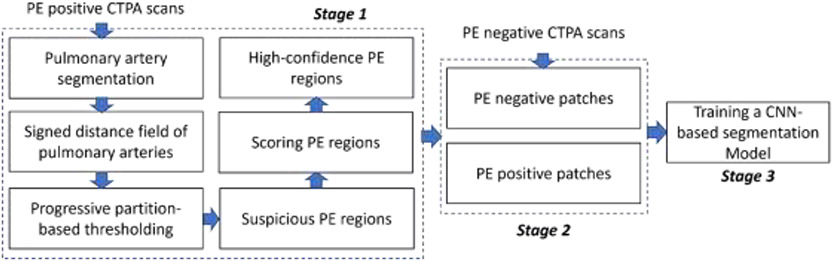
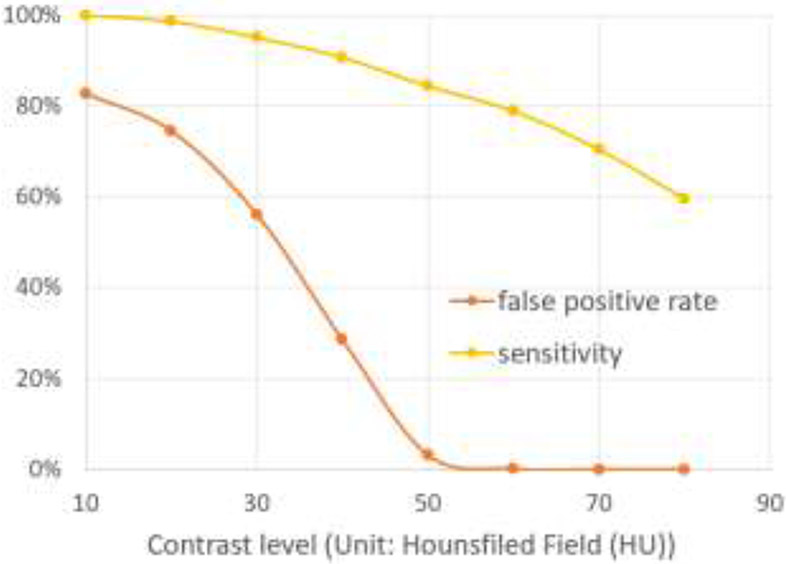
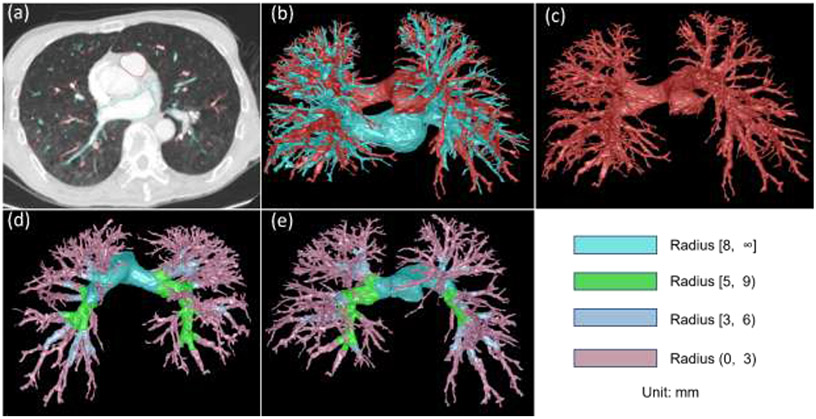
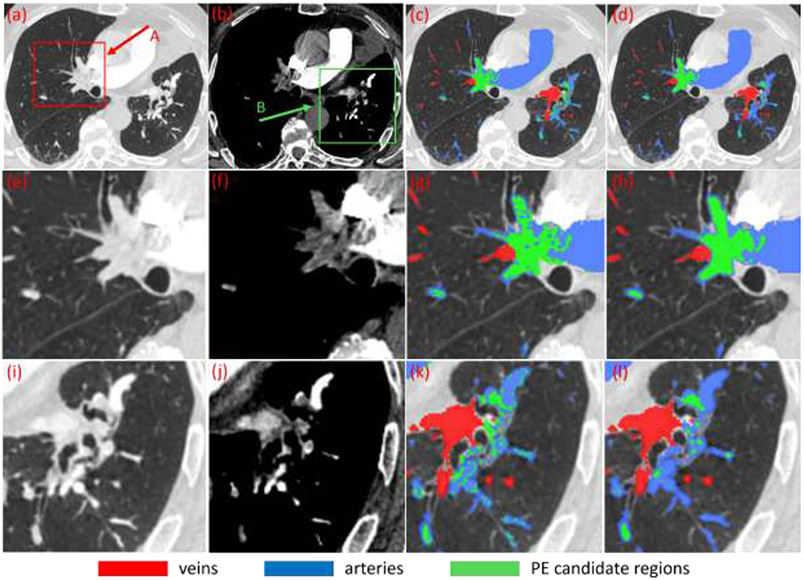
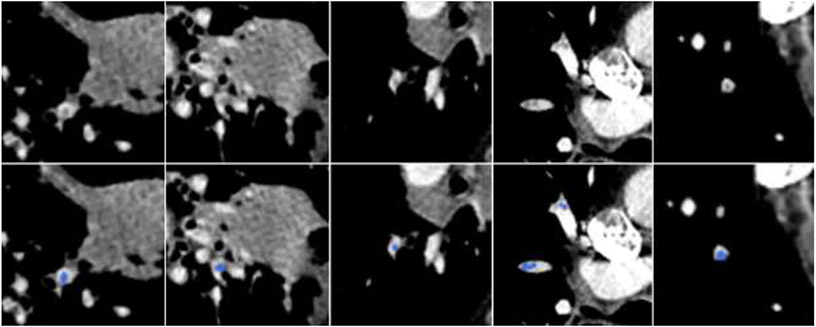
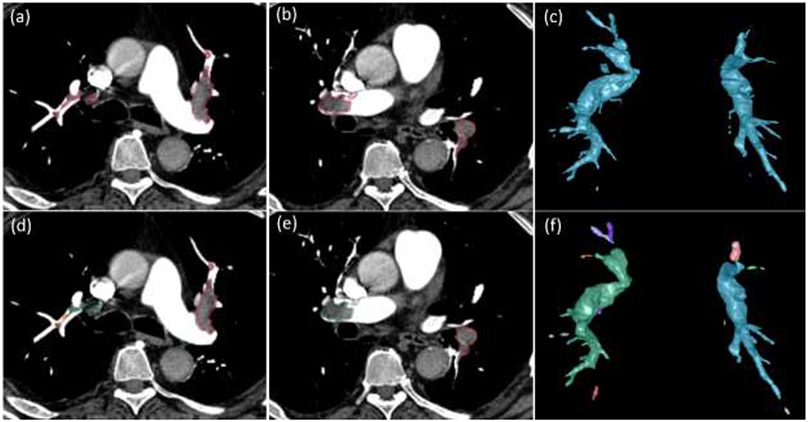
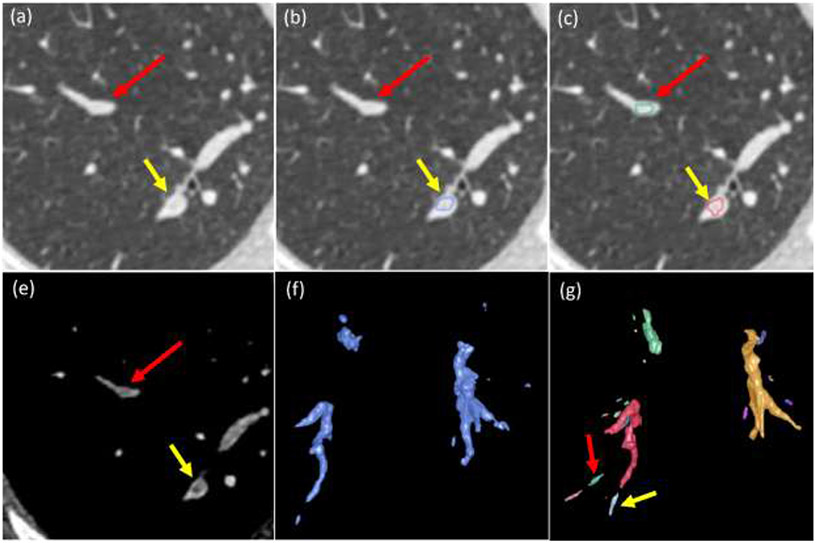
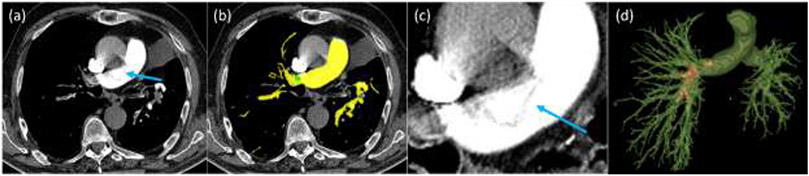
We present a novel computer algorithm to automatically detect and segment pulmonary embolisms (PEs) on computed tomography pulmonary angiography (CTPA). This algorithm is based on deep learning but does not require manual outlines of the PE regions. Given a CTPA scan, both intra- and extra-pulmonary arteries were firstly segmented. The arteries were then partitioned into several parts based on size (radius). Adaptive thresholding and constrained morphological operations were used to identify suspicious PE regions within each part. The confidence of a suspicious region to be PE was scored based on its contrast in the arteries. This approach was applied to the publicly available RSNA Pulmonary Embolism CT Dataset (RSNA-PE) to identify three-dimensional (3-D) PE negative and positive image patches, which were used to train a 3-D Recurrent Residual U-Net (R2-Unet) to automatically segment PE. The feasibility of this computer algorithm was validated on an independent test set consisting of 91 CTPA scans acquired from a different medical institute, where the PE regions were manually located and outlined by a thoracic radiologist (>18 years' experience). An R2-Unet model was also trained and validated on the manual outlines using a 5-fold cross-validation method. The CNN model trained on the high-confident PE regions showed a Dice coefficient of 0.676±0.168 and a false positive rate of 1.86 per CT scan, while the CNN model trained on the manual outlines demonstrated a Dice coefficient of 0.647±0.192 and a false positive rate of 4.20 per CT scan. The former model performed significantly better than the latter model (p<0.01). The promising performance of the developed PE detection and segmentation algorithm suggests the feasibility of training a deep learning network without dedicating significant efforts to manual annotations of the PE regions on CTPA scans.
我们提出了一种新的计算机算法,用于在计算机断层肺动脉造影(CTPA)上自动检测和分割肺栓塞(PE)。该算法基于深度学习,但不需要手动勾勒 PE 区域。给定 CTPA 扫描,首先对肺内和肺外动脉进行分割。然后,根据大小(半径)将动脉分成几部分。自适应阈值和约束形态学操作用于在每个部分内识别可疑的 PE 区域。根据动脉中的对比度对可疑区域是否为 PE 进行评分。该方法应用于公开的 RSNA 肺栓塞 CT 数据集(RSNA-PE),以识别三维(3-D)PE 阴性和阳性图像补丁,这些补丁用于训练 3-D 递归残差 U-Net(R2-Unet)以自动分割 PE。该计算机算法的可行性在一个由另一家医疗机构获得的 91 例 CTPA 扫描组成的独立测试集中得到验证,其中由一位胸部放射科医生(>18 年经验)手动定位和勾勒出 PE 区域。还使用 5 折交叉验证方法在手动轮廓上训练和验证了 R2-Unet 模型。在高置信度 PE 区域上训练的 CNN 模型的 Dice 系数为 0.676±0.168,假阳性率为每 CT 扫描 1.86,而在手动轮廓上训练的 CNN 模型的 Dice 系数为 0.647±0.192,假阳性率为每 CT 扫描 4.20。前者模型的性能明显优于后者模型(p<0.01)。开发的 PE 检测和分割算法的良好性能表明,在 CTPA 扫描上不需要大量人工标注 PE 区域的情况下,训练深度学习网络是可行的。