Human Performance Laboratory, Biology Department, Appalachian State University, North Carolina Research Campus, Kannapolis, NC, USA.
UNCG Center for Translational Biomedical Research, University of North Carolina at Greensboro, North Carolina Research Campus, Kannapolis, NC, USA.
Sci Rep. 2023 Jul 24;13(1):11976. doi: 10.1038/s41598-023-39269-1.
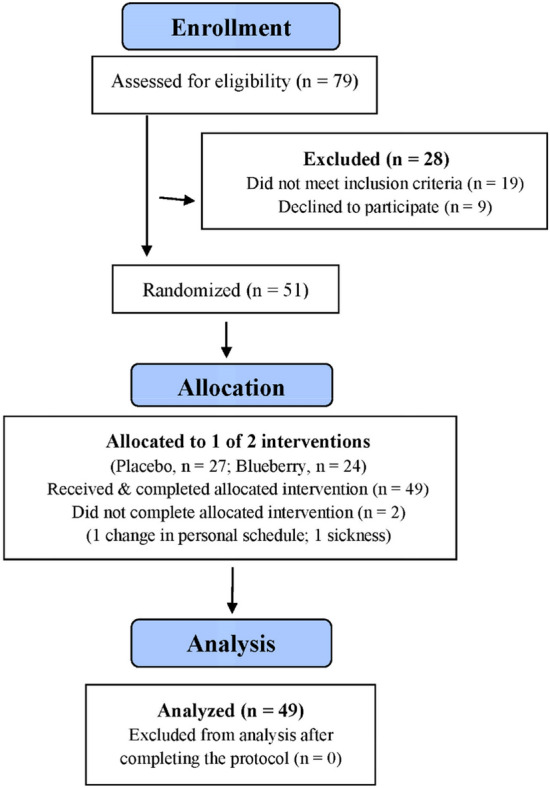
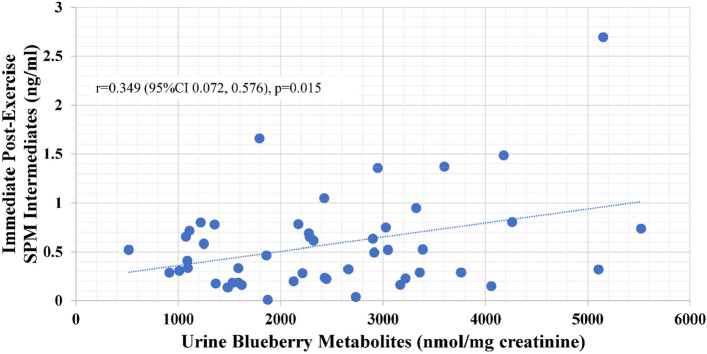
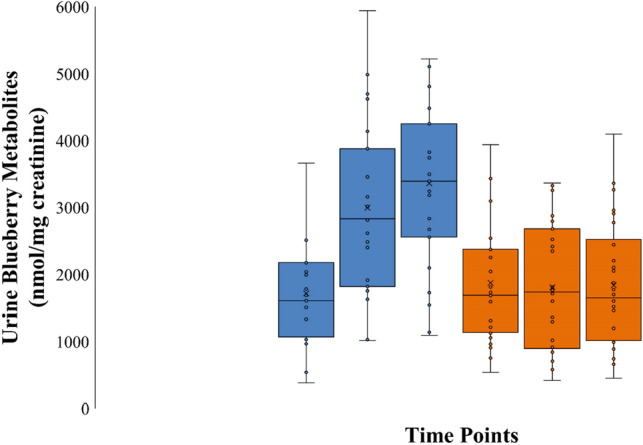
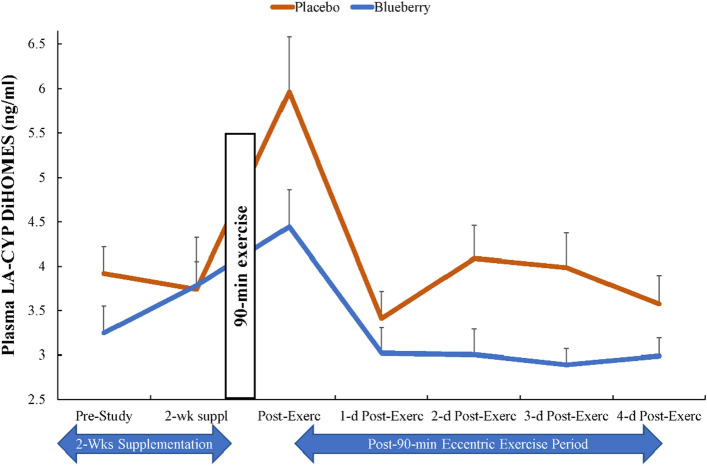
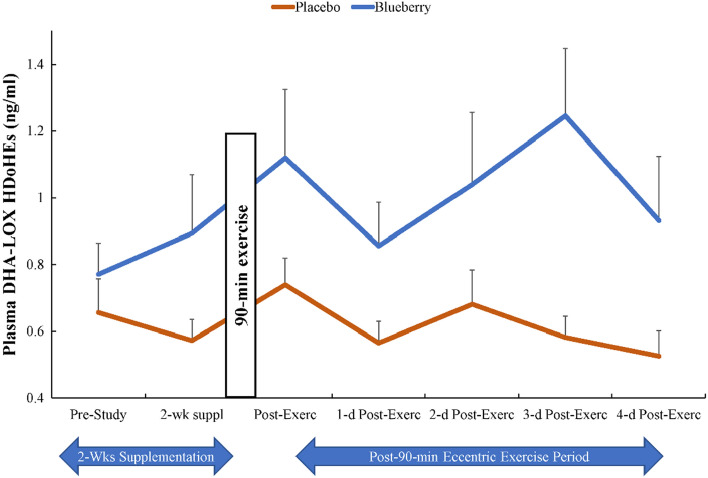
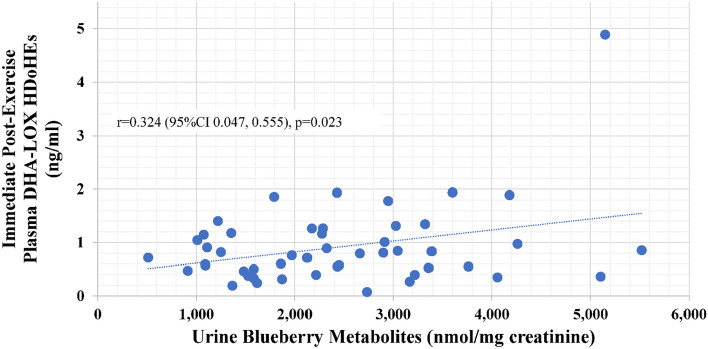
This study determined if 18 days of supplementation with blueberries (BL) compared to placebo (PL) could mitigate muscle soreness and damage and improve inflammation resolution in untrained adults (n = 49, ages 18-50 years) after engaging in a 90-min bout of "weekend warrior" eccentric exercise. The BL freeze dried supplement provided 1 cup of fresh blueberries per day equivalent with 805 mg/day total phenolics and 280 mg/day anthocyanins. Urine levels of eight BL gut-derived phenolics increased after 14- and 18-days supplementation with 83% higher concentrations in BL vs. PL (p < 0.001). The 90-min exercise bout caused significant muscle soreness and damage during 4d of recovery and a decrease in exercise performance with no significant differences between PL and BL. Plasma oxylipins were identified (n = 76) and grouped by fatty acid substrates and enzyme systems. Linoleic acid (LA) oxylipins generated from cytochrome P450 (CYP) (9,10-, 12,13-dihydroxy-9Z-octadecenoic acids) (diHOMEs) were lower in BL vs. PL (treatment effect, p = 0.051). A compositive variable of 9 plasma hydroxydocosahexaenoic acids (HDoHEs) generated from docosahexaenoic acid (DHA, 22:6) and lipoxygenase (LOX) was significantly higher in BL vs. PL (treatment effect, p = 0.008). The composite variable of plasma 14-HDoHE, 17-HDoHE, and the eicosapentaenoic acid (EPA)-derived oxylipin 18-hydroxyeicosapentaenoic acid (18-HEPE) (specialized pro-resolving lipid mediators, SPM, intermediates) was significantly higher in BL vs PL (treatment effect, p = 0.014). Pearson correlations showed positive relationships between post-exercise DHA-LOX HDoHEs and SPM intermediates with urine blueberry gut-derived phenolics (r = 0.324, p = 0.023, and r = 0.349, p = 0.015, respectively). These data indicate that 18d intake of 1 cup/day blueberries compared to PL was linked to a reduction in pro-inflammatory diHOMES and sustained elevations in DHA- and EPA-derived anti-inflammatory oxylipins in response to a 90-min bout of unaccustomed exercise by untrained adults.
这项研究旨在确定在未经训练的成年人(年龄 18-50 岁,n=49)进行 90 分钟“周末战士”离心运动后,18 天补充蓝莓(BL)与安慰剂(PL)相比是否可以减轻肌肉酸痛和损伤,并改善炎症消退情况。BL 冻干补充剂提供了相当于每天一杯新鲜蓝莓的剂量,其中含有 805mg/天的总酚类物质和 280mg/天的花青素。补充 14-18 天后,尿液中 8 种 BL 肠道衍生酚类物质的水平增加,BL 中的浓度比 PL 高 83%(p<0.001)。90 分钟的运动使肌肉在 4 天的恢复期内出现明显的酸痛和损伤,并降低了运动表现,但 PL 和 BL 之间没有显著差异。鉴定了氧化脂类(n=76),并根据脂肪酸底物和酶系统进行了分组。细胞色素 P450(CYP)(9,10-,12,13-二羟基-9Z-十八碳烯酸)(二 HOMEs)生成的亚油酸(LA)氧化脂类在 BL 中低于 PL(处理效果,p=0.051)。来自二十二碳六烯酸(DHA,22:6)和脂氧合酶(LOX)的 9 种血浆羟基二十二碳六烯酸(HDoHEs)的复合变量在 BL 中明显高于 PL(处理效果,p=0.008)。BL 中的血浆 14-HDoHE、17-HDoHE 和二十碳五烯酸(EPA)衍生的氧化脂 18-羟基二十碳五烯酸(18-HEPE)(专门的促解决脂质介质,SPM,中间体)的复合变量明显高于 PL(处理效果,p=0.014)。Pearson 相关性显示,运动后 DHA-LOX HDoHEs 与 SPM 中间体与尿液蓝莓肠道衍生酚类物质之间存在正相关关系(r=0.324,p=0.023 和 r=0.349,p=0.015)。这些数据表明,与 PL 相比,18 天每天摄入 1 杯蓝莓与促炎二 HOMES 的减少以及未经训练的成年人对 90 分钟不习惯的运动反应中 DHA 和 EPA 衍生抗炎氧化脂的持续升高有关。