Modeling in Health Research Center, Institute for Futures Studies in Health, Kerman University of Medical Sciences, Kerman, Iran.
Department of Biostatistics and Epidemiology, School of Public Health, Kerman University of Medical Sciences, Kerman, Iran.
BMC Womens Health. 2023 Jul 26;23(1):392. doi: 10.1186/s12905-023-02543-5.
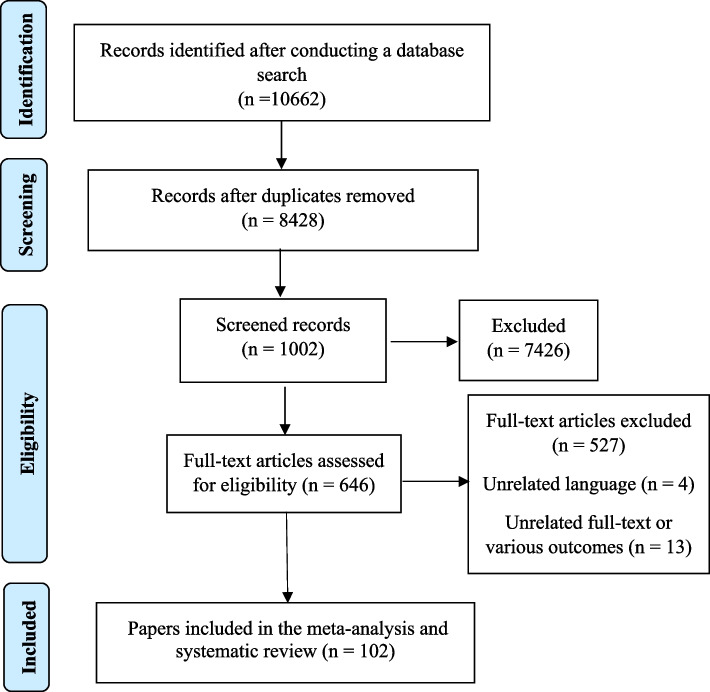
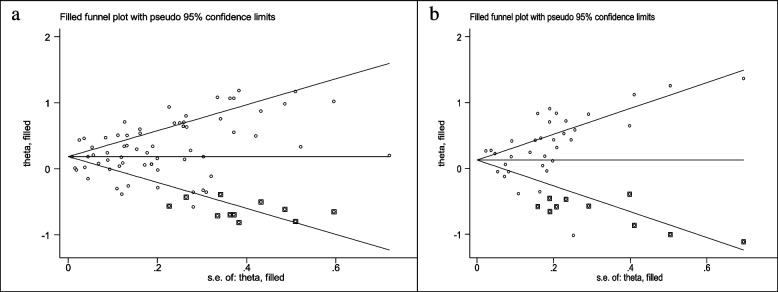
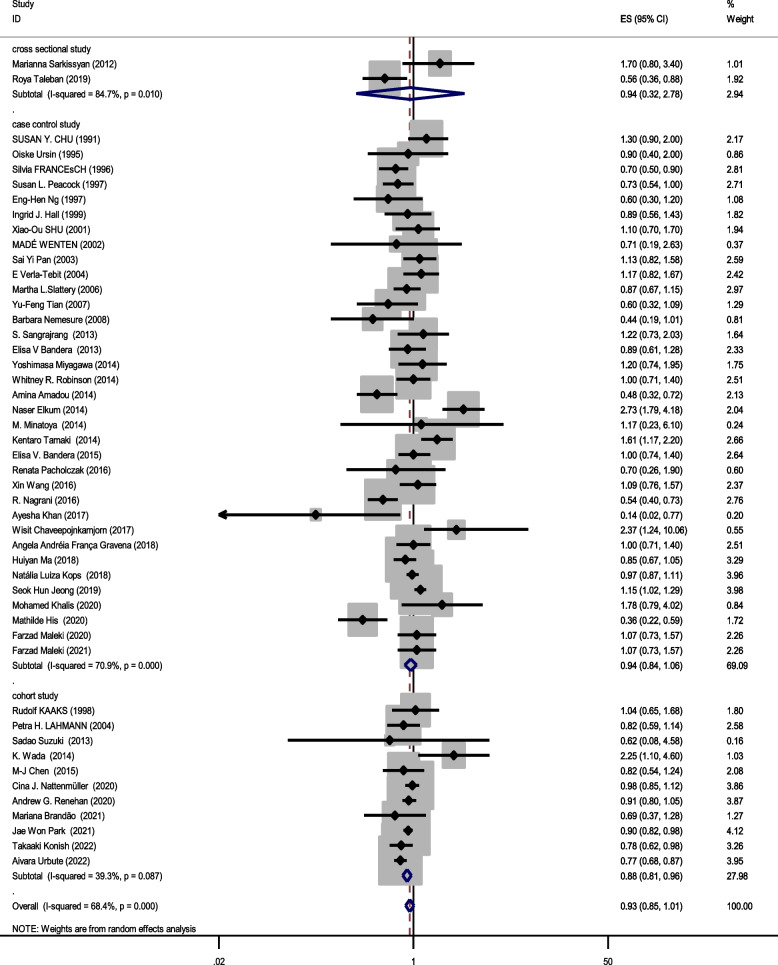
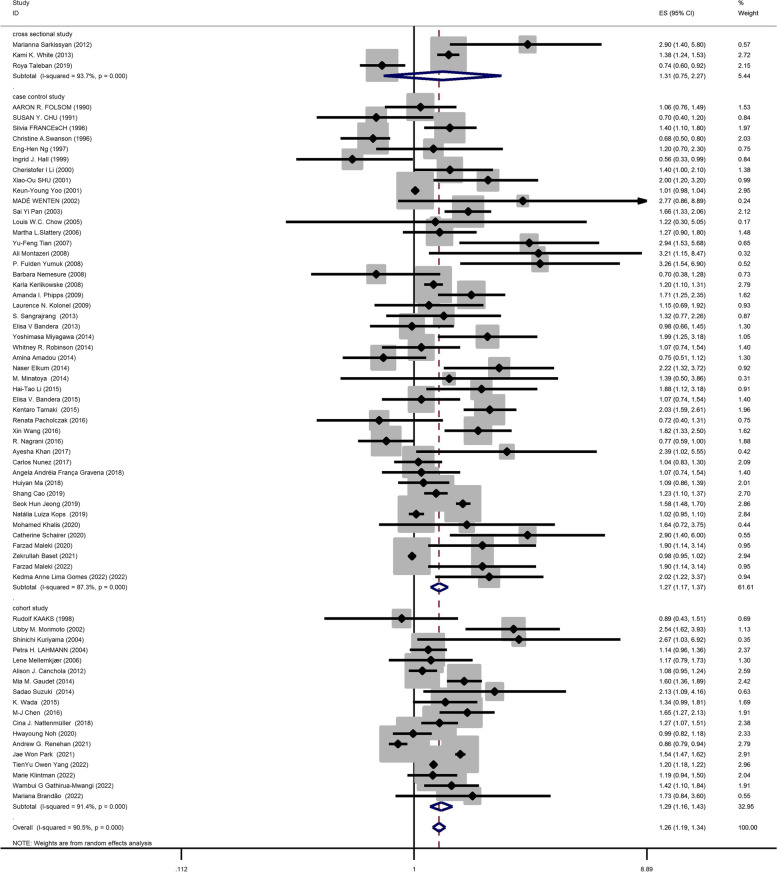
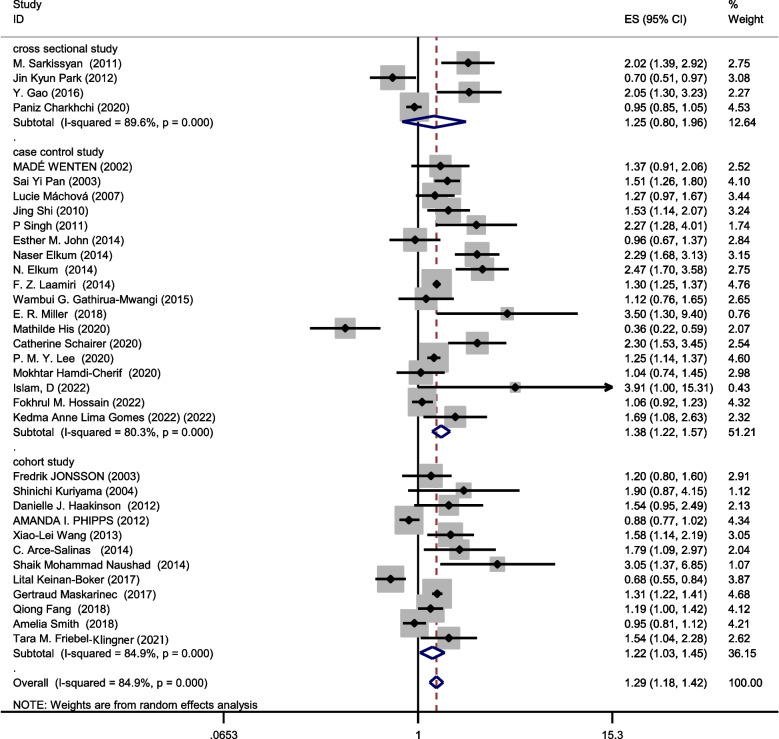
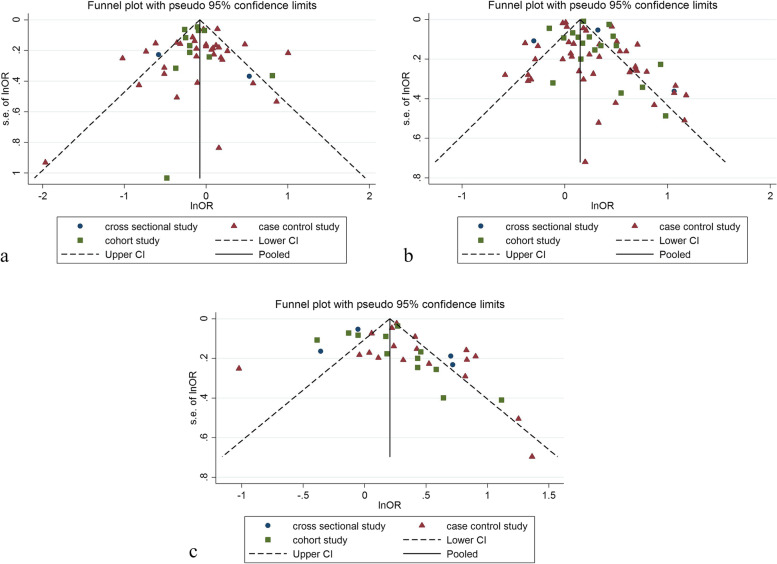
Given the increase in the incidence of breast cancer during the past decades, several studies have investigated the effects of variables on breast cancer, especially obesity. This systematic review and meta-analysis aims to evaluate any effects of obesity on breast cancer risk in women, before and after menopause, and in different continents.All forms of relevant literature examining any association between obesity and breast cancer, including cohort, case-control, and cross-sectional studies, were identified in the PubMed, Scopus, EMBASE, and Web of Science databases from January 1, 1990 until January 13, 2023. Body mass index (BMI) > 30 was used to indicate obesity. Every type of breast cancer was examined as outcome factors. The quality of the papers was evaluated using the Newcastle-Ottawa scale checklist. The Egger and Begg test was used to evaluate publication bias. To assess any extra impact of each research on the final measurement, a sensitivity analysis was carried out.One hundred and two studies were included in this meta-analysis. Respectively, 48 and 67 studies reported associations between obesity and breast cancer in pre and post menopausal women. Combining all studies, the pooled OR of the association between obesity and breast cancer in pre-menopausal women was OR = 0.93 CI: (0.85-1.1), (I = 65.4%), and for post-menopausal woman, OR = 1.26 CI: (1.19-1.34), (I = 90.5%).Obesity has a protective role in breast cancer among pre-menopausal women, but this relationship is statistically significant only in European women. The chance of developing breast cancer increases in post-menopausal women who are obese. This relationship is significant among Asian, North American, African and European women.
鉴于过去几十年来乳腺癌发病率的增加,已有多项研究调查了变量对乳腺癌的影响,尤其是肥胖。本系统评价和荟萃分析旨在评估肥胖对绝经前和绝经后女性乳腺癌风险的影响,并评估不同大陆的影响。从 1990 年 1 月 1 日至 2023 年 1 月 13 日,我们在 PubMed、Scopus、EMBASE 和 Web of Science 数据库中检索了所有形式的相关文献,以研究肥胖与乳腺癌之间的任何关联,包括队列研究、病例对照研究和横断面研究。使用体重指数(BMI)>30 来表示肥胖。将每种类型的乳腺癌作为结局因素进行了检查。使用纽卡斯尔-渥太华量表检查表评估论文质量。使用 Egger 和 Begg 检验评估发表偏倚。为了评估每项研究对最终测量的额外影响,进行了敏感性分析。这项荟萃分析共纳入了 102 项研究。分别有 48 项和 67 项研究报告了肥胖与绝经前和绝经后女性乳腺癌之间的关联。综合所有研究,肥胖与绝经前女性乳腺癌之间的关联的合并 OR 为 OR=0.93(95%CI:0.85-1.1)(I=65.4%),对于绝经后女性,OR=1.26(95%CI:1.19-1.34)(I=90.5%)。肥胖对绝经前女性乳腺癌具有保护作用,但这种关系在欧洲女性中仅具有统计学意义。肥胖的绝经后女性患乳腺癌的几率增加。这种关系在亚洲、北美、非洲和欧洲女性中均具有统计学意义。