Department of Pharmaceutics, Pandaveswar School of Pharmacy, Pandaveswar, West Bengal, 713378, India.
Department of Pharmaceutics, School of Pharmacy, Bharat Institute of Technology (BIT), Meerut, 250103, UP, India.
J Health Popul Nutr. 2023 Jul 27;42(1):74. doi: 10.1186/s41043-023-00423-0.
Magnesium (Mg) has gained much importance recently because of its unique range of biological functions. It is one of the most significant micronutrients in biological systems. This review aims to outline the immune-regulating actions of Mg and its crucial role in regulating inflammation and immune response to infectious agents and malignancies.
We conducted a literature review on MEDLINE, PubMed, EMBASE, Web of Science to determine the impact of Mg on immune regulation in three settings of inflammation, infection, and cancer. We thoroughly examined all abstracts and full-text articles and selected the most relevant ones for inclusion in this review.
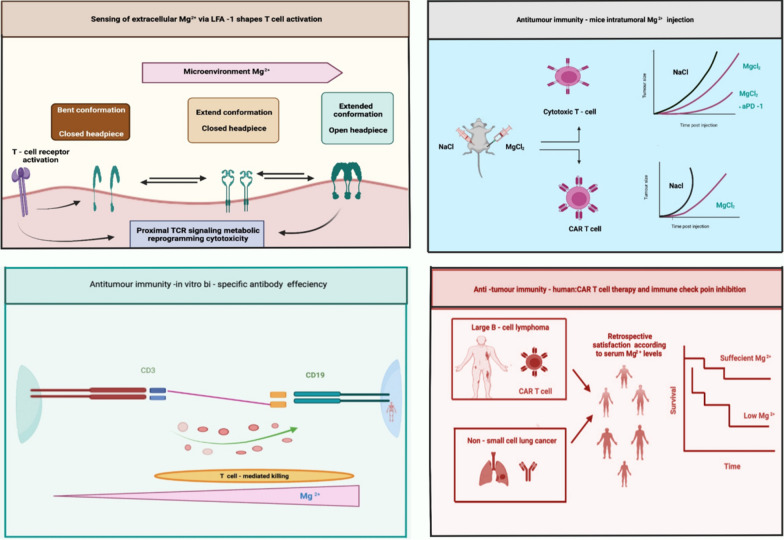
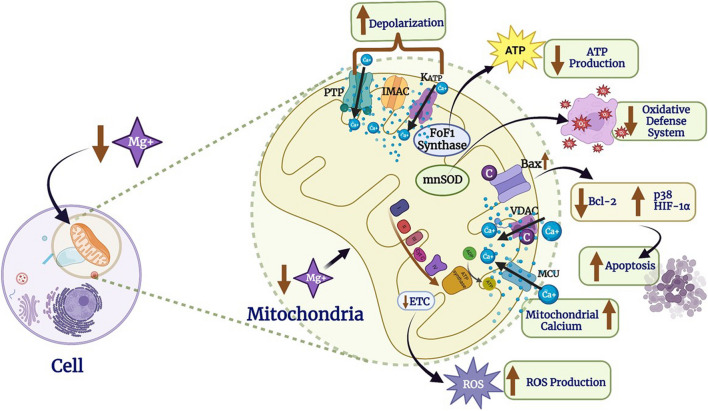
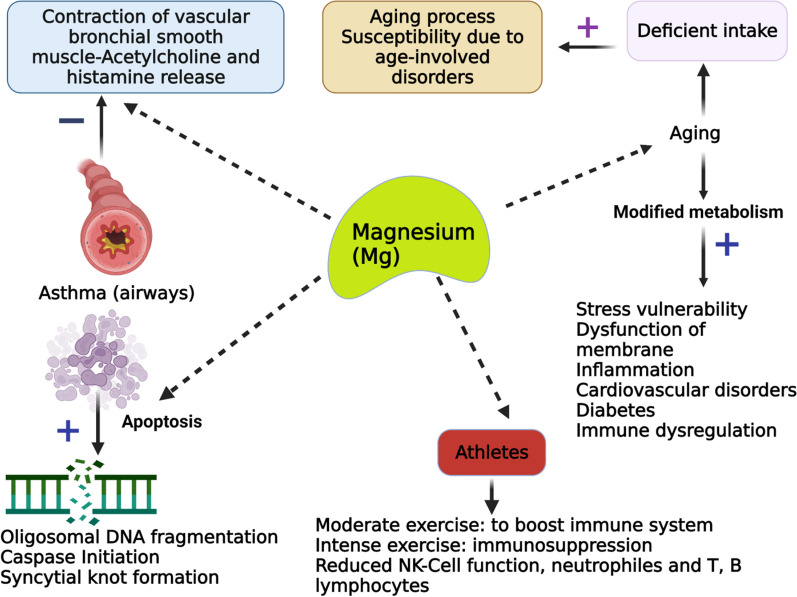
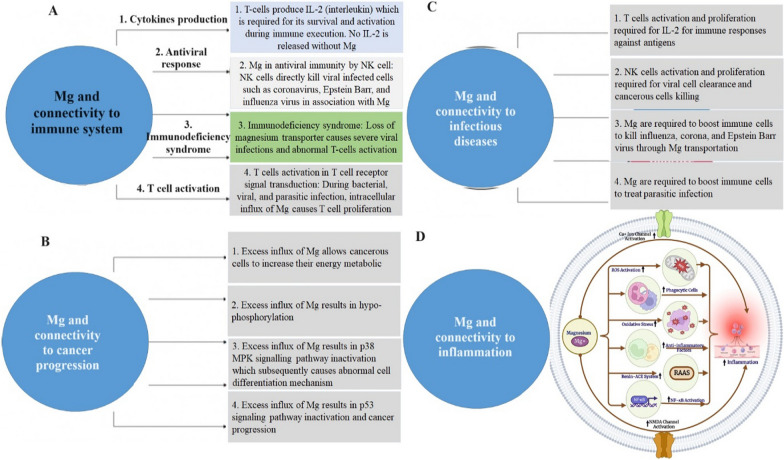
Mg has long been associated with immunological responses, both nonspecific and specific. It plays a pivotal role in diverse immune responses by participating in multiple mechanisms. It facilitates substance P binding to lymphoblasts, promotes T helper, B cell, and macrophage responses to lymphokines, and facilitates antibody-dependent cytolysis and immune cell adherence. Besides, Mg serves as a cofactor for C'3 convertase and immunoglobulin synthesis. It additionally boasts a significant anti-cancer effect. Chronic Mg deficiency leads to enhanced baseline inflammation associated with oxidative stress, related to various age-associated morbidities. A deficiency of Mg in rodents has been observed to impact the cell-mediated immunity and synthesis of IgG adversely. This deficiency can lead to various complications, such as lymphoma, histaminosis, hypereosinophilia, increased levels of IgE, and atrophy of the thymus. The immunological consequences of Mg deficiency in humans can be influenced by the genetic regulation of Mg levels in blood cells. Mg can also mediate cell cycle progression. There has been a renewed interest in the physiology and therapeutic efficacy of Mg. However, the in-depth mechanisms, their clinical significance, and their importance in malignancies and inflammatory disorders still need to be clarified.
Mg is essential for optimal immune function and regulating inflammation. Deficiency in Mg can lead to temporary or long-term immune dysfunction. A balanced diet usually provides sufficient Mg, but supplementation may be necessary in some cases. Excessive supplementation can have negative impacts on immune function and should be avoided. This review provides an update on the importance of Mg in an immune response against cancer cells and infectious agents and how it regulates inflammation, oxidative stress, cell progression, differentiation, and apoptosis.
由于镁具有独特的生物学功能范围,因此最近它变得非常重要。它是生物系统中最重要的微量营养素之一。本综述旨在概述镁的免疫调节作用及其在调节炎症和对感染因子和恶性肿瘤的免疫反应中的关键作用。
我们在 MEDLINE、PubMed、EMBASE、Web of Science 上进行了文献综述,以确定镁在炎症、感染和癌症三种情况下对免疫调节的影响。我们仔细检查了所有的摘要和全文文章,并选择了最相关的文章纳入本综述。
镁长期以来一直与非特异性和特异性免疫反应有关。它通过参与多种机制在各种免疫反应中发挥关键作用。它促进 P 物质与淋巴母细胞结合,促进 T 辅助细胞、B 细胞和巨噬细胞对淋巴因子的反应,并促进抗体依赖性细胞溶解和免疫细胞黏附。此外,镁是 C'3 转化酶和免疫球蛋白合成的辅助因子。它还具有显著的抗癌作用。慢性镁缺乏会导致与氧化应激相关的增强的基线炎症,与各种与年龄相关的疾病有关。在啮齿动物中观察到镁缺乏会对细胞介导的免疫和 IgG 的合成产生不利影响。这种缺乏会导致各种并发症,如淋巴瘤、组织胺增多症、嗜酸性粒细胞增多症、IgE 水平升高和胸腺萎缩。人类镁缺乏的免疫后果可能受到血细胞中镁水平的遗传调节的影响。镁还可以介导细胞周期进展。人们对镁的生理学和治疗功效重新产生了兴趣。然而,镁的深入机制、它们的临床意义以及它们在恶性肿瘤和炎症性疾病中的重要性仍有待阐明。
镁对于最佳免疫功能和调节炎症至关重要。镁缺乏会导致暂时或长期的免疫功能障碍。均衡的饮食通常可以提供足够的镁,但在某些情况下可能需要补充。过量补充会对免疫功能产生负面影响,应避免。本综述提供了镁在对抗癌细胞和感染因子的免疫反应中的重要性的最新信息,以及它如何调节炎症、氧化应激、细胞进展、分化和凋亡。