Javed Rabia, Ijaz Shumaila, Hameed Hajra, Nazish Moona, Sharif Muhammad Shakeeb, Afreen Afshan, Alarjani Khaloud Mohammed, Elshikh Mohamed S, Mehboob Saadia, Abdul Razak Sarah, Waheed Abdul, Ahmed Rashid, Tariq Muhammad
Department of Biotechnology, Mirpur University of Science and Technology, Mirpur 10250, Pakistan.
Department of Plant Sciences, Quaid-i-Azam University, Islamabad 45320, Pakistan.
Micromachines (Basel). 2023 Jul 4;14(7):1372. doi: 10.3390/mi14071372.
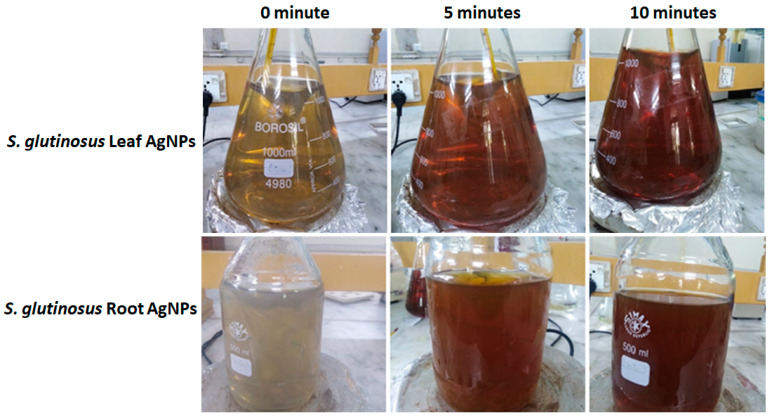
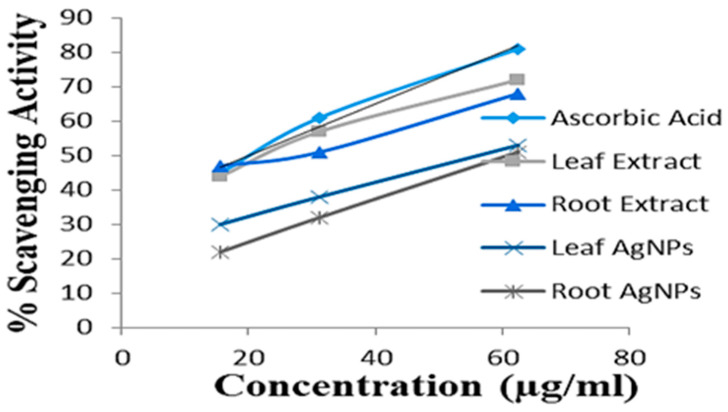
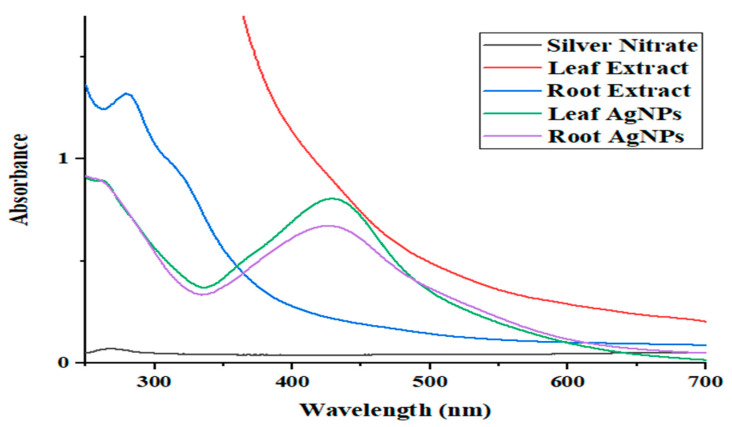
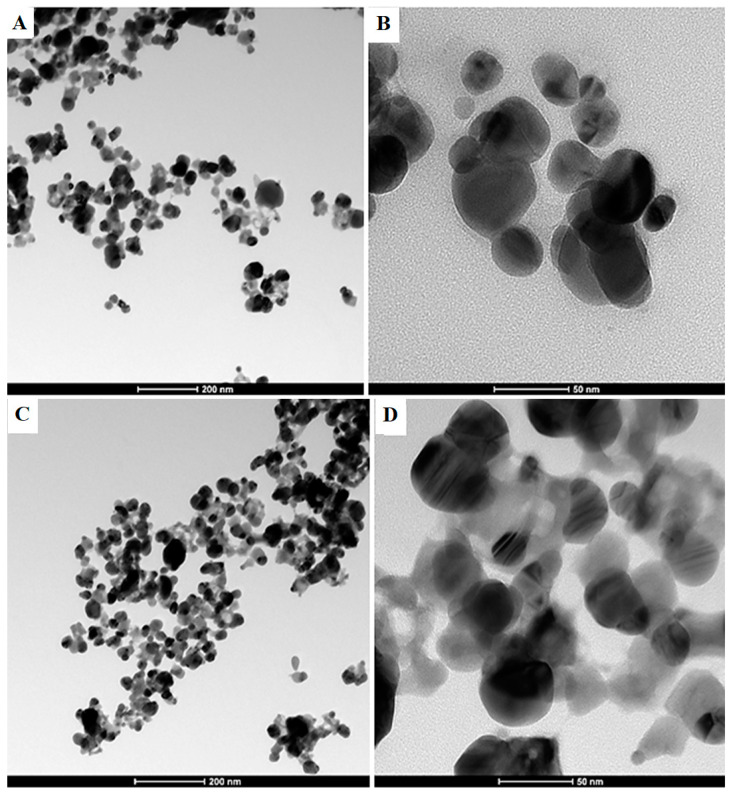
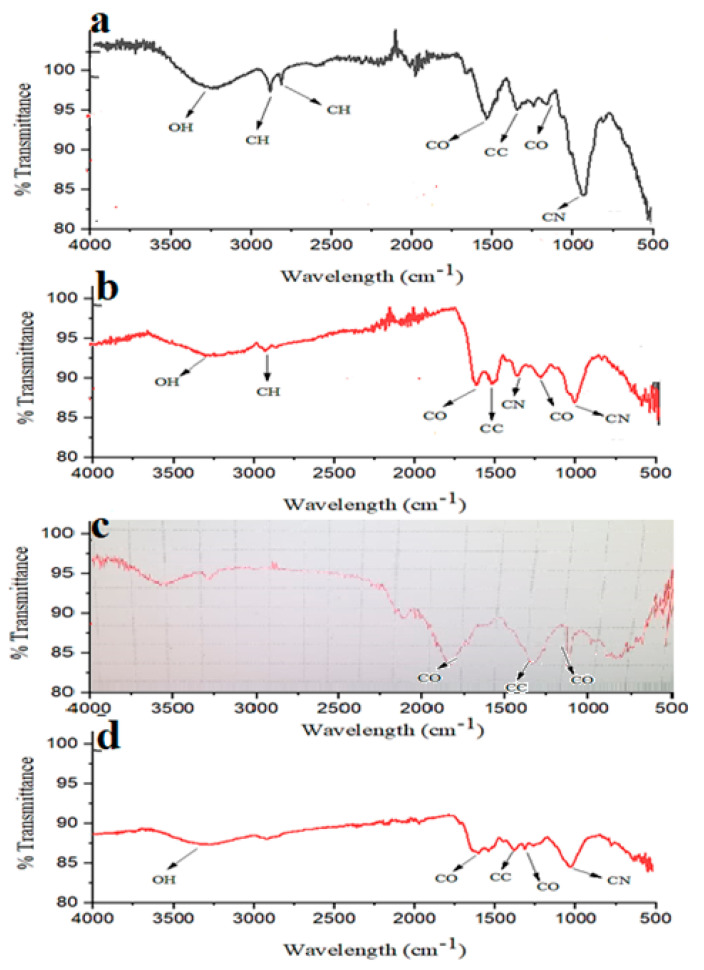
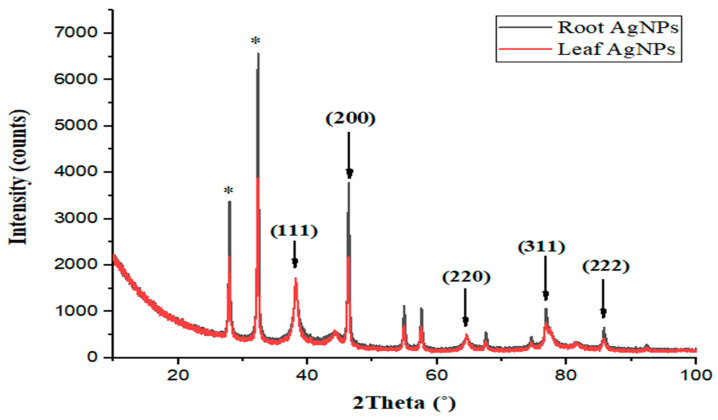
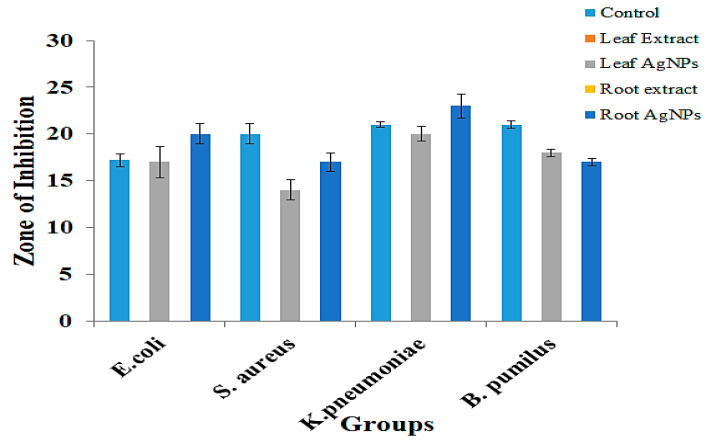
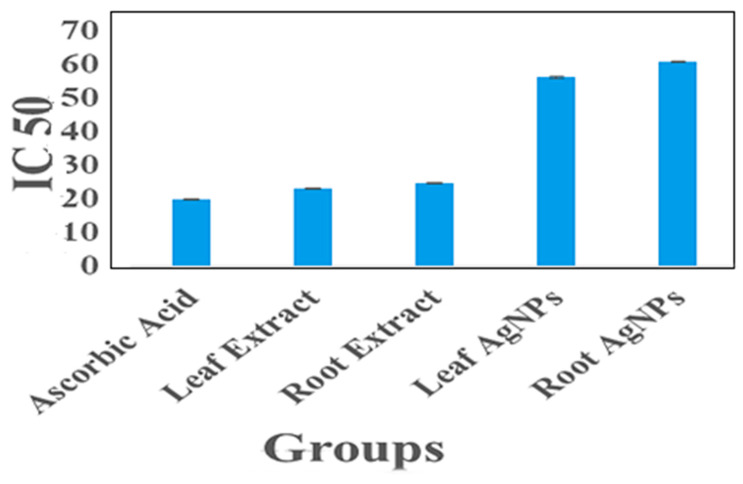
The application of green synthesis for silver nanoparticles in nanomedicine has experienced significant growth. , a plant primarily located in the Himalayas, remains largely unexplored. Considering the biomedical value of , phytochemicals from this plant were used for the biosynthesis of silver nanoparticles. Silver nanoparticles were synthesized from aqueous extract of root and leaves of . The synthesized silver nanoparticles were characterized using UV-Vis spectrophotometry, Fourier-transform infrared spectroscopy, transmission electron microscopy, and X-ray diffraction. Total phenolic and flavonoid contents of plants were determined and compared with nanoparticles. The biomedical efficacy of plant extracts and silver nanoparticles was assessed using antioxidant and antibacterial assays. The UV-Vis spectra of leaf- and root-extract-mediated AgNPs showed characteristic peaks at 428 nm and 429 nm, respectively. TEM images revealed the polycrystalline and spherical shapes of leaf- and root-extract-mediated AgNPs with size ranges of 15-60 nm and 20-52 nm, respectively. FTIR findings shown the involvement of phytochemicals of root and leaf extracts in the reduction of silver ions into silver nanoparticles. The crystalline face-centered cubic structure of nanoparticles is depicted by the XRD spectra of leaf and root AgNPs. The plant has an ample amount of total phenolic content (TPC) and total flavonoid content (TFC), which enhance the scavenging activity of plant samples and their respective AgNPs. Leaf and root AgNPs have also shown good antibacterial activity, which may enhance the medicinal value of AgNPs.
绿色合成法在纳米医学中制备银纳米颗粒的应用已取得显著发展。[一种主要生长在喜马拉雅山脉的植物]在很大程度上仍未被探索。考虑到[该植物]的生物医学价值,利用这种植物的植物化学物质来生物合成银纳米颗粒。从[该植物]的根和叶的水提取物中合成了银纳米颗粒。使用紫外可见分光光度法、傅里叶变换红外光谱法、透射电子显微镜和X射线衍射对合成的银纳米颗粒进行了表征。测定了植物的总酚和黄酮含量,并与纳米颗粒进行了比较。使用抗氧化和抗菌试验评估了植物提取物和银纳米颗粒的生物医学功效。叶提取物和根提取物介导的AgNPs的紫外可见光谱分别在428nm和429nm处显示出特征峰。透射电镜图像显示叶提取物和根提取物介导的AgNPs分别为多晶和球形,尺寸范围分别为15 - 60nm和20 - 52nm。傅里叶变换红外光谱结果表明根和叶提取物中的植物化学物质参与了将银离子还原为银纳米颗粒的过程。叶和根AgNPs的X射线衍射光谱描绘了纳米颗粒的面心立方晶体结构。该植物含有大量的总酚含量(TPC)和总黄酮含量(TFC),这增强了植物样品及其各自的AgNPs的清除活性。叶和根AgNPs也显示出良好的抗菌活性,这可能会提高AgNPs的药用价值。