Department of Chemistry, Shanghai Key Lab of Molecular Catalysis and Innovative Materials, iChEM, Fudan University, 200438, Shanghai, P. R. China.
Department of Orthopaedic Surgery, Zhongshan Hospital, Fudan University, No. 180 Fenglin Road, 200032, Shanghai, P. R. China.
Nat Commun. 2023 Aug 2;14(1):4628. doi: 10.1038/s41467-023-40300-2.
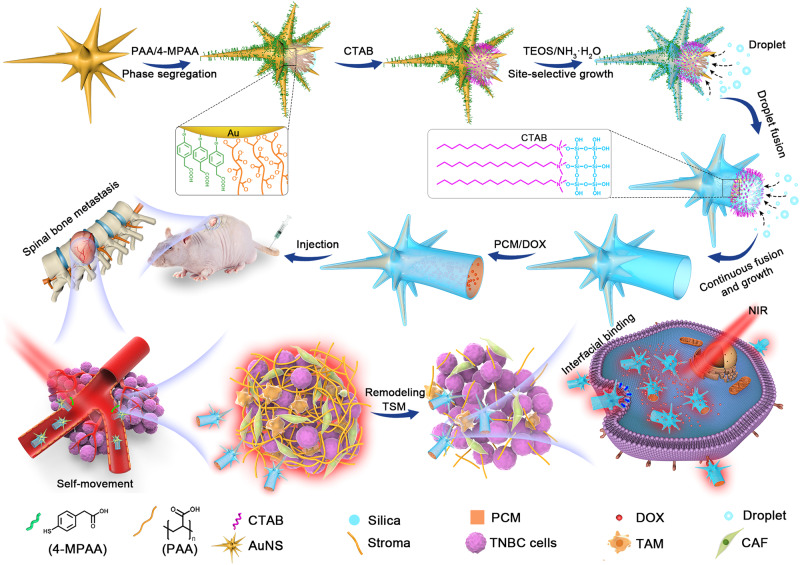
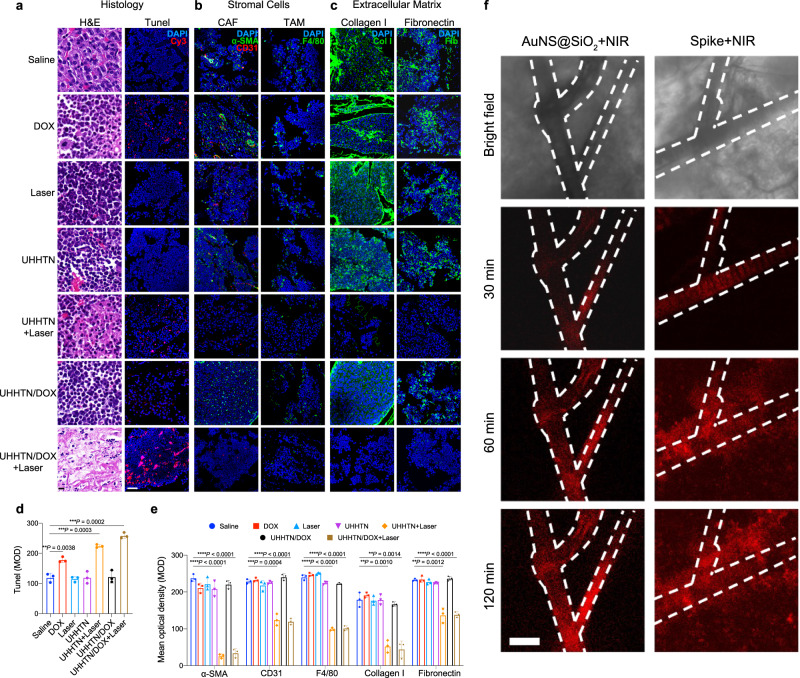
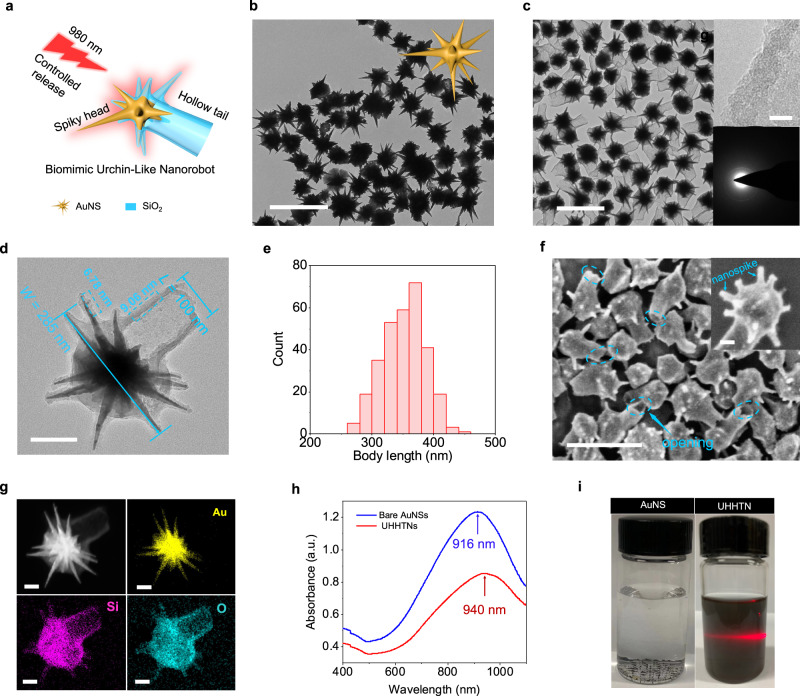
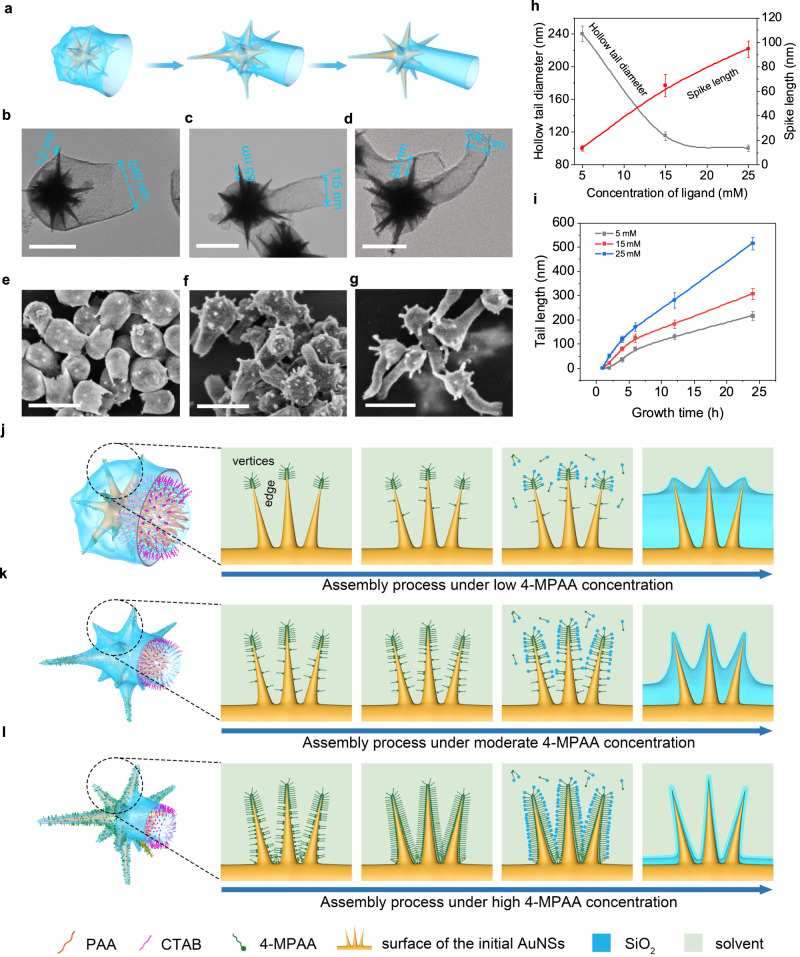
Chemotherapy remains as the first-choice treatment option for triple-negative breast cancer (TNBC). However, the limited tumor penetration and low cellular internalization efficiency of current nanocarrier-based systems impede the access of anticancer drugs to TNBC with dense stroma and thereby greatly restricts clinical therapeutic efficacy, especially for TNBC bone metastasis. In this work, biomimetic head/hollow tail nanorobots were designed through a site-selective superassembly strategy. We show that nanorobots enable efficient remodeling of the dense tumor stromal microenvironments (TSM) for deep tumor penetration. Furthermore, the self-movement ability and spiky head markedly promote interfacial cellular uptake efficacy, transvascular extravasation, and intratumoral penetration. These nanorobots, which integrate deep tumor penetration, active cellular internalization, near-infrared (NIR) light-responsive release, and photothermal therapy capacities into a single nanodevice efficiently suppress tumor growth in a bone metastasis female mouse model of TNBC and also demonstrate potent antitumor efficacy in three different subcutaneous tumor models.
化疗仍然是三阴性乳腺癌(TNBC)的首选治疗方案。然而,当前基于纳米载体的系统的肿瘤穿透能力有限和细胞内化效率低,阻碍了抗癌药物进入具有致密基质的 TNBC,从而极大地限制了临床治疗效果,特别是对于 TNBC 骨转移。在这项工作中,通过选择性超组装策略设计了仿生头/中空尾纳米机器人。我们表明,纳米机器人能够有效地重塑致密的肿瘤基质微环境(TSM),以实现深层肿瘤穿透。此外,自运动能力和刺状头部显著提高了界面细胞摄取效率、跨血管外渗和肿瘤内渗透。这些纳米机器人将深层肿瘤穿透、主动细胞内化、近红外(NIR)光响应释放和光热治疗能力集成到单个纳米器件中,能够有效地抑制 TNBC 骨转移雌性小鼠模型中的肿瘤生长,并在三种不同的皮下肿瘤模型中显示出强大的抗肿瘤功效。