Tirendi Sara, Marengo Barbara, Domenicotti Cinzia, Bassi Anna M, Almonti Vanessa, Vernazza Stefania
Department of Experimental Medicine, University of Genoa, Genoa, Italy.
Inter-University Center for the Promotion of the 3Rs Principles in Teaching & Research (Centro 3R), Genoa, Italy.
Front Oncol. 2023 Jul 19;13:1208140. doi: 10.3389/fonc.2023.1208140. eCollection 2023.
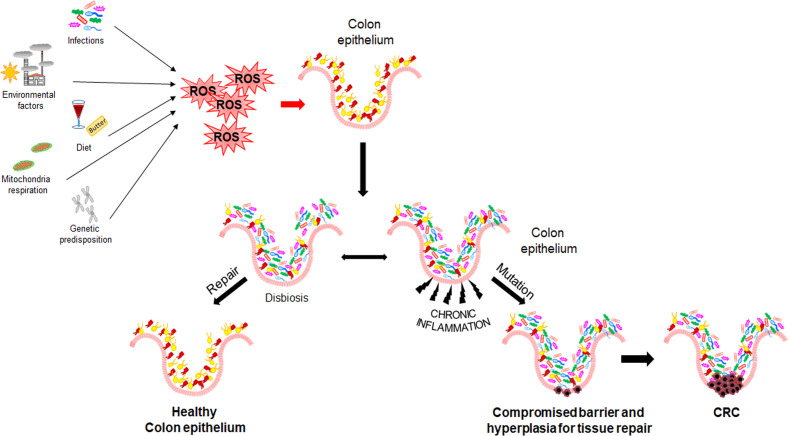
The latest GLOBOCAN 2021 reports that colorectal cancer (CRC) is the second leading cause of cancer-related death worldwide. Most CRC cases are sporadic and associated with several risk factors, including lifestyle habits, gut dysbiosis, chronic inflammation, and oxidative stress.
To summarize the biology of CRC and discuss current therapeutic interventions designed to counteract CRC development and to overcome chemoresistance.
Literature searches were conducted using PubMed and focusing the attention on the keywords such as "Current treatment of CRC" or "chemoresistance and CRC" or "oxidative stress and CRC" or "novel drug delivery approaches in cancer" or "immunotherapy in CRC" or "gut microbiota in CRC" or "systematic review and meta-analysis of randomized controlled trials" or "CSCs and CRC". The citations included in the search ranged from September 1988 to December 2022. An additional search was carried out using the clinical trial database.
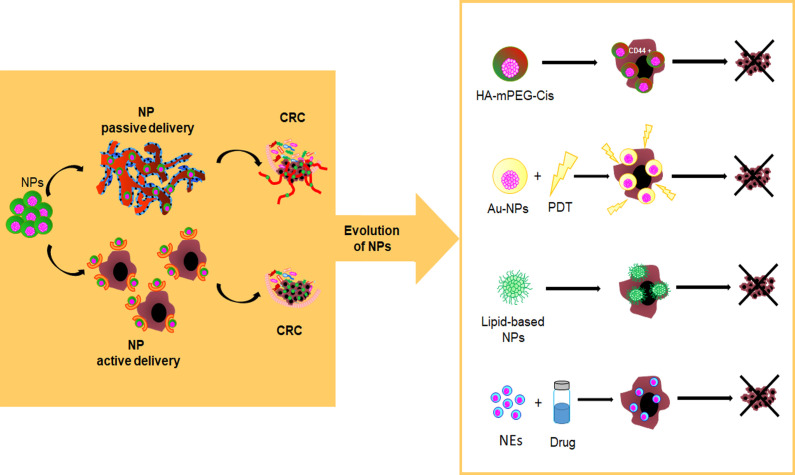
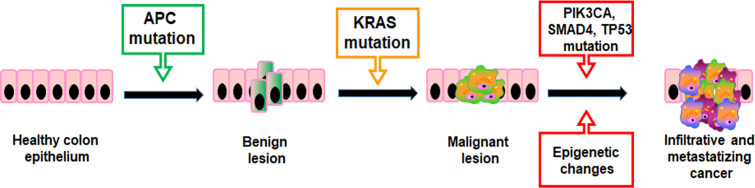
Rounds of adjuvant therapies, including radiotherapy, chemotherapy, and immunotherapy are commonly planned to reduce cancer recurrence after surgery (stage II and stage III CRC patients) and to improve overall survival (stage IV). 5-fluorouracil-based chemotherapy in combination with other cytotoxic drugs, is the mainstay to treat CRC. However, the onset of the inherent or acquired resistance and the presence of chemoresistant cancer stem cells drastically reduce the efficacy. On the other hand, the genetic-molecular heterogeneity of CRC often precludes also the efficacy of new therapeutic approaches such as immunotherapies. Therefore, the CRC complexity made of natural or acquired multidrug resistance has made it necessary the search for new druggable targets and new delivery systems.
Further knowledge of the underlying CRC mechanisms and a comprehensive overview of current therapeutic opportunities can provide the basis for identifying pharmacological and biological barriers that render therapies ineffective and for identifying new potential biomarkers and therapeutic targets for advanced and aggressive CRC.
最新的《2021年全球癌症统计报告》显示,结直肠癌(CRC)是全球癌症相关死亡的第二大主要原因。大多数CRC病例为散发性,与多种风险因素相关,包括生活习惯、肠道菌群失调、慢性炎症和氧化应激。
总结CRC的生物学特性,并讨论旨在对抗CRC发展和克服化疗耐药性的当前治疗干预措施。
使用PubMed进行文献检索,重点关注“CRC的当前治疗”“化疗耐药与CRC”“氧化应激与CRC”“癌症中的新型药物递送方法”“CRC中的免疫疗法”“CRC中的肠道微生物群”“随机对照试验的系统评价和荟萃分析”“癌症干细胞与CRC”等关键词。检索的文献引用时间范围为1988年9月至2022年12月。另外还使用临床试验数据库进行了检索。
通常会安排多轮辅助治疗,包括放疗、化疗和免疫疗法,以降低手术后(II期和III期CRC患者)的癌症复发率并提高总生存率(IV期)。以5-氟尿嘧啶为基础的化疗联合其他细胞毒性药物是治疗CRC的主要方法。然而,内在或获得性耐药的出现以及化疗耐药性癌症干细胞的存在极大地降低了疗效。另一方面,CRC的基因-分子异质性也常常使免疫疗法等新治疗方法的疗效受到限制。因此,由天然或获得性多药耐药构成的CRC复杂性使得寻找新的可药物作用靶点和新的递送系统成为必要。
对CRC潜在机制的进一步了解以及对当前治疗机会的全面概述,可以为识别导致治疗无效的药理学和生物学障碍以及为晚期侵袭性CRC识别新的潜在生物标志物和治疗靶点提供依据。