Faculty of Law, Giustino Fortunato University, Via Delcogliano, 12, Benevento, Italy.
Department of Educational Sciences, Psychology, Communication, University of Bari, Via Crisanzio 42, 70122, Bari, Italy.
Aging Clin Exp Res. 2023 Oct;35(10):2173-2190. doi: 10.1007/s40520-023-02501-z. Epub 2023 Aug 4.
In behavioural assessment, information can be gathered from internally referenced self-reports or from proxy informants.
This study aimed to fine-tune a brief but reliable method for evaluating the proxy accuracy in cases where responses obtained from adult and older adults' patient cannot be considered reliable.
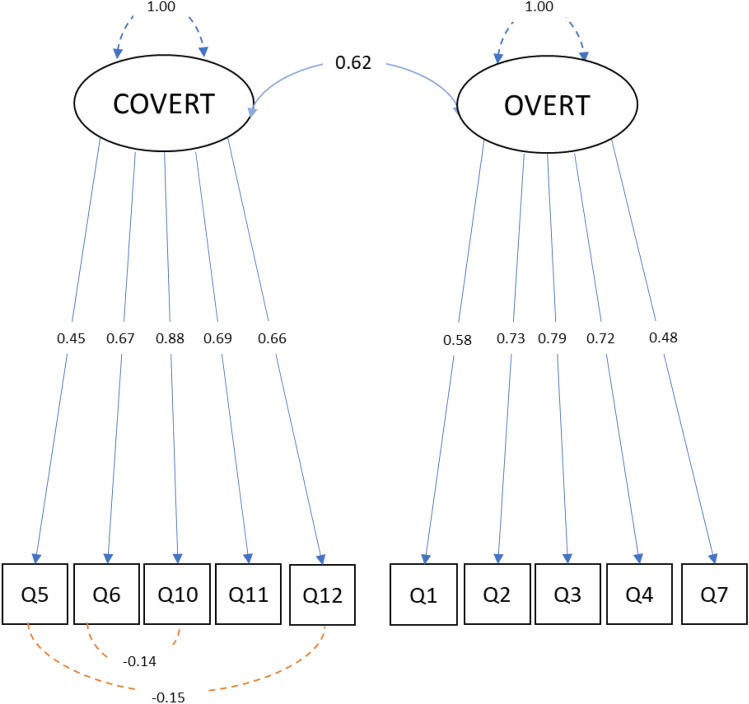
We generated a set of items reflecting both overt and covert behaviours related to the basic instrumental activities of daily living. The psychometric properties of the content, factorial, and criterium validity of these items were then checked. The Proxy Reliability Questionnaire-ProRe was created. We tested the frequency of "I don't know" responses as a measure of proxy reliability in a sample of healthy older adults and their proxies, and in a second sample of proxy respondents who answered questions about their parents.
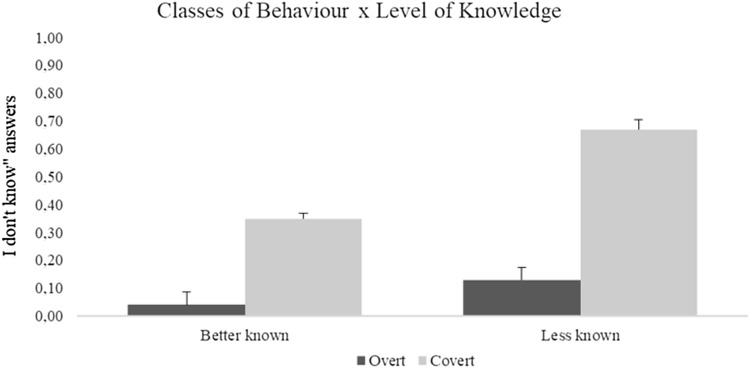
As expected, response precision was lower for items characterizing covert behaviours; items about covert compared to overt behaviours generated more "I don't know" answers. Proxies provided less "I don't know" responses when evaluating the parent, they claimed they knew better. Moreover, we tried to validate our approach using response confidence. Encouragingly, these results also showed differences in the expected direction in confidence between overt and covert behaviours.
The present study encourages clinicians/researchers to how well the proxy the patient know each other, the tendency of proxies to exhibit, for example, response bias when responding to questions about patients' covert behaviours, and more importantly, the reliability of informants in providing a clinical assessment of neurocognitive diseases associated with aging.
在行为评估中,可以从内部参考的自我报告或代理信息源中收集信息。
本研究旨在微调一种简短但可靠的方法,以评估代理的准确性,特别是在无法认为成人和老年人患者的自身报告可靠的情况下。
我们生成了一组反映与基本日常生活工具性活动相关的显性和隐性行为的项目。然后检查了这些项目的内容、因子和标准有效性的心理测量特性。创建了代理可靠性问卷-ProRe。我们在一组健康老年人及其代理的样本中以及在一组回答有关其父母问题的代理应答者的样本中测试了“我不知道”作为代理可靠性的衡量标准的频率。
正如预期的那样,描述隐性行为的项目的反应精度较低;关于隐性行为的项目比显性行为生成更多的“我不知道”回答。当评估父母时,代理提供的“我不知道”回答较少,他们声称更了解。此外,我们试图使用响应置信度来验证我们的方法。令人鼓舞的是,这些结果还显示了显性和隐性行为之间的预期方向的差异在置信度方面。
本研究鼓励临床医生/研究人员了解代理与患者之间的了解程度,代理在回答有关患者隐性行为的问题时表现出的倾向,例如反应偏差,以及更重要的是,信息提供者提供与年龄相关的神经认知疾病的临床评估的可靠性。