Liu Ziyu, Ling Yidan, Peng Yu, Han Shuibing, Ren Yuting, Jing Yujia, Fan Wenlu, Su Yong, Mu Chunlong, Zhu Weiyun
Laboratory of Gastrointestinal Microbiology, College of Animal Science and Technology, Nanjing Agricultural University, Nanjing, China.
National Center for International Research on Animal Gut Nutrition, National Experimental Teaching Demonstration Center of Animal Science, Nanjing Agricultural University, Nanjing, China.
J Anim Sci Biotechnol. 2023 Aug 5;14(1):111. doi: 10.1186/s40104-023-00903-7.
Serotonin is an important signaling molecule that regulates secretory and sensory functions in the gut. Gut microbiota has been demonstrated to affect serotonin synthesis in rodent models. However, how gut microbes regulate intestinal serotonin production in piglets remains vague. To investigate the relationship between microbiota and serotonin specifically in the colon, microbial composition and serotonin concentration were analyzed in ileum-cannulated piglets subjected to antibiotic infusion from the ileum when comparing with saline infusion. Microbes that correlated positively with serotonin production were isolated from piglet colon and were further used to investigate the regulation mechanisms on serotonin production in IPEC-J2 and a putative enterochromaffin cell line RIN-14B cells.
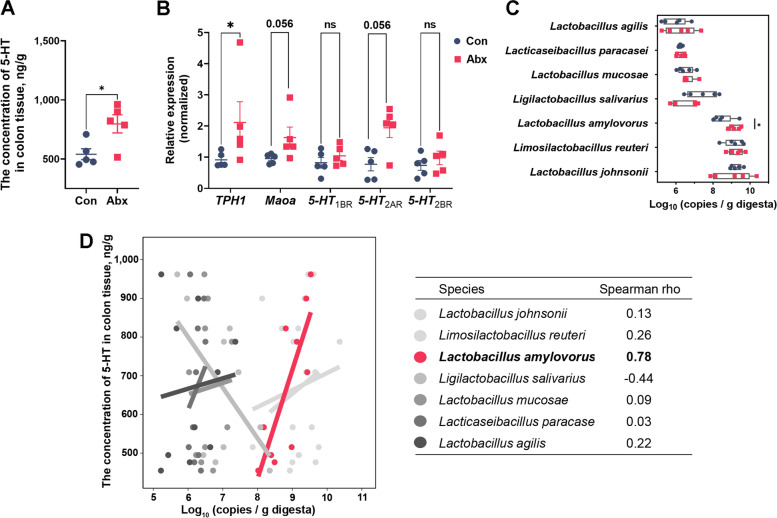
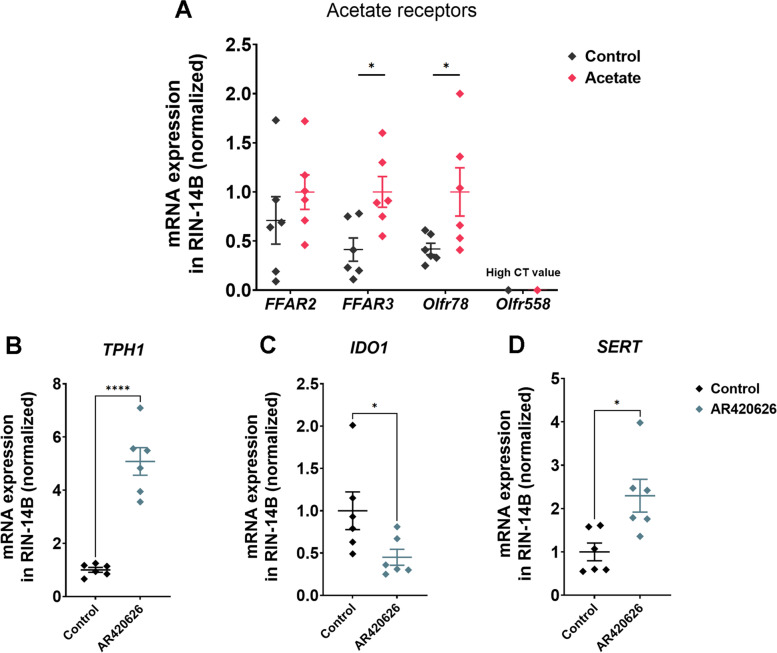
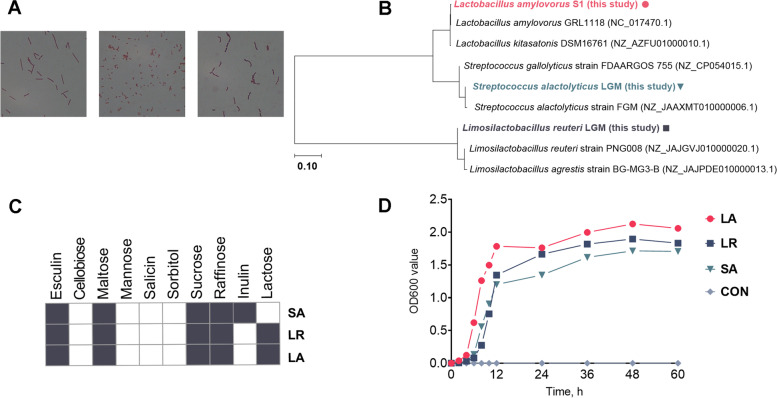
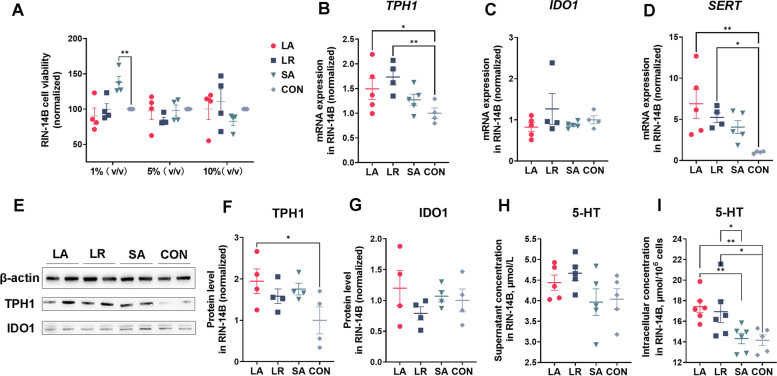
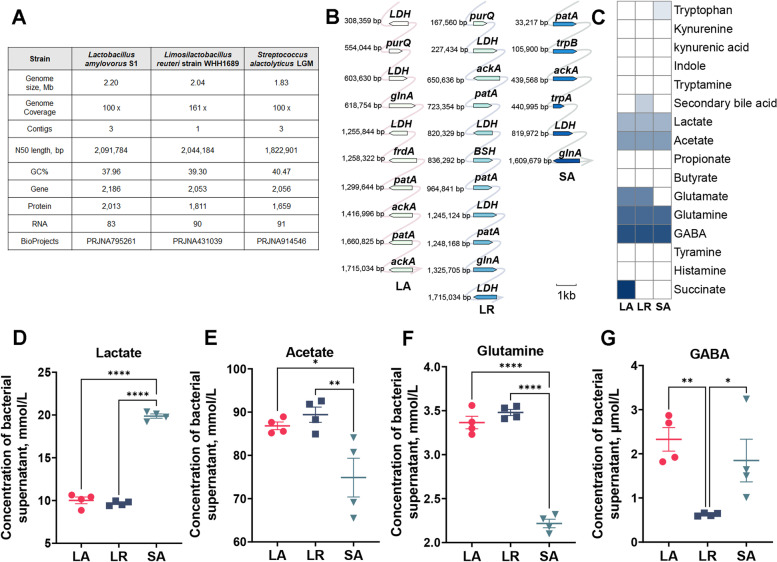
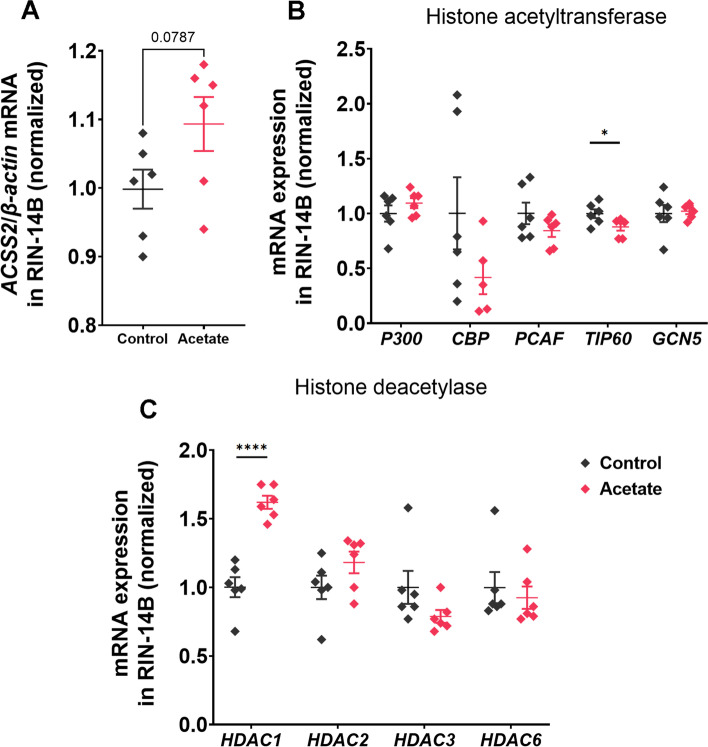
Antibiotic infusion increased quantities of Lactobacillus amylovorus (LA) that positively correlated with increased serotonin concentrations in the colon, while no effects observed for Limosilactobacillus reuteri (LR). To understand how microbes regulate serotonin, representative strains of LA, LR, and Streptococcus alactolyticus (SA, enriched in feces from prior observation) were selected for cell culture studies. Compared to the control group, LA, LR and SA supernatants significantly up-regulated tryptophan hydroxylase 1 (TPH1) expression and promoted serotonin production in IPEC-J2 cells, while in RIN-14B cells only LA exerted similar action. To investigate potential mechanisms mediated by microbe-derived molecules, microbial metabolites including lactate, acetate, glutamine, and γ-aminobutyric acid were selected for cell treatment based on computational and metabolite profiling in bacterial supernatant. Among these metabolites, acetate upregulated the expression of free fatty acid receptor 3 and TPH1 while downregulated indoleamine 2,3-dioxygenase 1. Similar effects were also recapitulated when treating the cells with AR420626, an agonist targeting free fatty acid receptor 3.
Overall, these results suggest that Lactobacillus amylovorus showed a positive correlation with serotonin production in the pig gut and exhibited a remarkable ability to regulate serotonin production in cell cultures. These findings provide evidence that microbial metabolites mediate the dialogue between microbes and host, which reveals a potential approach using microbial manipulation to regulate intestinal serotonin biosynthesis.
血清素是一种重要的信号分子,可调节肠道的分泌和感觉功能。在啮齿动物模型中,肠道微生物群已被证明会影响血清素的合成。然而,肠道微生物如何调节仔猪肠道血清素的产生仍不清楚。为了专门研究结肠中微生物群与血清素之间的关系,在回肠插管的仔猪中,通过回肠输注抗生素与输注生理盐水进行比较,分析了微生物组成和血清素浓度。从仔猪结肠中分离出与血清素产生呈正相关的微生物,并进一步用于研究其对IPEC-J2和假定的肠嗜铬细胞系RIN-14B细胞中血清素产生的调节机制。
抗生素输注增加了淀粉乳杆菌(LA)的数量,其与结肠中血清素浓度的增加呈正相关,而罗伊氏乳杆菌(LR)则未观察到影响。为了了解微生物如何调节血清素,选择了LA、LR和解乳糖链球菌(SA,先前观察发现其在粪便中富集)的代表性菌株进行细胞培养研究。与对照组相比,LA、LR和SA的上清液显著上调了色氨酸羟化酶1(TPH1)的表达,并促进了IPEC-J2细胞中血清素的产生,而在RIN-14B细胞中只有LA发挥了类似作用。为了研究微生物衍生分子介导的潜在机制,基于细菌上清液中的计算和代谢物谱分析,选择了包括乳酸、乙酸、谷氨酰胺和γ-氨基丁酸在内的微生物代谢物进行细胞处理。在这些代谢物中,乙酸上调了游离脂肪酸受体3和TPH1的表达,同时下调了吲哚胺2,3-双加氧酶1。用靶向游离脂肪酸受体3的激动剂AR420626处理细胞时,也观察到了类似的效果。
总体而言,这些结果表明淀粉乳杆菌与猪肠道中血清素的产生呈正相关,并在细胞培养中表现出显著的调节血清素产生的能力。这些发现提供了证据,表明微生物代谢物介导了微生物与宿主之间的对话,这揭示了一种利用微生物操纵来调节肠道血清素生物合成的潜在方法。