Zhou Jing, Wei Zixin, Yang Chuan, Jia Dexin, Pan Bo, Zeng Yuan, Sun Di, Yu Yan
Department of Radiation Oncology, Harbin Medical University Cancer Hospital, Harbin 150040, China.
Department of Medical Oncology, Sichuan Cancer Hospital, Chengdu 610042, China.
Transl Oncol. 2023 Oct;36:101749. doi: 10.1016/j.tranon.2023.101749. Epub 2023 Aug 4.
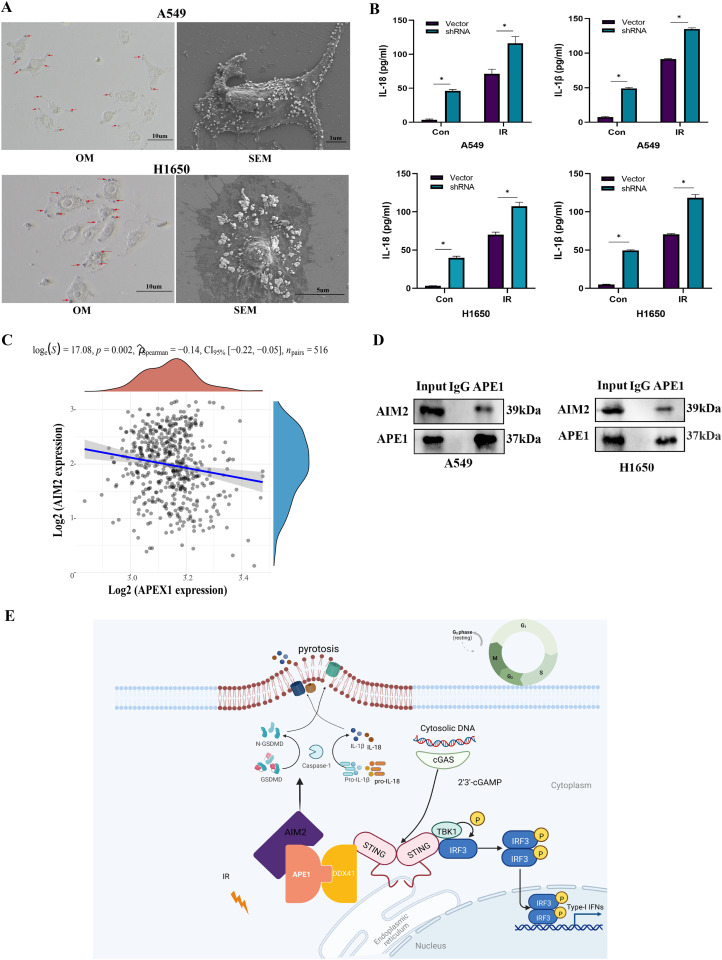
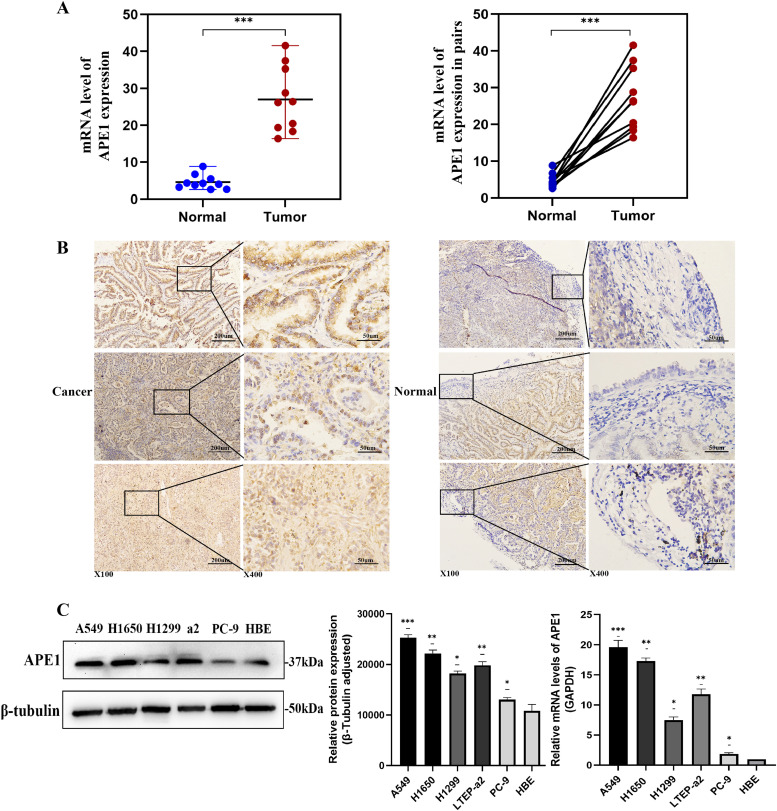
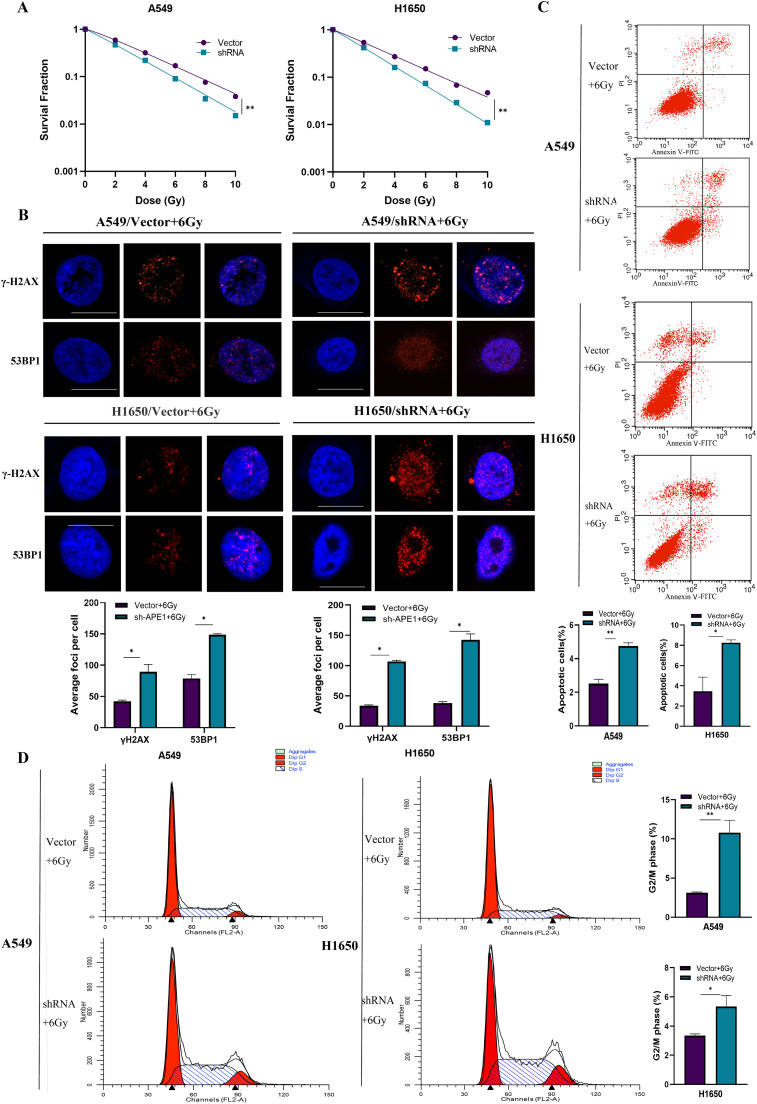
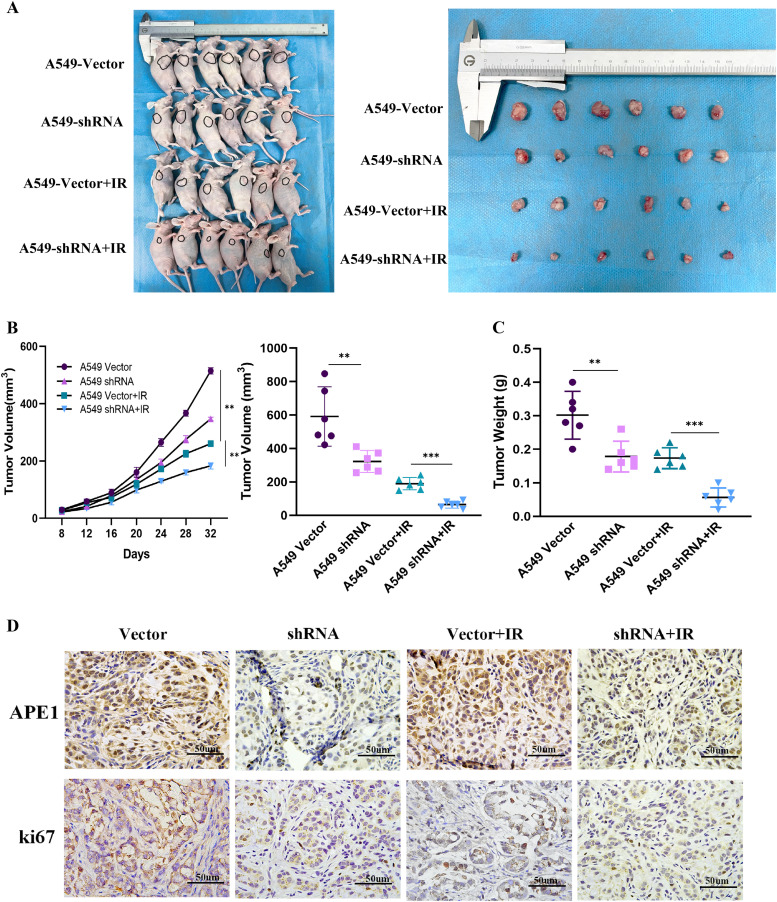
Mammalian apurinic/apyrimidinic endonuclease 1 (APE1, APEX1) is a multifunctional enzyme that maintains cellular homeostasis. It is involved in the base excision repair (BER) pathway and plays a key role in radiation-induced DNA damage response. However, the relationship between APE1-driven radiation resistance and pyroptosis in lung adenocarcinoma (LUAD) cells and the underlying molecular mechanisms remain unclear. We found that APE1 was significantly upregulated in LUAD tissues compared to para-carcinoma tissues and promoted the proliferation and invasion of LUAD cells in vitro and in vivo. Mechanistically, APE1 inhibited pyroptosis by inactivating the interferon gene stimulator (STING) pathway via direct interaction with AIM2 and DDX41, as detected by RNA-seq and co-immunoprecipitation. APE1 protects LUAD cells against radiation-induced damage and induces radio-resistance by targeting the STING pathway. It can induce pyroptosis and is negatively regulated by interactions with AIM2 and DDX41. Therefore, APE1 inhibitors should be considered to enhance the radiosensitivity of LUAD cells and improve patient prognosis and therapeutic outcomes. Thus, APE1 play a role in the tumor immune microenvironment and in tumor immunotherapy.
哺乳动物脱嘌呤/脱嘧啶内切酶1(APE1,APEX1)是一种维持细胞内稳态的多功能酶。它参与碱基切除修复(BER)途径,在辐射诱导的DNA损伤反应中起关键作用。然而,APE1驱动的肺癌(LUAD)细胞辐射抗性与焦亡之间的关系及其潜在分子机制仍不清楚。我们发现,与癌旁组织相比,APE1在LUAD组织中显著上调,并在体外和体内促进LUAD细胞的增殖和侵袭。机制上,通过RNA测序和免疫共沉淀检测发现,APE1通过与AIM2和DDX41直接相互作用使干扰素基因刺激物(STING)途径失活,从而抑制焦亡。APE1通过靶向STING途径保护LUAD细胞免受辐射诱导的损伤并诱导辐射抗性。它可以诱导焦亡,并通过与AIM2和DDX41的相互作用受到负调控。因此,应考虑使用APE1抑制剂来提高LUAD细胞的放射敏感性,改善患者预后和治疗效果。因此,APE1在肿瘤免疫微环境和肿瘤免疫治疗中发挥作用。