Doctoral Program in Biomedical Science, Faculty of Medicine, University of Indonesia, Jakarta, Indonesia.
National Research and Innovation Agency (BRIN), Eijkman Research Center for Molecular Biology, Cibinong, Indonesia.
Parasit Vectors. 2023 Aug 7;16(1):267. doi: 10.1186/s13071-023-05880-4.
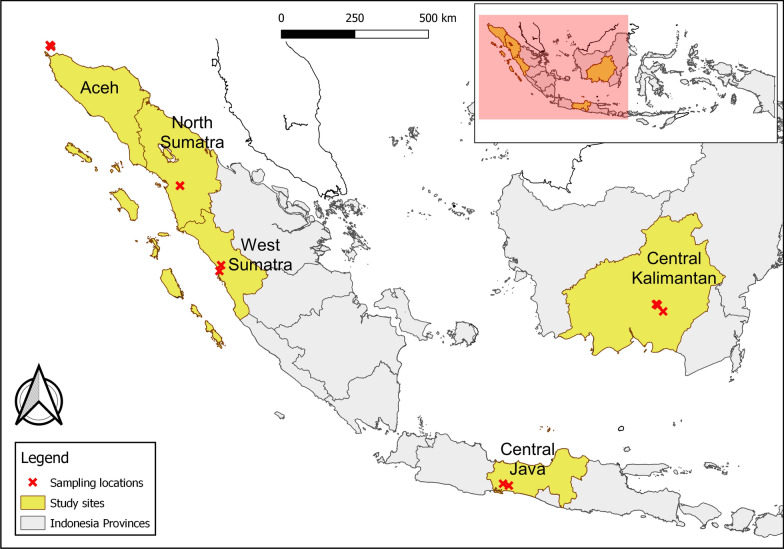
Indonesia is home to many species of non-human primates (NHPs). Deforestation, which is still ongoing in Indonesia, has substantially reduced the habitat of NHPs in the republic. This has led to an intensification of interactions between NHPs and humans, which opens up the possibility of pathogen spillover. The aim of the present study was to determine the prevalence of malarial parasite infections in NHPs in five provinces of Indonesia in 2022. Species of the genus Anopheles that can potentially transmit malarial pathogens to humans were also investigated.
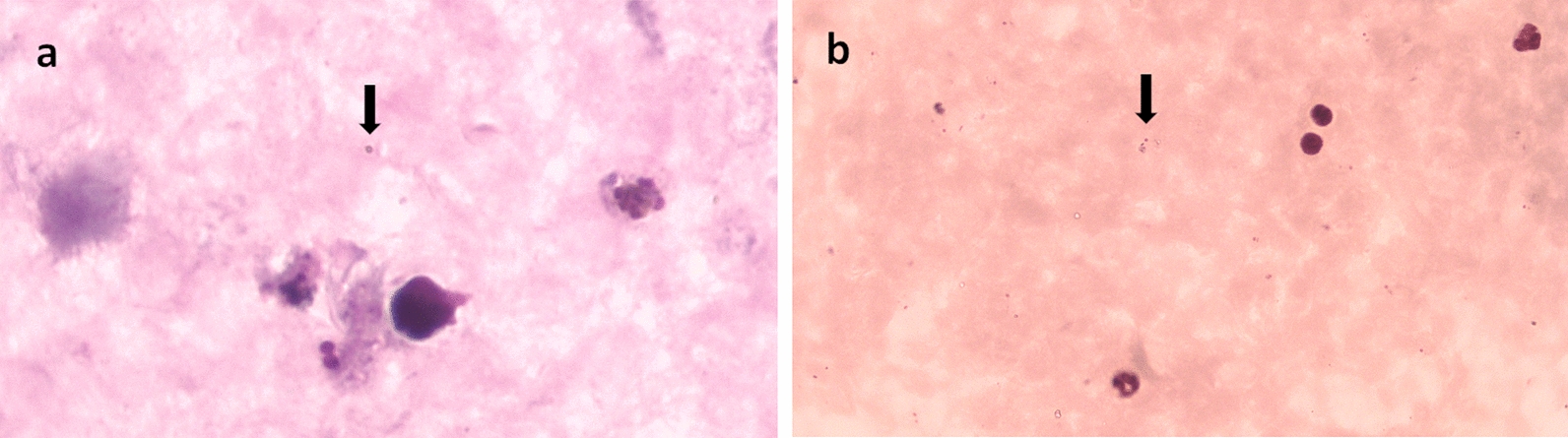
An epidemiological survey was conducted by capturing NHPs in traps installed in several localities in the five provinces, including in the surroundings of a wildlife sanctuary. Blood samples were drawn aseptically after the NHPs had been anesthetized; the animals were released after examination. Blood smears were prepared on glass slides, and dried blood spot tests on filter paper. Infections with Plasmodium spp. were determined morphologically from the blood smears, which were stained with Giemsa solution, and molecularly through polymerase chain reaction and DNA sequencing using rplU oligonucleotides. The NHPs were identified to species level by using the mitochondrial cytochrome c oxidase subunit I gene and the internal transcribed spacer 2 gene as barcoding DNA markers. Mosquito surveillance included the collection of larvae from breeding sites and that of adults through the human landing catch (HLC) method together with light traps.
Analysis of the DNA extracted from the dried blood spot tests of the 110 captured NHPs revealed that 50% were positive for Plasmodium, namely Plasmodium cynomolgi, Plasmodium coatneyi, Plasmodium inui, Plasmodium knowlesi and Plasmodium sp. Prevalence determined by microscopic examination of the blood smears was 42%. Species of the primate genus Macaca and family Hylobatidae were identified by molecular analysis. The most common mosquito breeding sites were ditches, puddles and natural ponds. Some of the Anopheles letifer captured through HLC carried sporozoites of malaria parasites that can cause the disease in primates.
The prevalence of malaria in the NHPs was high. Anopheles letifer, a potential vector of zoonotic malaria, was identified following its collection in Central Kalimantan by the HLC method. In sum, the potential for the transmission of zoonotic malaria in several regions of Indonesia is immense.
印度尼西亚是许多非人类灵长类动物(NHPs)的家园。印度尼西亚仍在进行的森林砍伐大大减少了该共和国 NHP 的栖息地。这导致了 NHPs 与人类之间的互动加剧,从而增加了病原体溢出的可能性。本研究的目的是确定 2022 年印度尼西亚五个省份 NHP 中疟疾寄生虫感染的流行率。还调查了可能将疟疾病原体传播给人类的按蚊属物种。
通过在五个省份的几个地点(包括野生动物保护区周围)安装的诱捕器捕获 NHP 进行了流行病学调查。在对 NHP 进行麻醉后无菌抽取血液样本;检查后释放动物。在玻璃载玻片上制备血涂片,并在滤纸干燥血斑上进行测试。通过吉姆萨溶液染色从血涂片形态学上确定感染了疟原虫属。通过聚合酶链反应和使用 rplU 寡核苷酸的 DNA 测序进行分子检测。使用线粒体细胞色素 c 氧化酶亚单位 I 基因和内部转录间隔区 2 基因作为条形码 DNA 标记,将 NHP 鉴定到种水平。蚊子监测包括从繁殖地点收集幼虫以及通过人类降落捕捉(HLC)方法和灯光陷阱收集成虫。
从 110 只捕获的 NHP 的干燥血斑测试中提取的 DNA 分析显示,50%的 NHP 对疟原虫呈阳性,即疟原虫属、疟原虫属、疟原虫属、疟原虫属和疟原虫属。通过血涂片的显微镜检查确定的患病率为 42%。通过分子分析鉴定了灵长类动物属 Macaca 和长臂猿科的物种。最常见的蚊子繁殖地是沟渠、水坑和天然池塘。通过 HLC 捕获的一些按蚊携带可引起灵长类动物发病的疟原虫孢子。
NHP 中疟疾的流行率很高。通过 HLC 方法在中加里曼丹采集到的潜在人类疟疾病媒按蚊属。总之,印度尼西亚几个地区发生人畜共患疟疾传播的潜力巨大。