Department of Neurosciences 'Rita Levi Montalcini', University of Turin, Turin, Italy.
Piedmont Centre for Drug Addiction Epidemiology, ASL TO3, Grugliasco, Turin, Italy.
Soc Psychiatry Psychiatr Epidemiol. 2024 Jun;59(6):1039-1051. doi: 10.1007/s00127-023-02544-7. Epub 2023 Aug 8.
Suicide attempters are at high risk of premature death, both for suicide and for non-suicidal causes. The aim of this study is to investigate risk factors and temporal span for mortality in a cohort of cases admitted to hospital for suicide attempt.
The cohort included 1489 patients resident in Piedmont Region, North West of Italy, who had been admitted to hospital or emergency department for suicide attempt between 2010 and 2020. Cox regression models were used to identify risk factors for death. The final multivariate model included gender, age, area deprivation index, family composition, psychiatric disorders, malignant neoplasms, neurological disorders, diabetes mellitus, cardiovascular diseases, chronic obstructive pulmonary disease, and intracranial injury or skull fracture.
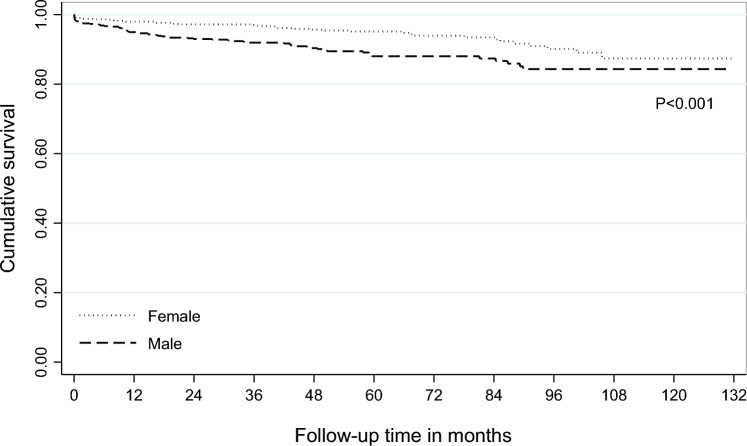
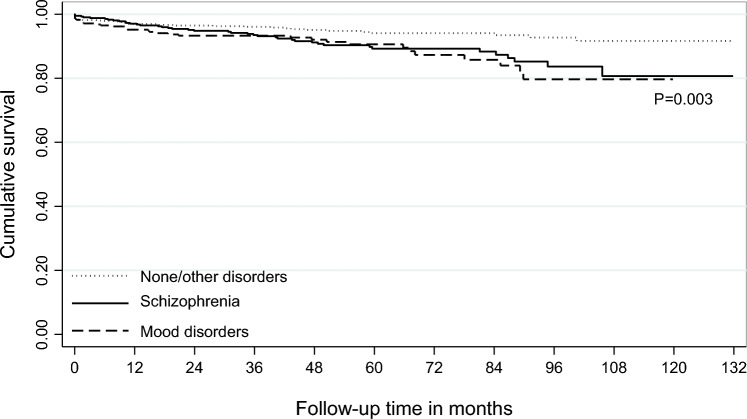
During the observation period, 7.3% of patients died. The highest mortality was observed within the first 12 months after suicide attempt, and remained elevated for many years afterwards. Male gender, older age, high deprivation index of the census area, single-parent family, mood disorders, malignant neoplasms, diabetes mellitus and intracranial injuries or skull fracture were independent predictors of death. Risk factors for natural and unnatural causes of death were also identified.
The mortality risk of suicide attempters is very high, both in the months immediately following the attempt and afterwards. The identification of high-risk groups can help to plan outpatient care following the hospital discharge. Our findings urge the need to design strategies for the assistance and care of these patients at long term in order to reduce the unfavourable outcomes.
自杀未遂者有很高的早逝风险,包括自杀和非自杀原因。本研究旨在调查因自杀未遂而住院的病例队列的死亡风险因素和时间跨度。
该队列包括 1489 名居住在意大利西北部皮埃蒙特地区的患者,他们在 2010 年至 2020 年间因自杀未遂被送往医院或急诊室。使用 Cox 回归模型来确定死亡的风险因素。最终的多变量模型包括性别、年龄、地区贫困指数、家庭构成、精神障碍、恶性肿瘤、神经障碍、糖尿病、心血管疾病、慢性阻塞性肺疾病以及颅内损伤或颅骨骨折。
在观察期间,7.3%的患者死亡。自杀未遂后 12 个月内死亡率最高,并且在随后的多年中仍保持较高水平。男性、年龄较大、所在普查区贫困指数较高、单亲家庭、情绪障碍、恶性肿瘤、糖尿病和颅内损伤或颅骨骨折是死亡的独立预测因素。还确定了自然和非自然原因死亡的风险因素。
自杀未遂者的死亡率非常高,无论是在未遂后的几个月内还是之后。识别高风险群体有助于计划出院后的门诊护理。我们的研究结果表明,需要制定长期援助和照顾这些患者的策略,以降低不良后果。