Center for Brain Science, Harvard University, Cambridge, MA 02138.
F.M. Kirby Neurobiology Center, Boston Children's Hospital, Boston, MA 02115.
Proc Natl Acad Sci U S A. 2023 Aug 22;120(34):e2306153120. doi: 10.1073/pnas.2306153120. Epub 2023 Aug 11.
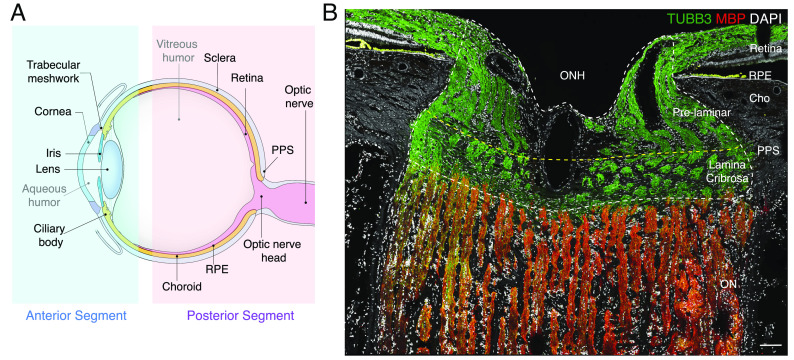
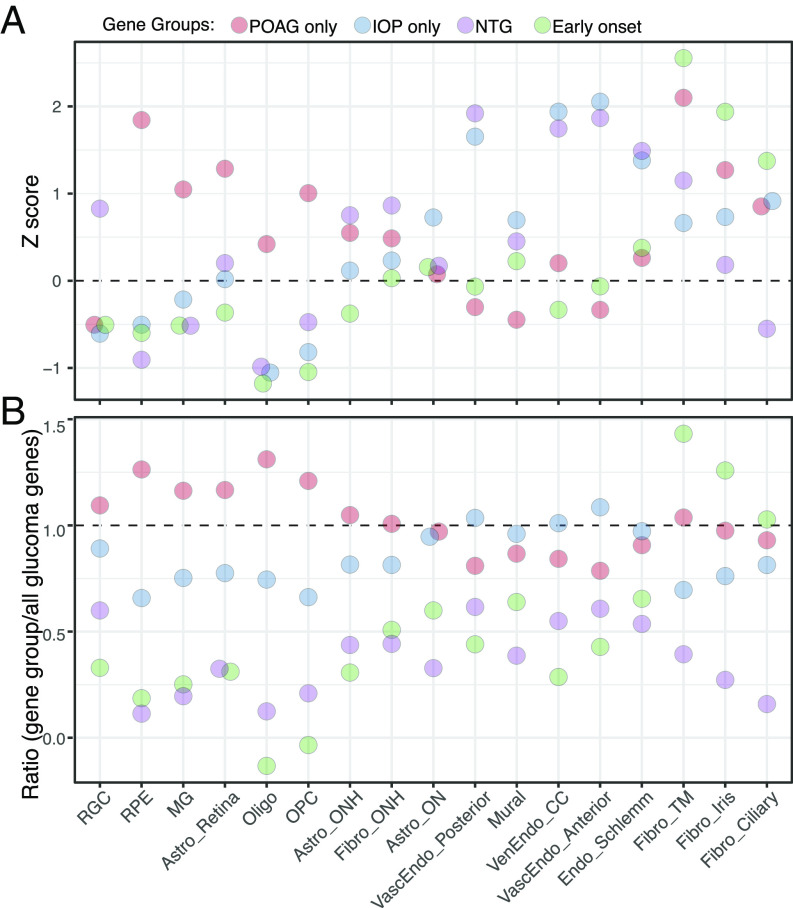
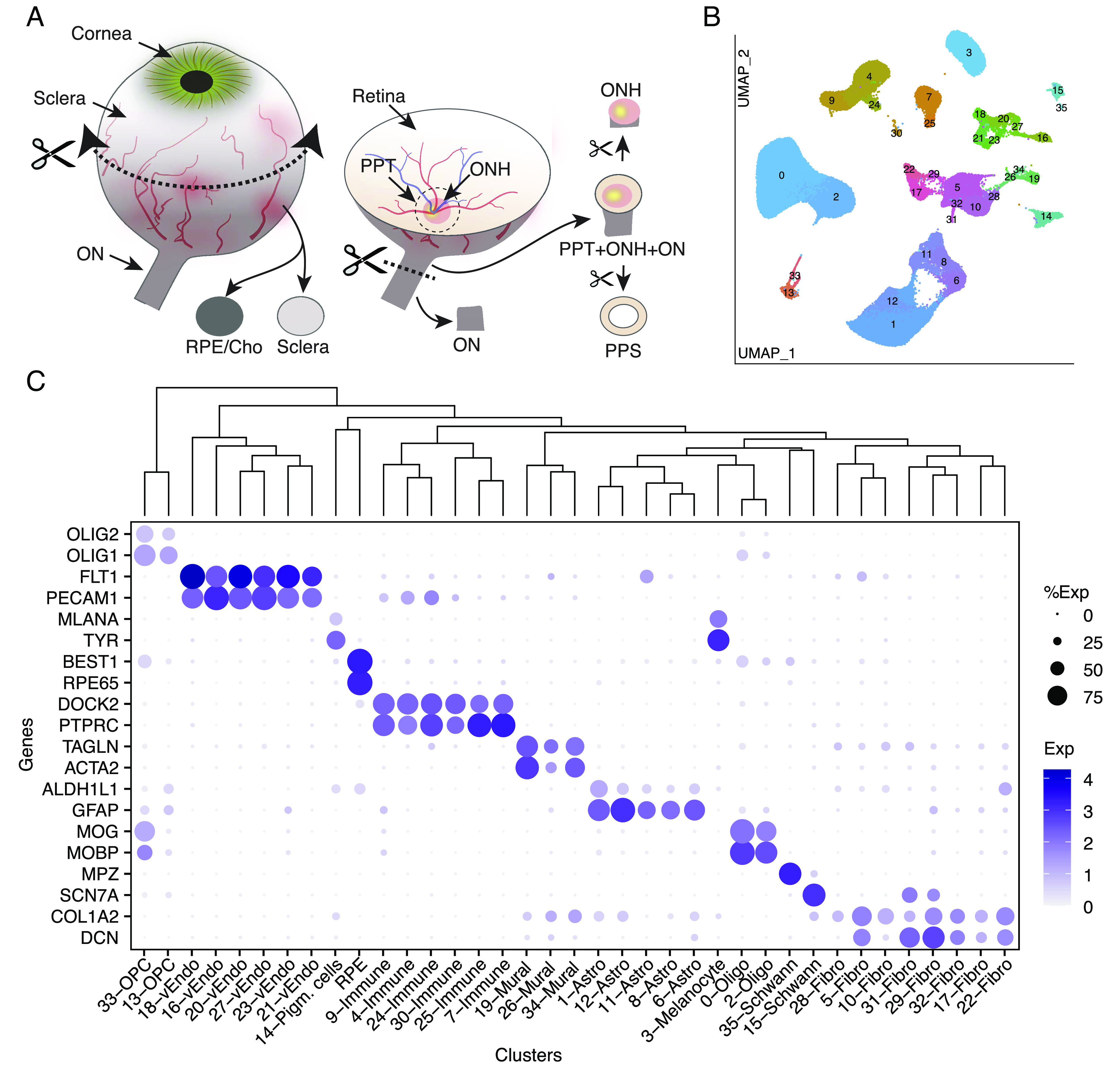
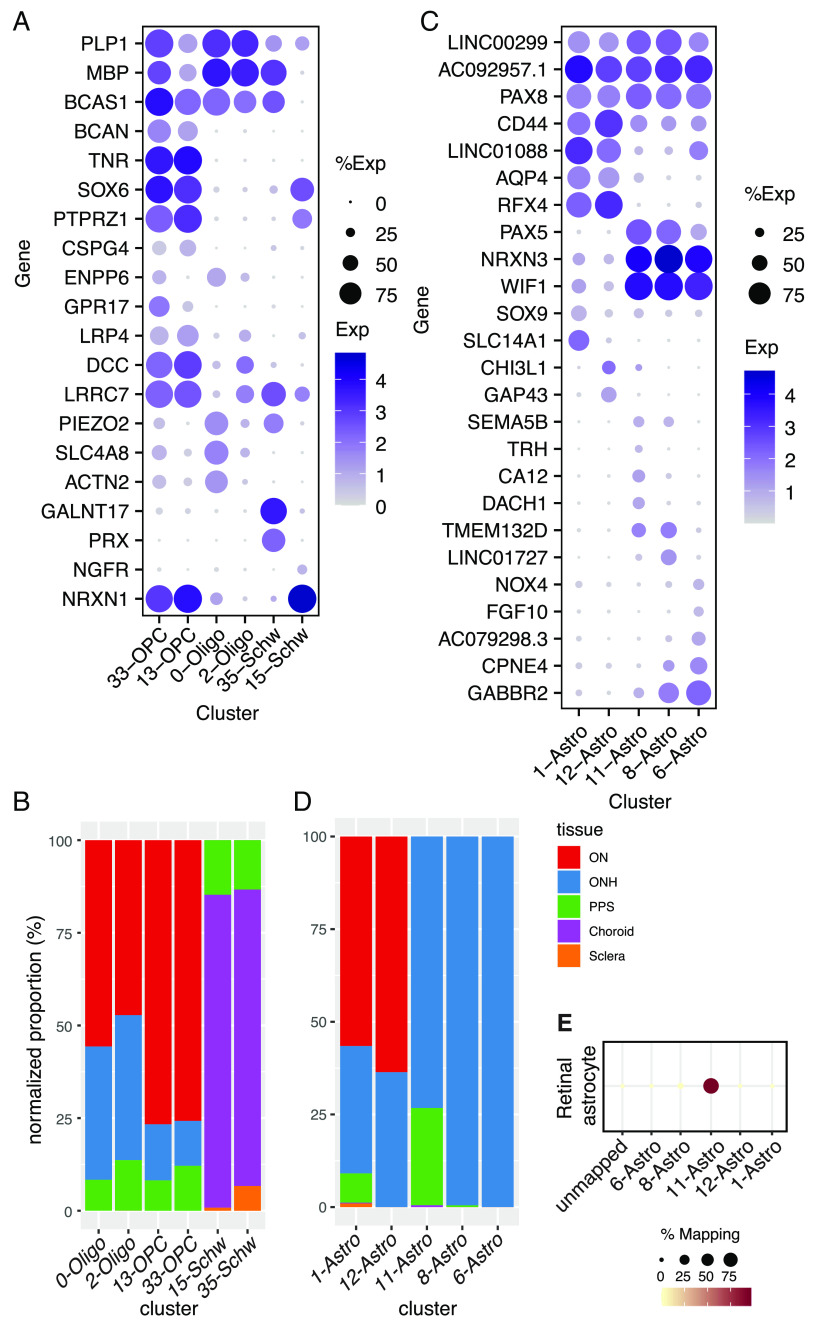
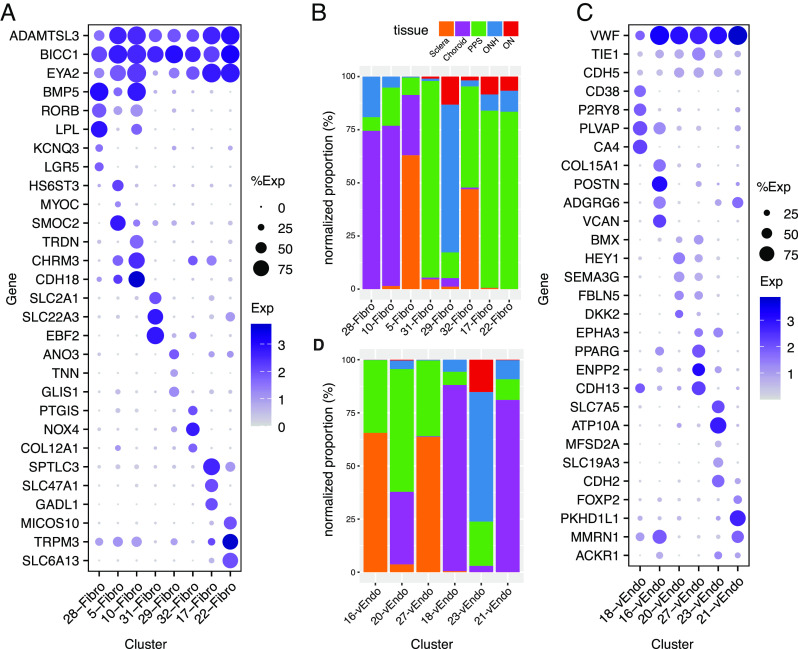
Although the visual system extends through the brain, most vision loss originates from defects in the eye. Its central element is the neural retina, which senses light, processes visual signals, and transmits them to the rest of the brain through the optic nerve (ON). Surrounding the retina are numerous other structures, conventionally divided into anterior and posterior segments. Here, we used high-throughput single-nucleus RNA sequencing (snRNA-seq) to classify and characterize cells in six extraretinal components of the posterior segment: ON, optic nerve head (ONH), peripheral sclera, peripapillary sclera (PPS), choroid, and retinal pigment epithelium (RPE). Defects in each of these tissues are associated with blinding diseases-for example, glaucoma (ONH and PPS), optic neuritis (ON), retinitis pigmentosa (RPE), and age-related macular degeneration (RPE and choroid). From ~151,000 single nuclei, we identified 37 transcriptomically distinct cell types, including multiple types of astrocytes, oligodendrocytes, fibroblasts, and vascular endothelial cells. Our analyses revealed a differential distribution of many cell types among distinct structures. Together with our previous analyses of the anterior segment and retina, the data presented here complete a "Version 1" cell atlas of the human eye. We used this atlas to map the expression of >180 genes associated with the risk of developing glaucoma, which is known to involve ocular tissues in both anterior and posterior segments as well as the neural retina. Similar methods can be used to investigate numerous additional ocular diseases, many of which are currently untreatable.
虽然视觉系统延伸到大脑,但大多数视力丧失都源于眼睛的缺陷。它的核心元素是神经视网膜,它感知光线,处理视觉信号,并通过视神经(ON)将它们传输到大脑的其他部分。视网膜周围有许多其他结构,传统上分为前段和后段。在这里,我们使用高通量单细胞 RNA 测序(snRNA-seq)对后段的六个眼外组织中的细胞进行分类和特征描述:视神经(ON)、视神经头(ONH)、周围巩膜、视盘周围巩膜(PPS)、脉络膜和视网膜色素上皮(RPE)。这些组织中的每一个组织的缺陷都与致盲性疾病有关,例如青光眼(ONH 和 PPS)、视神经炎(ON)、视网膜色素变性(RPE)和年龄相关性黄斑变性(RPE 和脉络膜)。从大约 151000 个单个核中,我们鉴定出 37 种转录上不同的细胞类型,包括多种类型的星形胶质细胞、少突胶质细胞、成纤维细胞和血管内皮细胞。我们的分析显示,许多细胞类型在不同结构中的分布存在差异。结合我们以前对前段和视网膜的分析,这里提供的数据完成了人类眼睛的“版本 1”细胞图谱。我们使用该图谱来绘制与青光眼风险相关的>180 个基因的表达图谱,已知青光眼涉及前段和后段的眼部组织以及神经视网膜。类似的方法可用于研究许多其他眼部疾病,其中许多目前尚无治疗方法。