Giannopapas Vasileios, Palaiodimou Lina, Kitsos Dimitrios, Papagiannopoulou Georgia, Stavrogianni Konstantina, Chasiotis Athanasios, Kosmidou Maria, Tzartos John S, Paraskevas George P, Bakalidou Daphne, Tsivgoulis Georgios, Giannopoulos Sotirios
Second Department of Neurology, Attikon University Hospital, School of Medicine, National & Kapodistrian University of Athens, 15784 Athens, Greece.
Physical Therapy Department, University of West Attica, 12210 Athens, Greece.
J Clin Med. 2023 Jul 27;12(15):4948. doi: 10.3390/jcm12154948.
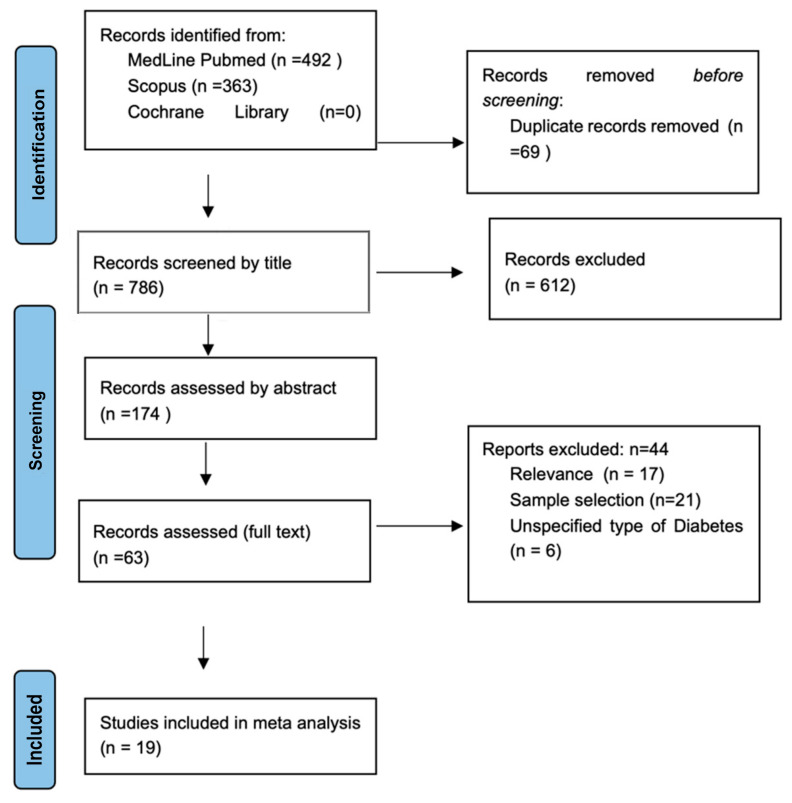
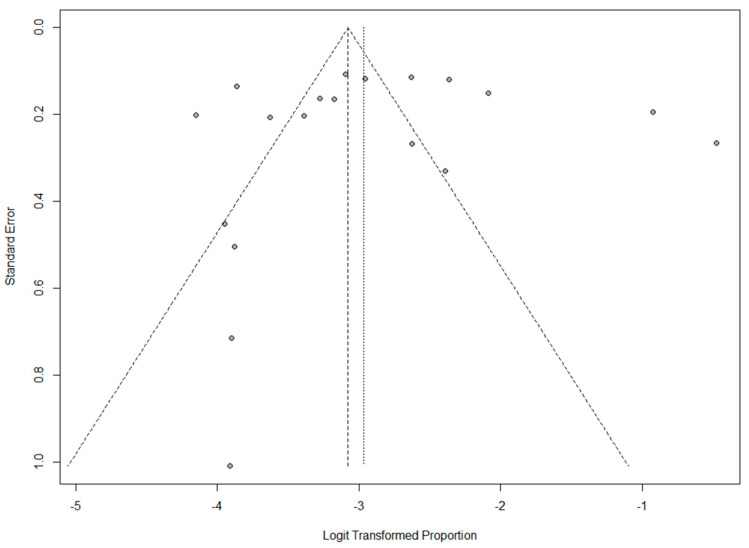
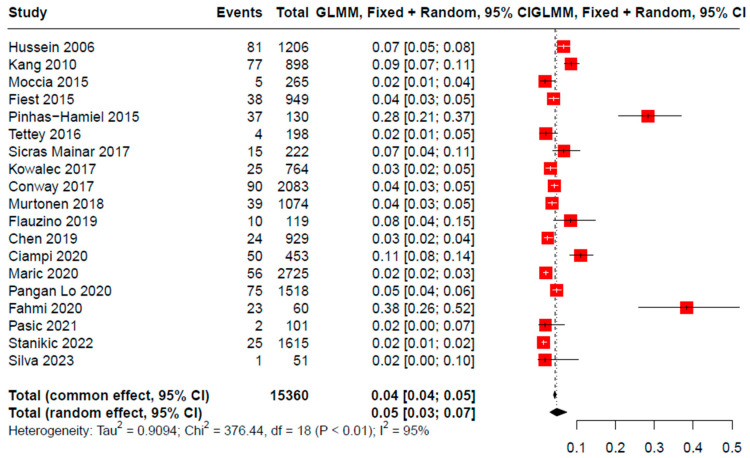
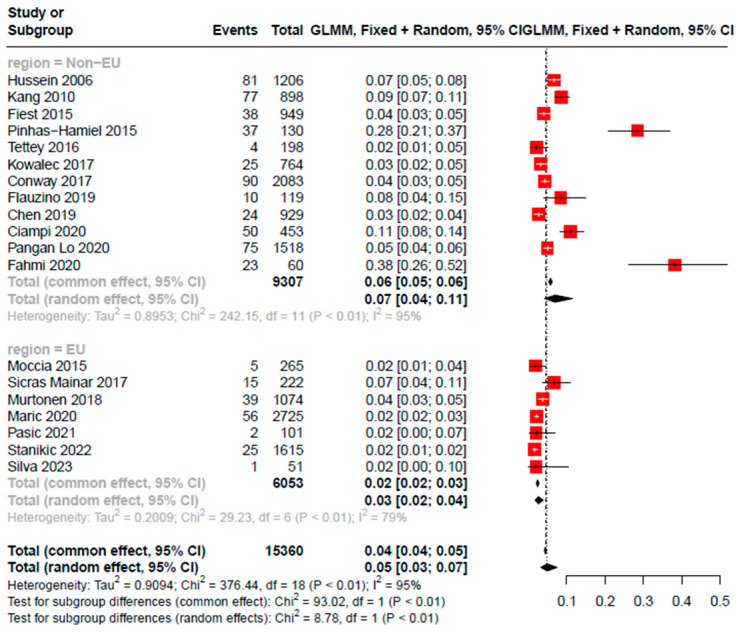
: The interactions between Diabetes Mellitus type II (DMII) and Multiple Sclerosis (MS) lead to higher levels of fatigue, higher risk of physical disability, faster cognitive decline, and in general a lower quality of life and a higher frequency of depression compared to the general population. All of the above accelerate the disability progression of patients with MS, reduce the patients' functional capacity, and further increase their psychological and economic burden. : This systematic review and meta-analysis aims to calculate the prevalence of DMII in the MS population. Following PRISMA guidelines, a thorough search of the Medline Pubmed, Cochrane Library, and Scopus databases was performed, focusing on the frequency of DMII in the MS population. : A total of 19 studies were included in the synthesis. The results of the main meta-analysis of random effects using R studio 3.3.0 for Windows and the Meta r package showed that the prevalence of DMII in the MS population is 5% (95% CI [0.03, 0.07], 19 studies, I = 95%, p < 0.001). Additional subgroup analysis based on region showed a difference of 4.4% (I = 95.2%, p < 0.001), p = 0.003) between European and non-European participants, while demographic- and MS-specific characteristic (EDSS, Disease Duration) did not seem to affect the prevalence of DMII in the MS population ( = 0.30, = 0.539, = 0.19, = 0.838). No publication bias was discovered (Egger's test value: 0.896). : Even though the prevalence of DMII in the MS population is lower than 10% (the reported prevalence of DMII in the general population) the interactions between the two conditions create significant challenges for MS patients, their caregivers, and physicians. DΜΙΙ should be systematically recorded in the case of MS patients to clearly delineate any potential relationship between the two conditions. Additionally, more structured studies investigating the interactions of MS and DMΙΙ as well as the direction of the causation between those two conditions are necessary in order to gain a deeper insight into the nature of the interaction between MS and DMII.
与普通人群相比,2型糖尿病(DMII)与多发性硬化症(MS)之间的相互作用导致更高程度的疲劳、更高的身体残疾风险、更快的认知衰退,总体而言生活质量更低且抑郁发生率更高。上述所有情况都会加速MS患者的残疾进展,降低患者的功能能力,并进一步增加其心理和经济负担。
本系统评价和荟萃分析旨在计算MS人群中DMII的患病率。按照PRISMA指南,对Medline Pubmed、Cochrane图书馆和Scopus数据库进行了全面检索,重点关注MS人群中DMII的发生率。
共有19项研究纳入该综合分析。使用适用于Windows的R studio 3.3.0和Meta r软件包进行的随机效应主要荟萃分析结果显示,MS人群中DMII的患病率为5%(95%CI[0.03, 0.07],19项研究,I = 95%,p < 0.001)。基于地区的额外亚组分析显示,欧洲和非欧洲参与者之间存在4.4%的差异(I = 95.2%,p < 0.001,p = 0.003),而人口统计学和特定于MS的特征(扩展残疾状态量表[EDSS]、疾病持续时间)似乎并未影响MS人群中DMII的患病率(p = 0.30,p = 0.539,p = 0.19,p = 0.838)。未发现发表偏倚(Egger检验值:0.896)。
尽管MS人群中DMII的患病率低于10%(普通人群中报告的DMII患病率),但这两种疾病之间的相互作用给MS患者、其护理人员和医生带来了重大挑战。对于MS患者,应系统记录DMII情况,以明确界定这两种疾病之间的任何潜在关系。此外,需要开展更具系统性的研究,调查MS与DMII的相互作用以及这两种疾病之间因果关系的方向,以便更深入地了解MS与DMII之间相互作用的本质。