Department of Morphological and Functional Science, University of Medicine and Pharmacy Dunarea de Jos, Str. Alexandru Ioan Cuza No. 36, 800017 Galati, Romania.
Laboratory of Structural and Computational Physical-Chemistry for Nanosciences and QSAR, Biology-Chemistry Department, Faculty of Chemistry, Biology, Geography, West University of Timisoara, Str. Pestalozzi No. 16, 300115 Timisoara, Romania.
Int J Mol Sci. 2023 Jul 27;24(15):12058. doi: 10.3390/ijms241512058.
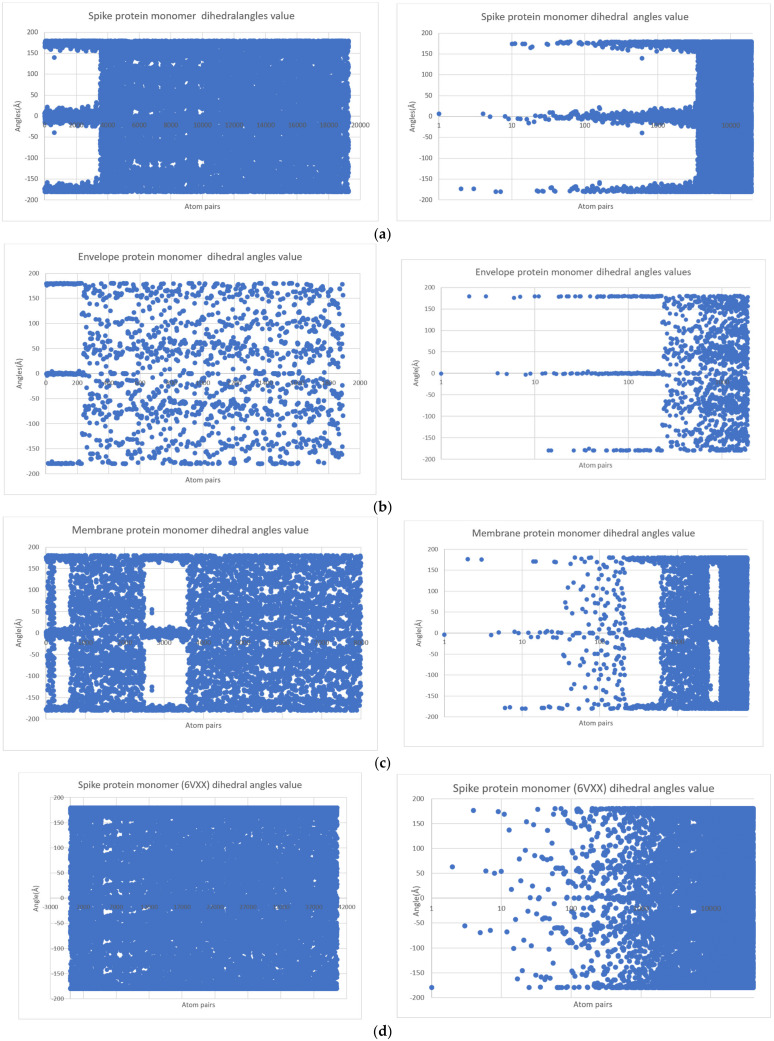
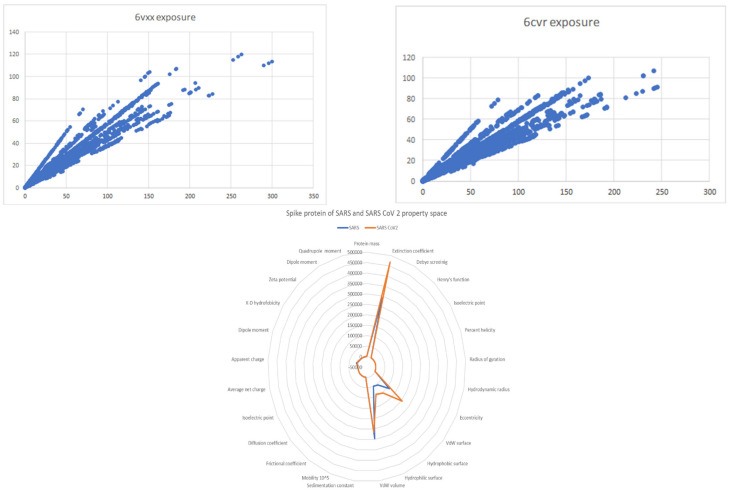
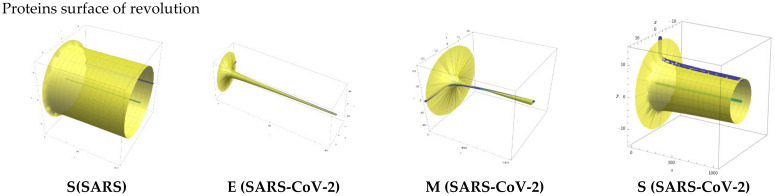
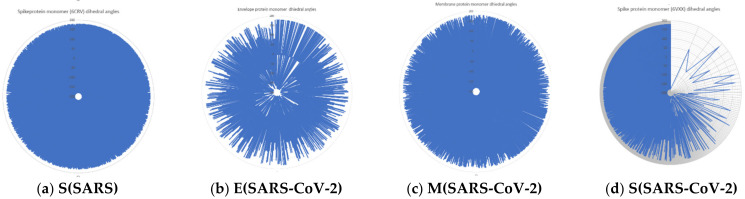
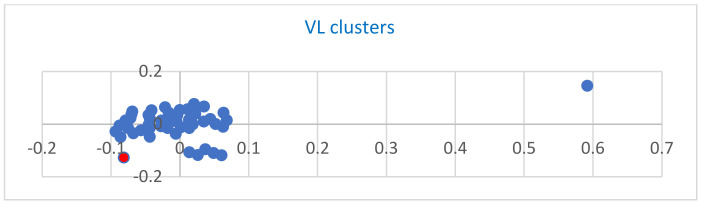
Severe acute respiratory syndrome coronavirus 2 (SARS-CoV-2) is a +sense single-strand RNA virus. The virus has four major surface proteins: spike (S), envelope (E), membrane (M), and nucleocapsid (N), respectively. The constitutive proteins present a high grade of symmetry. Identifying a binding site is difficult. The virion is approximately 50-200 nm in diameter. Angiotensin-converting enzyme 2 (ACE2) acts as the cell receptor for the virus. SARS-CoV-2 has an increased affinity to human ACE2 compared with the original SAR strain. Topological space, and its symmetry, is a critical component in molecular interactions. By exploring this space, a suitable ligand space can be characterized accordingly. A spike protein (S) computational model in a complex with ACE 2 was generated using silica methods. Topological spaces were probed using high computational throughput screening techniques to identify and characterize the topological space of both SARS and SARS-CoV-2 spike protein and its ligand space. In order to identify the symmetry clusters, computational analysis techniques, together with statistical analysis, were utilized. The computations are based on crystallographic protein data bank PDB-based models of constitutive proteins. Cartesian coordinates of component atoms and some cluster maps were generated and analyzed. Dihedral angles were used in order to compute a topological receptor space. This computational study uses a multimodal representation of spike protein interactions with some fragment proteins. The chemical space of the receptors (a dimensional volume) suggests the relevance of the receptor as a drug target. The spike protein S of SARS and SARS-CoV-2 is analyzed and compared. The results suggest a mirror symmetry of SARS and SARS-CoV-2 spike proteins. The results show thatSARS-CoV-2 space is variable and has a distinct topology. In conclusion, surface proteins grant virion variability and symmetry in interactions with a potential complementary target (protein, antibody, ligand). The mirror symmetry of dihedral angle clusters determines a high specificity of the receptor space.
严重急性呼吸综合征冠状病毒 2(SARS-CoV-2)是一种正链单链 RNA 病毒。该病毒有四个主要的表面蛋白:刺突(S)、包膜(E)、膜(M)和核衣壳(N)。组成蛋白呈现高度的对称性。识别结合位点较为困难。病毒粒子的直径约为 50-200nm。血管紧张素转化酶 2(ACE2)是病毒的细胞受体。与原始 SARS 株相比,SARS-CoV-2 对人 ACE2 的亲和力增加。拓扑空间及其对称性是分子相互作用的关键组成部分。通过探索这一空间,可以相应地对合适的配体空间进行特征描述。利用硅烷方法生成与 ACE2 复合的刺突蛋白(S)计算模型。利用高计算通量筛选技术探测拓扑空间,以识别和描述 SARS 和 SARS-CoV-2 刺突蛋白及其配体空间的拓扑空间。为了识别对称群,采用计算分析技术,结合统计分析。计算基于晶体学蛋白质数据库 PDB 中的组成蛋白模型。生成并分析了组成原子的笛卡尔坐标和一些聚类图。使用二面角来计算拓扑受体空间。这项计算研究使用了一种多模态表示方法,用于分析刺突蛋白与一些片段蛋白的相互作用。受体的化学空间(一个维度的体积)表明受体作为药物靶点的相关性。分析并比较了 SARS 和 SARS-CoV-2 的刺突蛋白 S。结果表明 SARS 和 SARS-CoV-2 刺突蛋白存在镜像对称。结果表明,SARS-CoV-2 空间是可变的,具有独特的拓扑结构。总之,表面蛋白使病毒粒子在与潜在互补靶标(蛋白质、抗体、配体)相互作用时具有变异性和对称性。二面角簇的镜像对称决定了受体空间的高度特异性。