Guangdong Provincial Key Laboratory of Animal Molecular Design and Precise Breeding, College of Life Science and Engineering, Foshan University, Foshan, China.
School of Life Science and Engineering, Foshan University, Guangdong, China.
Microbiome. 2023 Aug 14;11(1):180. doi: 10.1186/s40168-023-01603-0.
The gut microbiota of the giant panda (Ailuropoda melanoleuca), a global symbol of conservation, are believed to be involved in the host's dietary switch to a fibrous bamboo diet. However, their exact roles are still largely unknown.
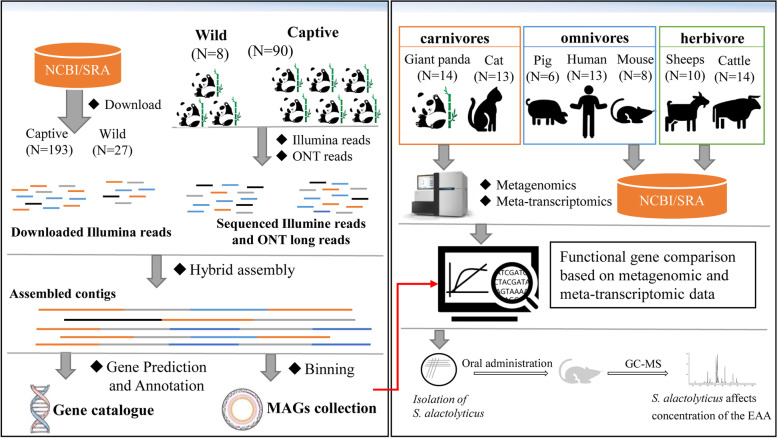
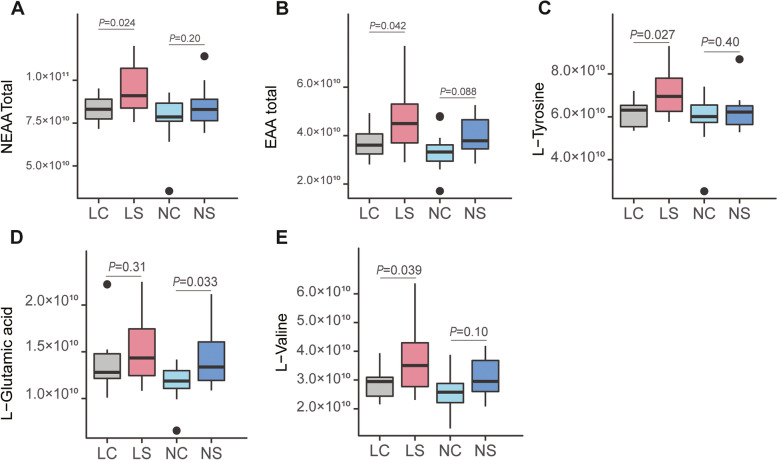
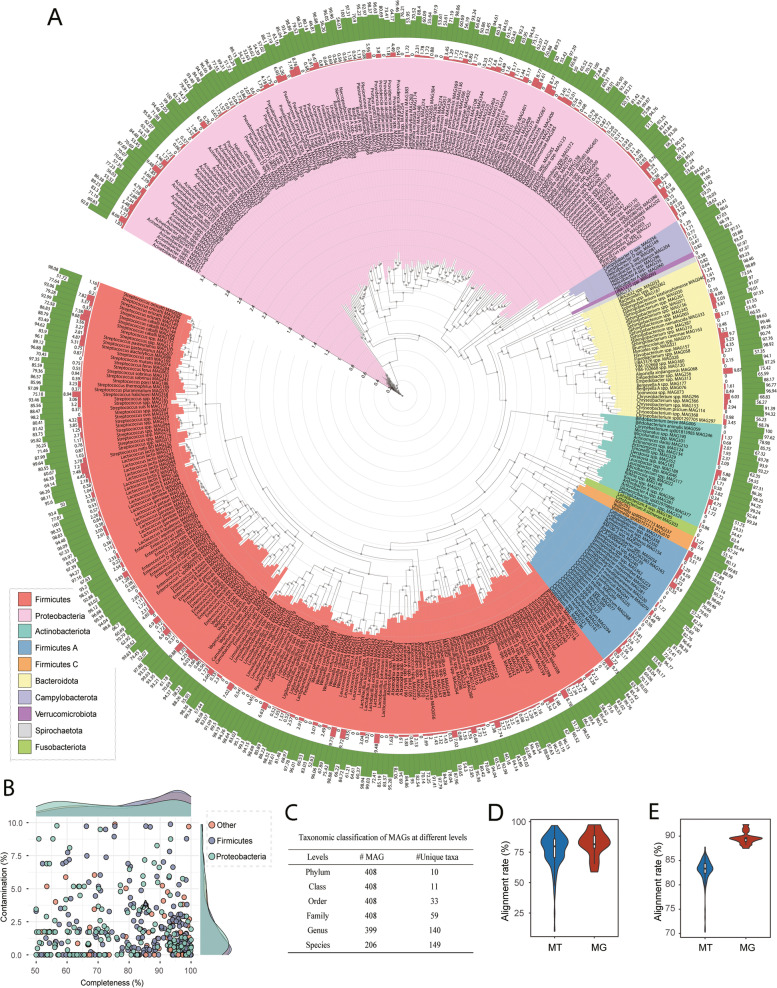
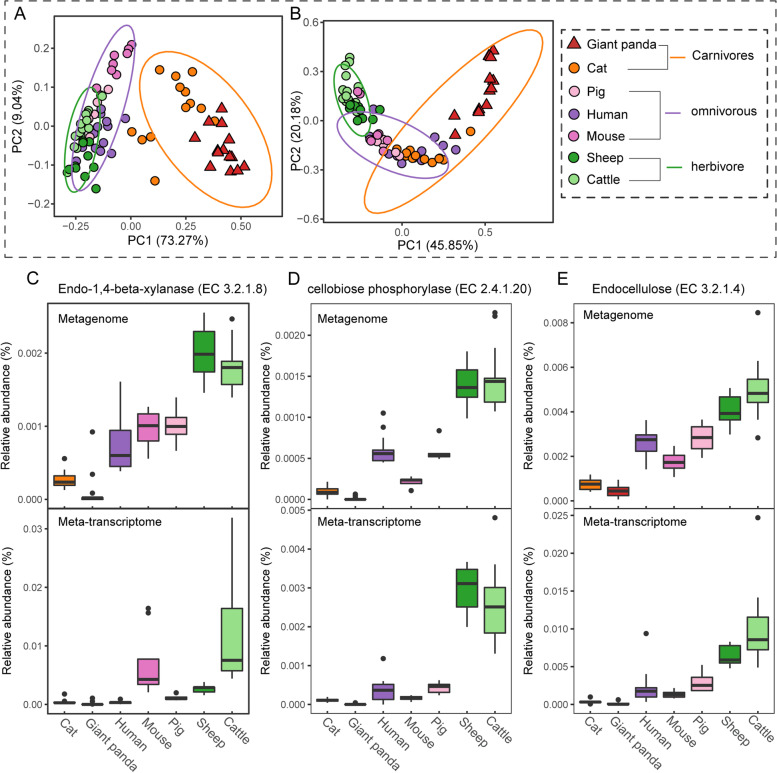
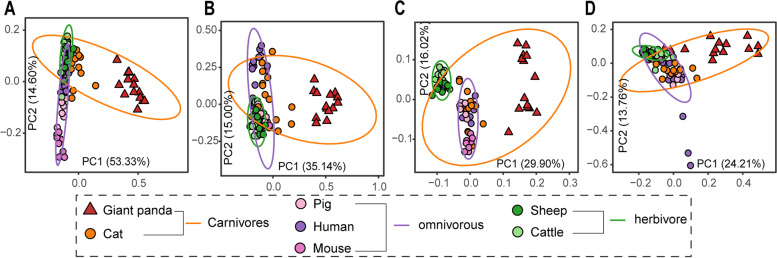
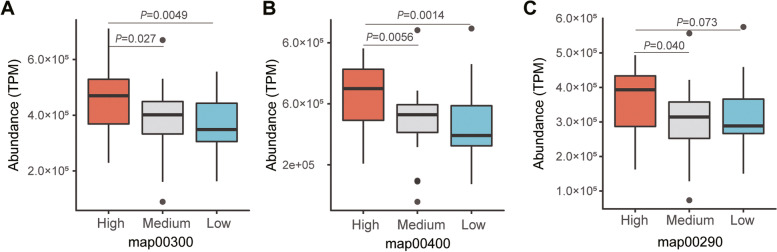
In this study, we first comprehensively analyzed a large number of gut metagenomes giant pandas (n = 322), including 98 pandas sequenced in this study with deep sequencing (Illumina) and third-generation sequencing (nanopore). We reconstructed 408 metagenome-assembled genomes (MAGs), and 148 of which (36.27%) were near complete. The most abundant MAG was classified as Streptococcus alactolyticus. A pairwise comparison of the metagenomes and meta-transcriptomes in 14 feces revealed genes involved in carbohydrate metabolism were lower, but those involved in protein metabolism were greater in abundance and expression in giant pandas compared to those in herbivores and omnivores. Of note, S. alactolyticus was positively correlated to the KEGG modules of essential amino-acid biosynthesis. After being isolated from pandas and gavaged to mice, S. alactolyticus significantly increased the relative abundance of essential amino acids in mice jejunum.
The study highlights the unique protein metabolic profiles in the giant panda's gut microbiome. The findings suggest that S. alactolyticus is an important player in the gut microbiota that contributes to the giant panda's dietary adaptation by more involvement in protein rather than carbohydrate metabolism. Video Abstract.
大熊猫(Ailuropoda melanoleuca)是全球保护的象征,其肠道微生物群被认为参与了宿主从纤维性竹子饮食的转变。然而,它们的确切作用在很大程度上仍然未知。
在这项研究中,我们首先全面分析了大量的大熊猫肠道宏基因组(n=322),其中包括本研究中通过深度测序(Illumina)和第三代测序(nanopore)测序的 98 只大熊猫。我们重建了 408 个宏基因组组装基因组(MAG),其中 148 个(36.27%)接近完整。最丰富的 MAG 被分类为唾液链球菌(Streptococcus alactolyticus)。对 14 个粪便中的宏基因组和宏转录组进行成对比较发现,与食草动物和杂食动物相比,大熊猫肠道中参与碳水化合物代谢的基因丰度较低,但参与蛋白质代谢的基因丰度和表达较高。值得注意的是,唾液链球菌与必需氨基酸生物合成的 KEGG 模块呈正相关。从大熊猫中分离出来并灌胃给小鼠后,唾液链球菌显著增加了小鼠空肠中必需氨基酸的相对丰度。
该研究强调了大熊猫肠道微生物组中独特的蛋白质代谢特征。研究结果表明,唾液链球菌是肠道微生物群中的一个重要成员,通过更多地参与蛋白质而不是碳水化合物代谢,有助于大熊猫的饮食适应。