Environmental Chemistry Laboratory, School of Architecture, Civil and Environmental Engineering, Ecole Polytechnique Fédérale de Lausanne (EPFL) , Lausanne, Switzerland.
Protein Platform, Faculty of Medicine, University of Geneva , Geneva, Switzerland.
mSphere. 2023 Oct 24;8(5):e0022623. doi: 10.1128/msphere.00226-23. Epub 2023 Aug 18.
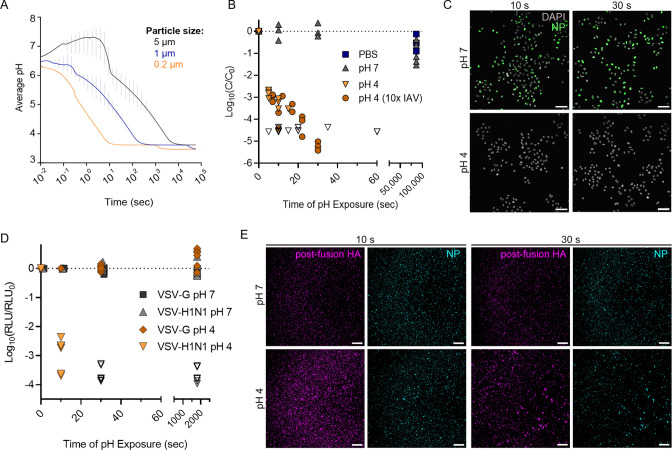
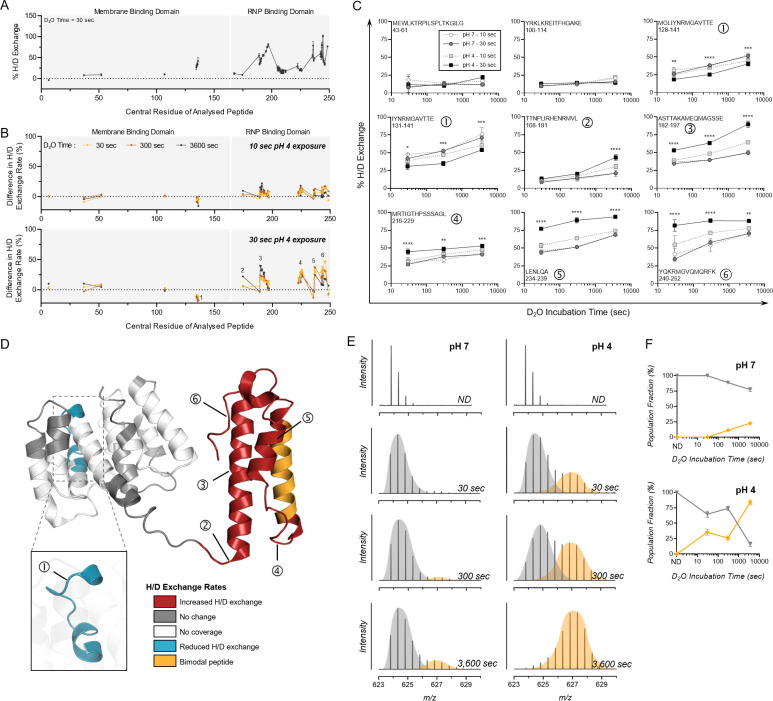
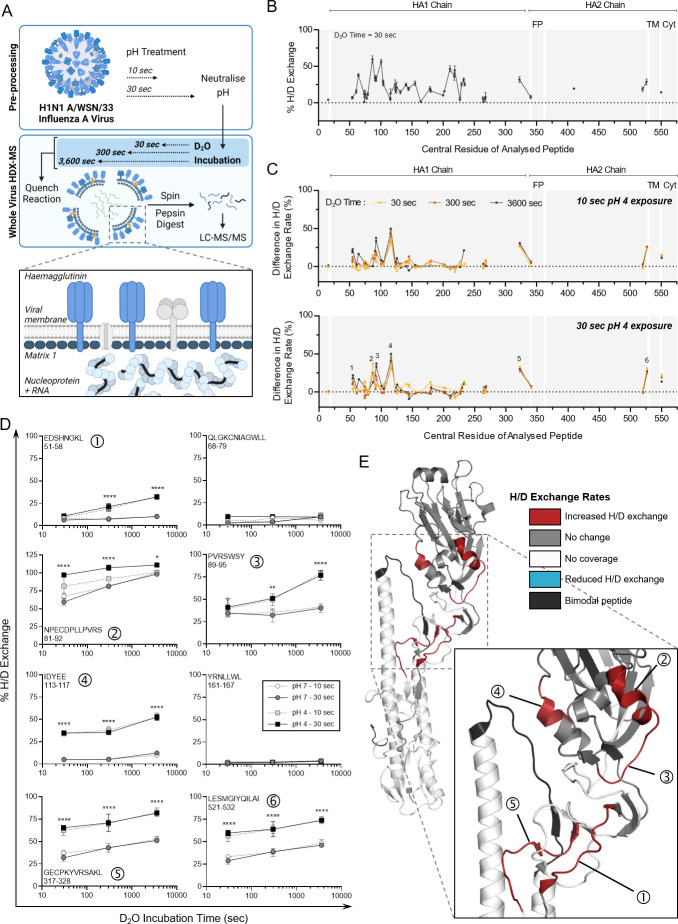
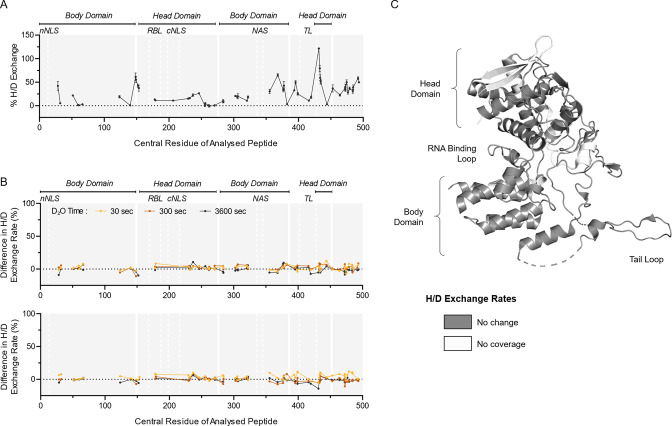
Multiple respiratory viruses, including influenza A virus (IAV), can be transmitted via expiratory aerosol particles, and aerosol pH was recently identified as a major factor influencing airborne virus infectivity. Indoors, small exhaled aerosols undergo rapid acidification to pH ~4. IAV is known to be sensitive to mildly acidic conditions encountered within host endosomes; however, it is unknown whether the same mechanisms could mediate viral inactivation within the more acidic aerosol micro-environment. Here, we identified that transient exposure to pH 4 caused IAV inactivation by a two-stage process, with an initial sharp decline in infectious titers mainly attributed to premature attainment of the post-fusion conformation of viral protein haemagglutinin (HA). Protein changes were observed by hydrogen-deuterium exchange coupled to mass spectrometry (HDX-MS) as early as 10 s post-exposure to acidic conditions. Our HDX-MS data are in agreement with other more labor-intensive structural analysis techniques, such as X-ray crystallography, highlighting the ease and usefulness of whole-virus HDX-MS for multiplexed protein analyses, even within enveloped viruses such as IAV. Additionally, virion integrity was partially but irreversibly affected by acidic conditions, with a progressive unfolding of the internal matrix protein 1 (M1) that aligned with a more gradual decline in viral infectivity with time. In contrast, no acid-mediated changes to the genome or lipid envelope were detected. Improved understanding of respiratory virus fate within exhaled aerosols constitutes a global public health priority, and information gained here could aid the development of novel strategies to control the airborne persistence of seasonal and/or pandemic influenza in the future. IMPORTANCE It is well established that COVID-19, influenza, and many other respiratory diseases can be transmitted by the inhalation of aerosolized viruses. Many studies have shown that the survival time of these airborne viruses is limited, but it remains an open question as to what drives their infectivity loss. Here, we address this question for influenza A virus by investigating structural protein changes incurred by the virus under conditions relevant to respiratory aerosol particles. From prior work, we know that expelled aerosols can become highly acidic due to equilibration with indoor room air, and our results indicate that two viral proteins are affected by these acidic conditions at multiple sites, leading to virus inactivation. Our findings suggest that the development of air treatments to quicken the speed of aerosol acidification would be a major strategy to control infectious bioburdens in the air.
多种呼吸道病毒,包括甲型流感病毒(IAV),可通过呼气气溶胶颗粒传播,最近发现气溶胶 pH 值是影响空气传播病毒感染力的主要因素。在室内,小的呼出气溶胶会迅速酸化至 pH 值~4。已知 IAV 对宿主内体中遇到的轻度酸性条件敏感;然而,IAV 能否在更酸性的气溶胶微环境中通过相同机制失活尚不清楚。在这里,我们发现短暂暴露于 pH 值 4 会导致 IAV 失活,这是一个两阶段的过程,初始阶段传染性滴度急剧下降,主要归因于病毒蛋白血凝素(HA)融合后构象过早获得。暴露于酸性条件后 10 秒内,通过氢氘交换结合质谱(HDX-MS)即可观察到蛋白质变化。我们的 HDX-MS 数据与其他更耗时的结构分析技术(如 X 射线晶体学)一致,突出了全病毒 HDX-MS 在包被病毒(如 IAV)的多蛋白分析中的简便性和有用性。此外,病毒完整性部分但不可逆转地受到酸性条件的影响,内部基质蛋白 1(M1)逐渐展开,与病毒感染力随时间的逐渐下降相一致。相比之下,没有检测到基因组或脂质包膜的酸介导变化。提高对呼出气溶胶中呼吸道病毒命运的认识是全球公共卫生的当务之急,这里获得的信息可以帮助未来开发控制季节性和/或大流行性流感在空气中持续存在的新策略。重要性 众所周知,COVID-19、流感和许多其他呼吸道疾病可通过吸入气溶胶化病毒传播。许多研究表明,这些空气传播病毒的存活时间有限,但驱动其感染力丧失的原因仍不清楚。在这里,我们通过研究与呼吸性气溶胶颗粒相关的条件下病毒的结构蛋白变化来解决甲型流感病毒的这个问题。根据之前的工作,我们知道呼出的气溶胶由于与室内空气的平衡作用会变得高度酸性,我们的结果表明,两种病毒蛋白在多个部位受到这些酸性条件的影响,导致病毒失活。我们的研究结果表明,开发空气处理技术以加速气溶胶酸化速度将是控制空气中传染性生物负荷的主要策略。