Department of Pharmaceutics, Faculty of Pharmacy, Alexandria University, 1 Khartoum Square, Azarita, Alexandria, Egypt.
Department of Medical Physiology, Faculty of Medicine, Alexandria University, Alexandria, Egypt.
Drug Deliv Transl Res. 2024 Feb;14(2):400-417. doi: 10.1007/s13346-023-01407-7. Epub 2023 Aug 19.
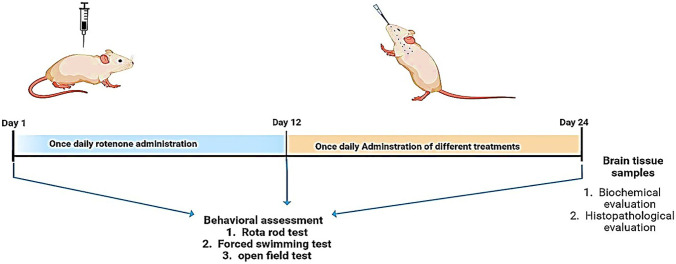
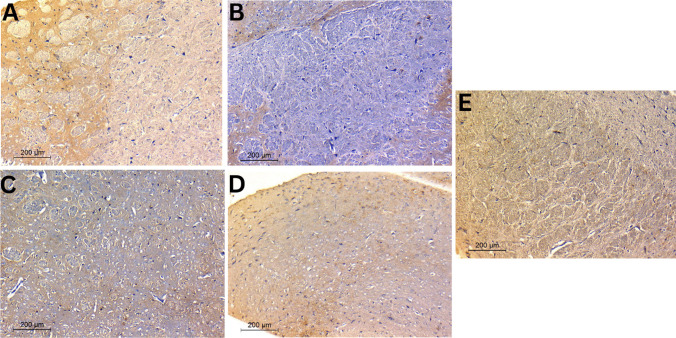
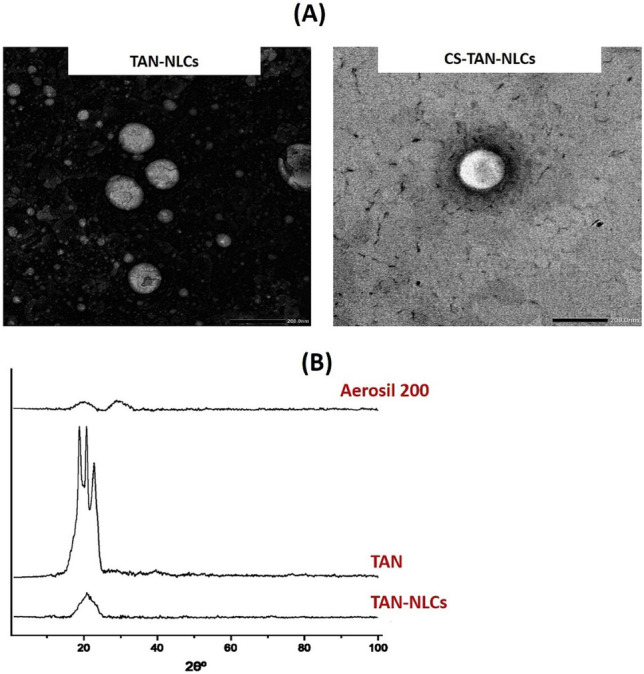
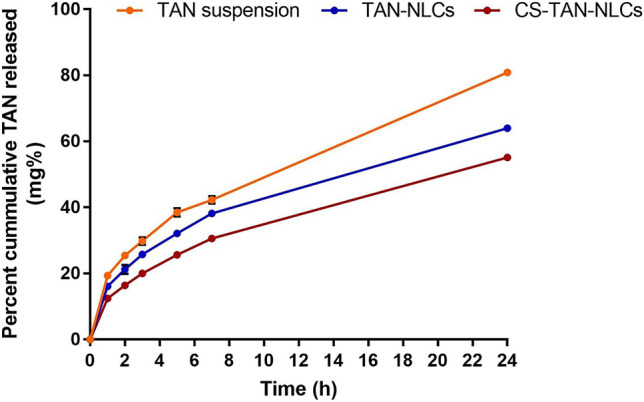
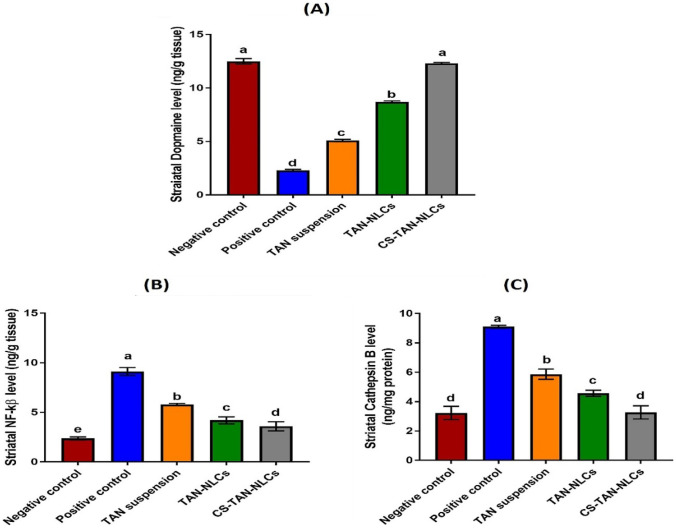
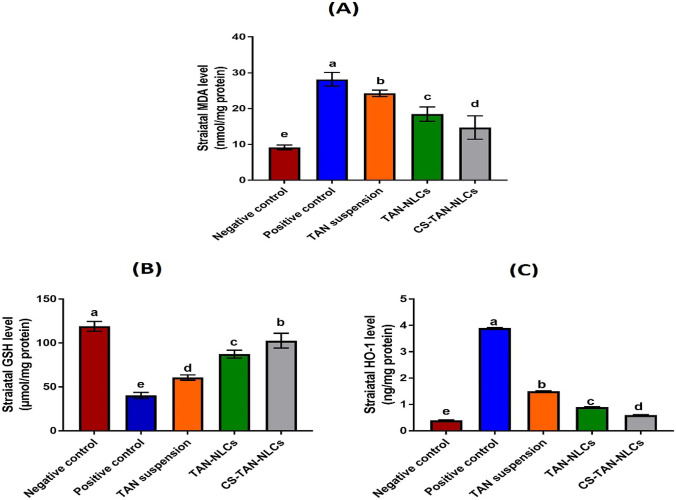
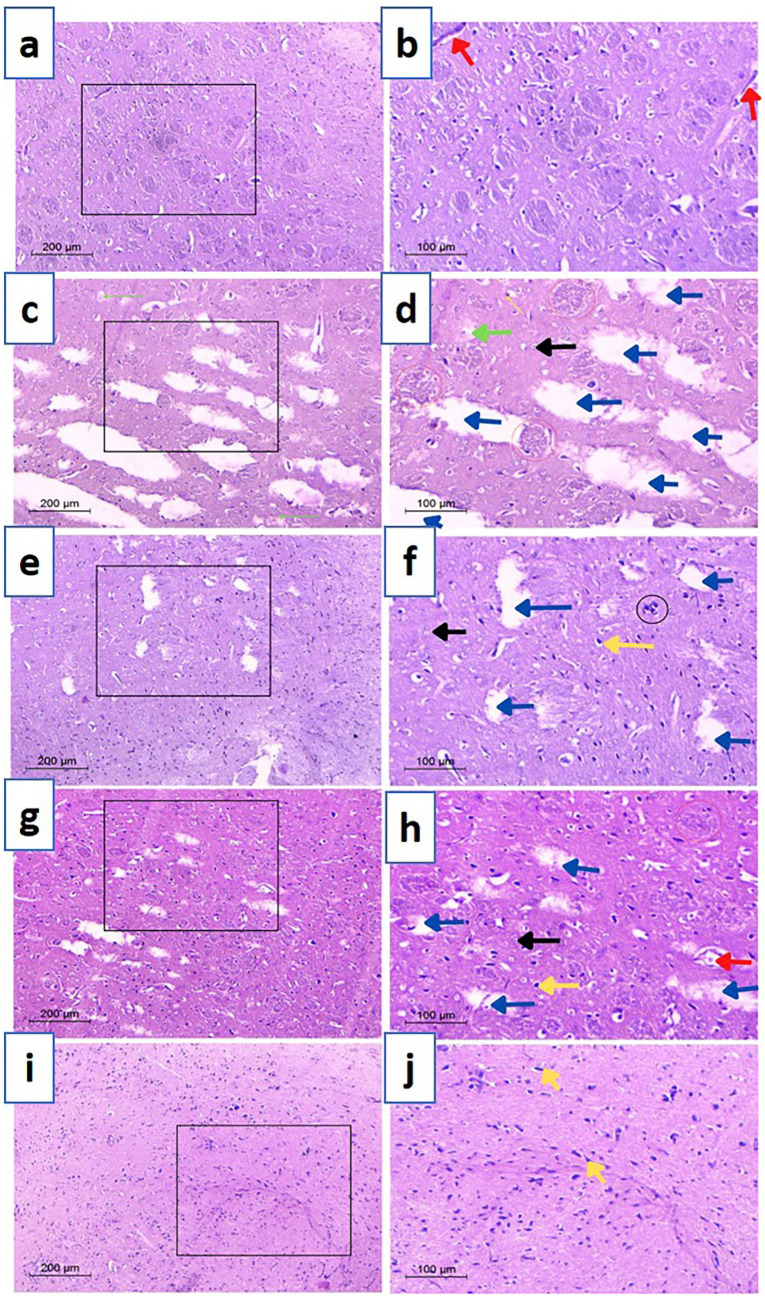
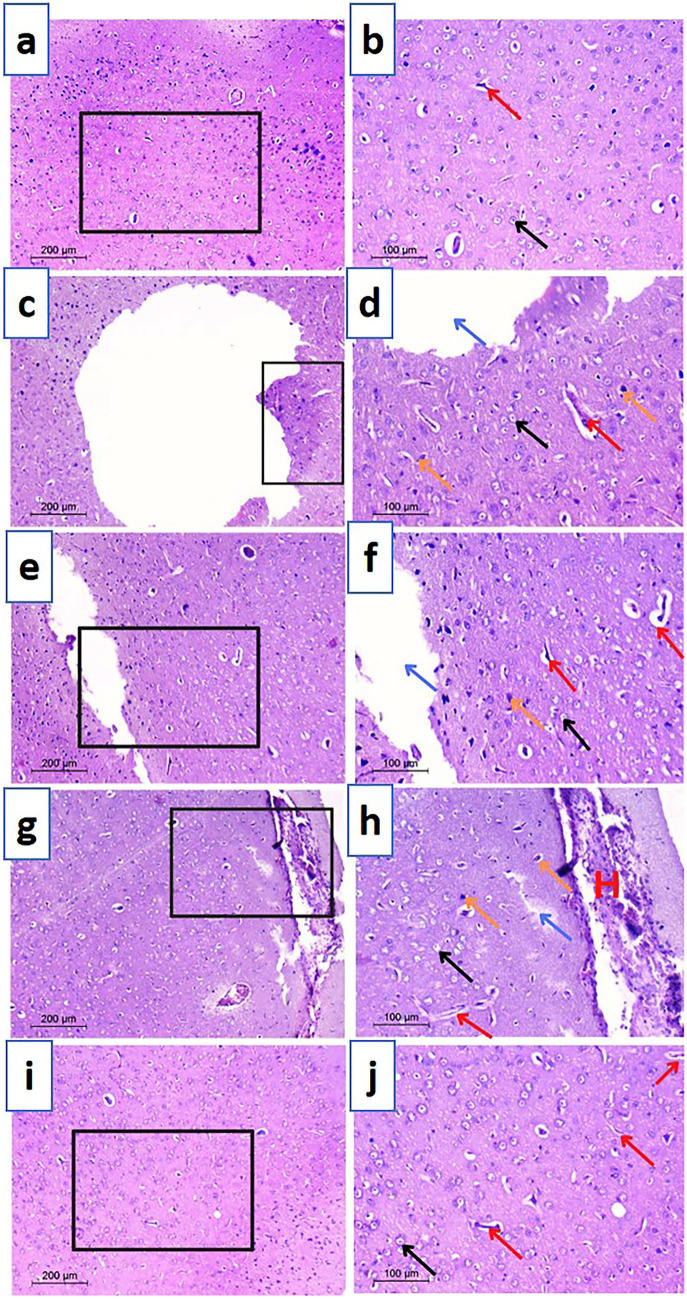
Parkinson's disease (PD) is the second most common progressive neurodegenerative disorder associated with increased oxidative stress, the underlying vital process contributing to cell death. Tanshinone IIA (TAN) is a phytomedicine with a documented activity in treating many CNS disorders, particularly PD owing to its unique anti-inflammatory and antioxidant effect. However, its clinical utility is limited by its poor aqueous solubility, short half-life, and hence low concentration reaching targeted cells. This work aimed to develop a biocompatible chitosan-coated nanostructured lipid carriers (CS-NLCs) for effective brain delivery of TAN for PD management. The proposed nanosystem was successfully prepared using a simple melt-emulsification ultra-sonication method, optimized and characterized both in vitro and in vivo in a rotenone-induced PD rat model. The developed TAN-loaded CS-NLCs (CS-TAN-NLCs) showed good colloidal properties (size ≤ 200 nm, PDI ≤ 0.2, and ζ-potential + 20 mV) and high drug entrapment efficiency (> 97%) with sustained release profile for 24 h. Following intranasal administration, CS-TAN-NLCs succeeded to achieve a remarkable antiparkinsonian and antidepressant effect in diseased animals compared to both the uncoated TAN-NLCs and free TAN suspension as evidenced by the conducted behavioral tests and improved histopathological findings. Furthermore, biochemical evaluation of oxidative stress along with inflammatory markers, nuclear factor-kabba β (NF-Kβ) and cathepsin B further confirmed the potential of the CS-TAN-NLCs in enhancing brain delivery and hence the therapeutic effect of TAN of treatment of PD. Accordingly, CS-TAN-NLCs could be addressed as a promising nano-platform for the effective management of PD.
帕金森病(PD)是第二常见的与氧化应激增加相关的进行性神经退行性疾病,是导致细胞死亡的基本重要过程。丹参酮 IIA(TAN)是一种植物药,具有治疗许多中枢神经系统疾病的作用,特别是 PD,因为它具有独特的抗炎和抗氧化作用。然而,由于其较差的水溶性、半衰期短,因此到达靶向细胞的浓度低,其临床应用受到限制。本工作旨在开发一种生物相容性壳聚糖包覆的纳米结构脂质载体(CS-NLCs),用于有效递送到 PD 管理的 TAN 脑内。该纳米系统是使用简单的熔融乳化超声方法成功制备的,并在罗替诺因诱导的 PD 大鼠模型中进行了体外和体内优化和表征。所开发的载有 TAN 的 CS-NLCs(CS-TAN-NLCs)表现出良好的胶体性质(尺寸≤200nm,PDI≤0.2,ζ-电位+20mV)和高药物包封效率(>97%),具有 24 小时的持续释放特性。经鼻内给药后,与未包覆的 TAN-NLCs 和游离 TAN 混悬液相比,CS-TAN-NLCs 成功地在患病动物中实现了显著的抗帕金森和抗抑郁作用,这一点从进行的行为测试和改善的组织病理学发现中可以得到证明。此外,氧化应激以及炎症标志物、核因子-kabba β(NF-Kβ)和组织蛋白酶 B 的生化评估进一步证实了 CS-TAN-NLCs 能够增强脑内递药能力,从而增强 TAN 治疗 PD 的治疗效果。因此,CS-TAN-NLCs 可以作为一种有前途的纳米平台,用于有效管理 PD。