Chi Hao, Chen Haiqing, Wang Rui, Zhang Jieying, Jiang Lai, Zhang Shengke, Jiang Chenglu, Huang Jinbang, Quan Xiaomin, Liu Yunfei, Zhang Qinhong, Yang Guanhu
Clinical Medical College, Southwest Medical University, Luzhou, China.
Department of General Surgery (Hepatobiliary Surgery), The Affiliated Hospital of Southwest Medical University, Luzhou, China.
Front Oncol. 2023 Aug 3;13:1244578. doi: 10.3389/fonc.2023.1244578. eCollection 2023.
Pancreatic cancer (PC) is a lethal malignancy that ranks seventh in terms of global cancer-related mortality. Despite advancements in treatment, the five-year survival rate remains low, emphasizing the urgent need for reliable early detection methods. MicroRNAs (miRNAs), a group of non-coding RNAs involved in critical gene regulatory mechanisms, have garnered significant attention as potential diagnostic and prognostic biomarkers for pancreatic cancer (PC). Their suitability stems from their accessibility and stability in blood, making them particularly appealing for clinical applications.
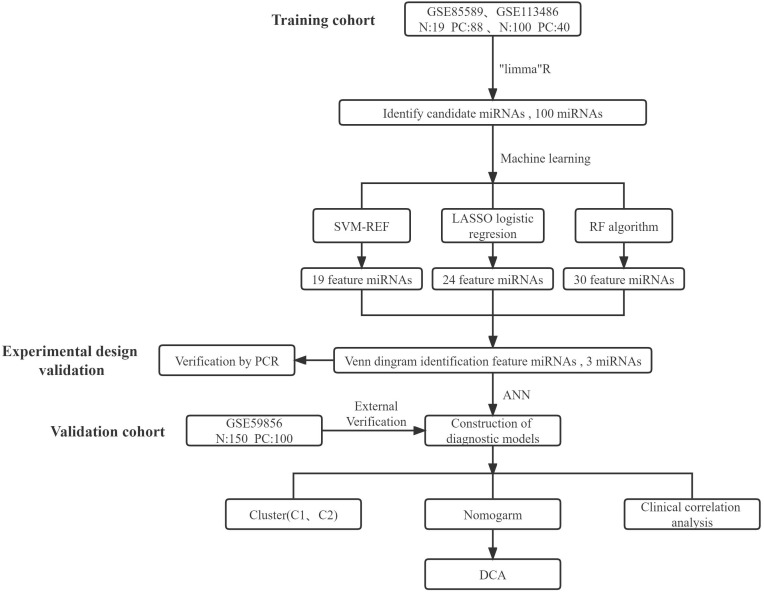
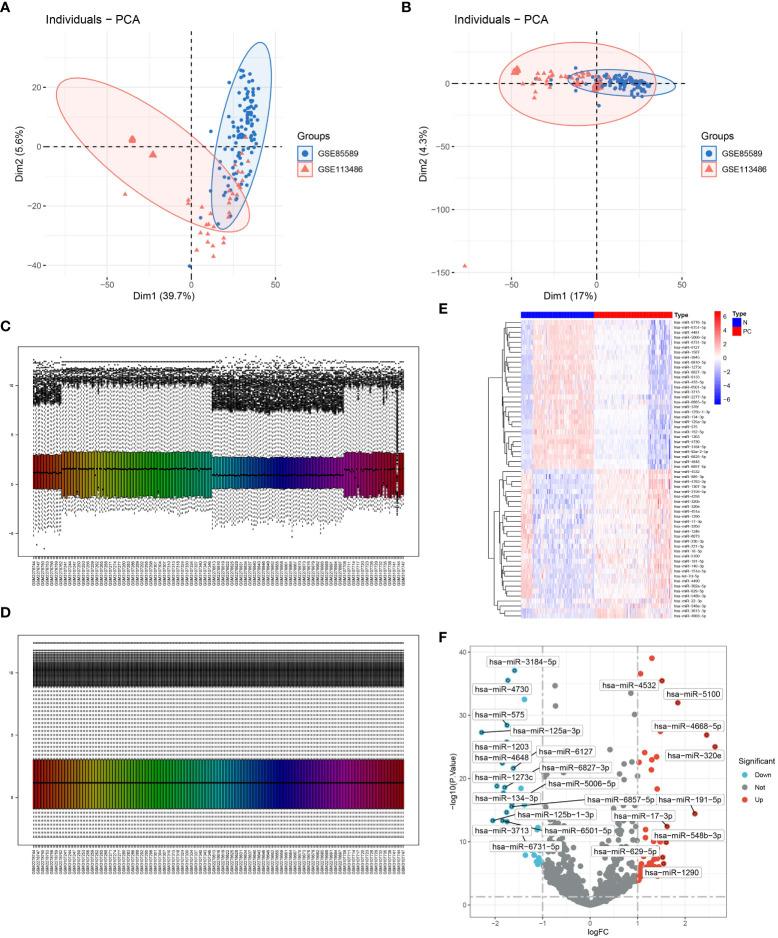
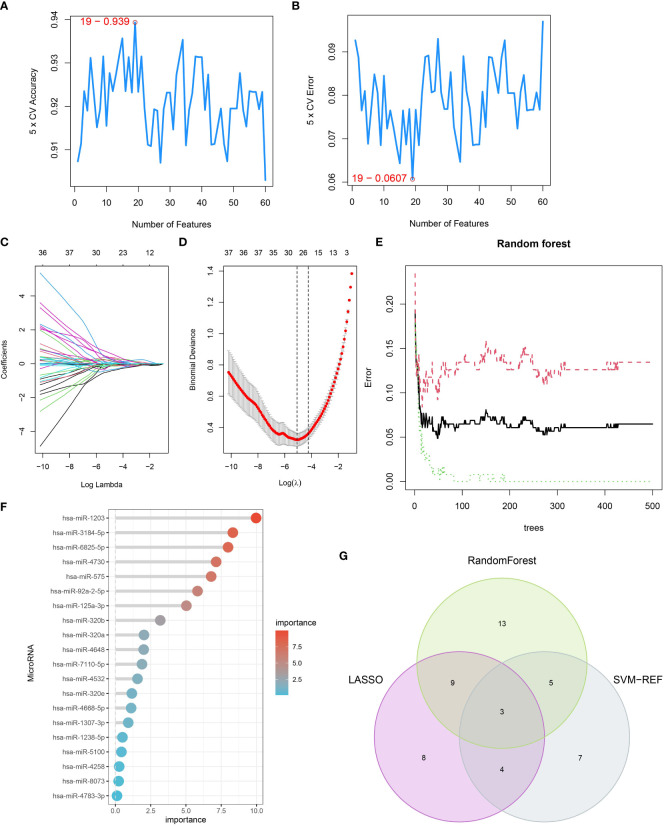
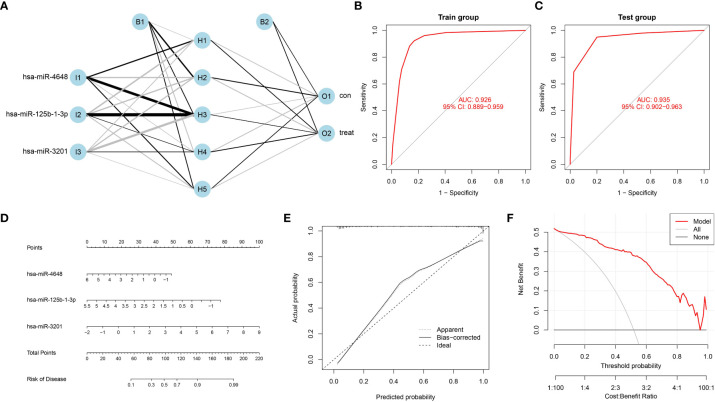
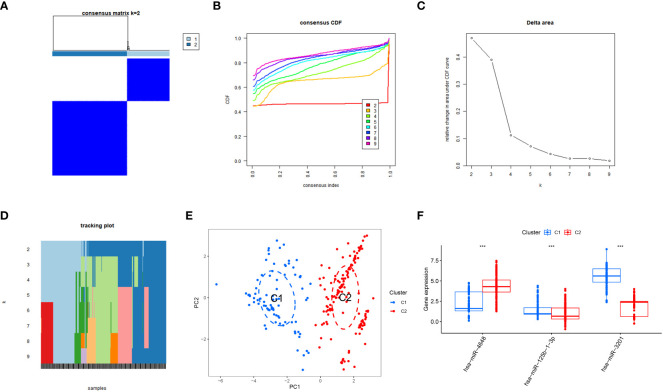
In this study, we analyzed serum miRNA expression profiles from three independent PC datasets obtained from the Gene Expression Omnibus (GEO) database. To identify serum miRNAs associated with PC incidence, we employed three machine learning algorithms: Support Vector Machine-Recursive Feature Elimination (SVM-RFE), Least Absolute Shrinkage and Selection Operator (LASSO), and Random Forest. We developed an artificial neural network model to assess the accuracy of the identified PC-related serum miRNAs (PCRSMs) and create a nomogram. These findings were further validated through qPCR experiments. Additionally, patient samples with PC were classified using the consensus clustering method.
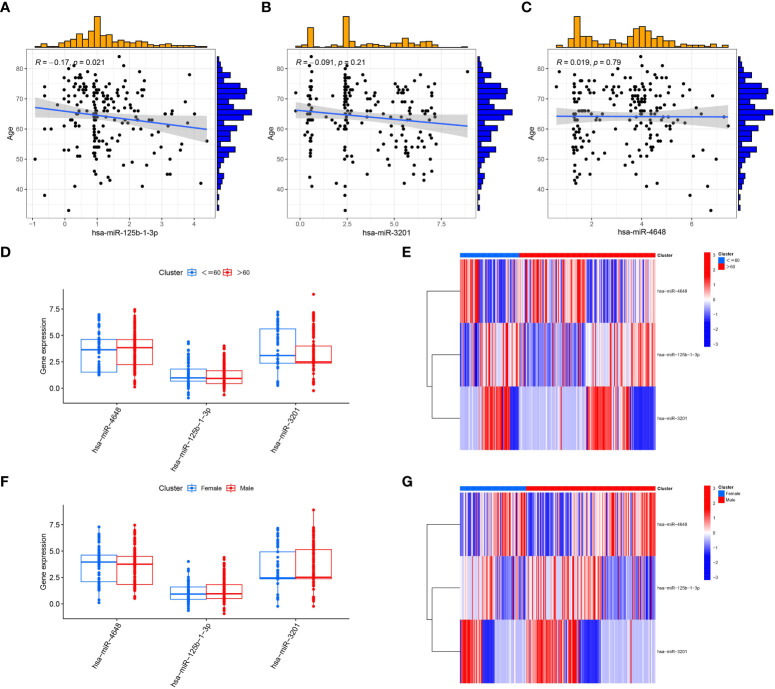
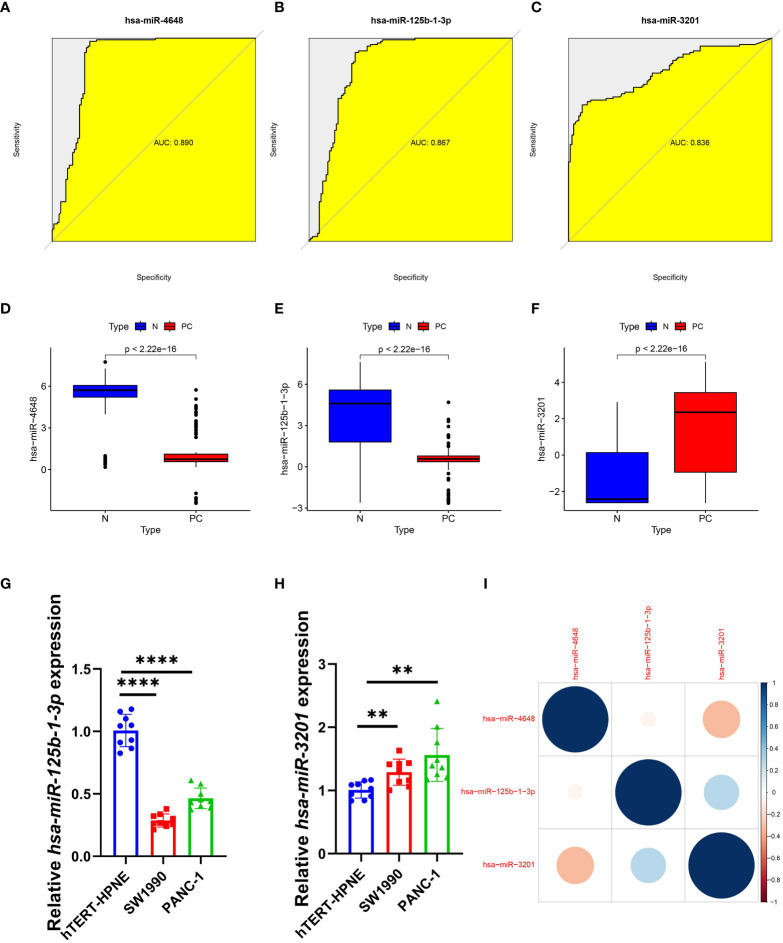
Our analysis revealed three PCRSMs, namely hsa-miR-4648, hsa-miR-125b-1-3p, and hsa-miR-3201, using the three machine learning algorithms. The artificial neural network model demonstrated high accuracy in distinguishing between normal and pancreatic cancer samples, with verification and training groups exhibiting AUC values of 0.935 and 0.926, respectively. We also utilized the consensus clustering method to classify PC samples into two optimal subtypes. Furthermore, our investigation into the expression of PCRSMs unveiled a significant negative correlation between the expression of hsa-miR-125b-1-3p and age.
Our study introduces a novel artificial neural network model for early diagnosis of pancreatic cancer, carrying significant clinical implications. Furthermore, our findings provide valuable insights into the pathogenesis of pancreatic cancer and offer potential avenues for drug screening, personalized treatment, and immunotherapy against this lethal disease.
胰腺癌(PC)是一种致命的恶性肿瘤,在全球癌症相关死亡率中排名第七。尽管治疗方面有所进展,但五年生存率仍然很低,这凸显了对可靠的早期检测方法的迫切需求。微小RNA(miRNA)是一组参与关键基因调控机制的非编码RNA,作为胰腺癌(PC)潜在的诊断和预后生物标志物受到了广泛关注。它们的适用性源于其在血液中的可及性和稳定性,使其在临床应用中特别具有吸引力。
在本研究中,我们分析了从基因表达综合数据库(GEO)获得的三个独立的PC数据集的血清miRNA表达谱。为了识别与PC发病相关的血清miRNA,我们采用了三种机器学习算法:支持向量机递归特征消除(SVM-RFE)、最小绝对收缩和选择算子(LASSO)以及随机森林。我们开发了一个人工神经网络模型来评估所识别的PC相关血清miRNA(PCRSM)的准确性并创建列线图。这些发现通过qPCR实验进一步得到验证。此外,使用一致性聚类方法对PC患者样本进行分类。
我们的分析使用三种机器学习算法揭示了三种PCRSM,即hsa-miR-4648、hsa-miR-125b-1-3p和hsa-miR-3201。人工神经网络模型在区分正常样本和胰腺癌样本方面表现出很高的准确性,验证组和训练组的AUC值分别为0.935和0.926。我们还使用一致性聚类方法将PC样本分为两个最佳亚型。此外,我们对PCRSM表达的研究揭示了hsa-miR-125b-1-3p的表达与年龄之间存在显著的负相关。
我们的研究引入了一种用于胰腺癌早期诊断的新型人工神经网络模型,具有重要的临床意义。此外,我们的发现为胰腺癌的发病机制提供了有价值的见解,并为针对这种致命疾病的药物筛选、个性化治疗和免疫治疗提供了潜在途径。