Faculty of Science, Biological Sciences Program, Chulalongkorn University, Bangkok, Thailand.
Faculty of Science, Department of Biology, Chulalongkorn University, Bangkok, Thailand.
PLoS One. 2023 Aug 24;18(8):e0289961. doi: 10.1371/journal.pone.0289961. eCollection 2023.
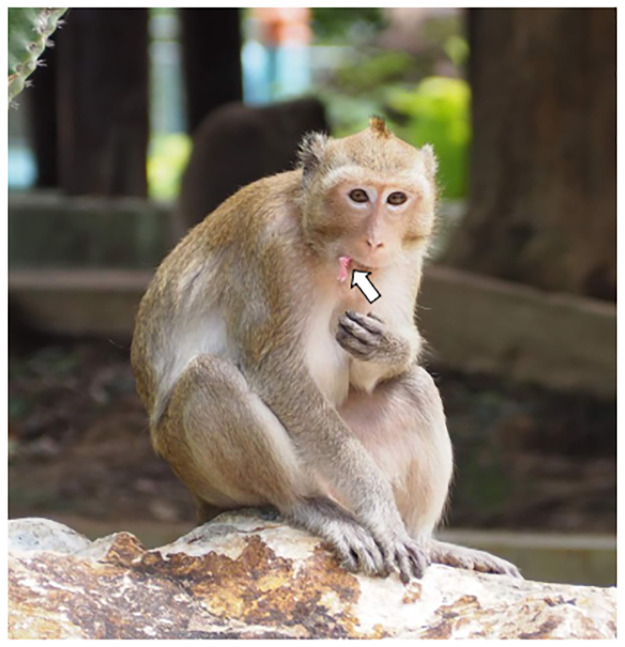
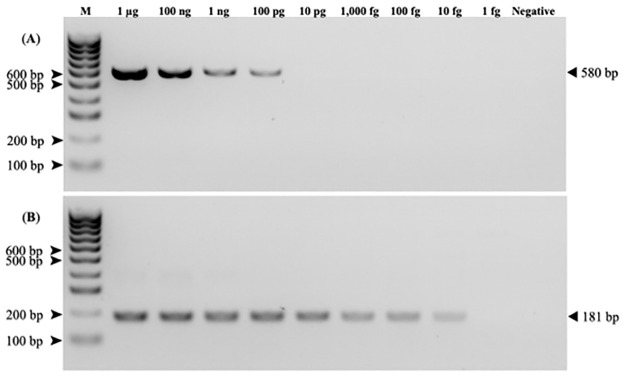
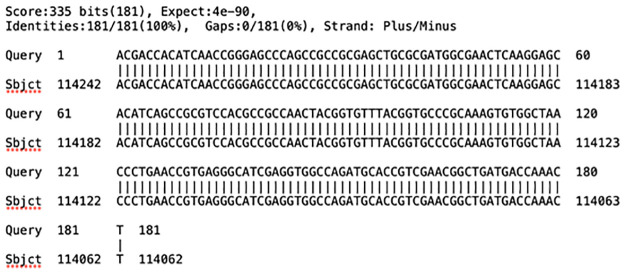
Surveillance of infectious diseases in free-ranging or wild animals has been widely conducted in many habitat-range countries after the COVID-19 episode. Thailand is located in the center of the distribution range of long-tailed macaques (Macaca fascicularis; Mf) where the animals have both frequent human contact and a high prevalence of human tuberculosis. For the large-scale detection of Mycobacterium tuberculosis complex (MTBC) using IS6110-nested PCR in free-ranging Mf, non-invasive sampling was developed using oral (via rope bait) and fecal (direct swabs of fresh feces) specimen collection. Firstly, the MTBC-IS6110-nested PCR was validated in non-invasively collected specimens, in terms of its specificity and sensitivity, and then compared with those of the invasively collected oral and rectal swabs in 24 captive MTBC-suspected Mf. After validation, these methods were applied to survey for the prevalence of shed MTBC (MTBCS) in four previously reported MTBC-infected populations. A total of 173 baited rope specimens and 204 freshly defecated excretions were collected. The limit of detection of the IS6110-nested PCR technique was 10 fg/μL and the 181-bp PCR amplicon showed 100% sequence similarity with the MTB H37Rv genome sequence. Comparing the MTBCS detection between the invasive and non-invasive collected specimens in captive suspected Mf revealed a significant correlation between the two types of oral specimens (oral swabs and baited ropes; n = 24, r2 = 1, p-value < 0.001), but fresh fecal swabs showed higher MTBCS frequencies than the rectal swabs. Moreover, the proportion of MTBCS-positive free-ranging Mf were significantly higher in the fresh fecal swabs (8.82%; 95% CI; 4.9-12.7%) than in the baited ropes (5.20%; 95% CI; 1.9-8.5%). This result indicates that oral sampling via baited ropes and fecal sampling via defecated excretion swabs can serve as ancillary specimens for MTBCS detection in free-ranging non-human primates.
传染病在野生动物中的监测在 COVID-19 爆发后在许多栖息地国家得到了广泛开展。泰国位于长尾猕猴(Macaca fascicularis;Mf)分布范围的中心,这些动物与人频繁接触,且人类结核病的患病率很高。为了使用 IS6110 巢式 PCR 对自由放养的 Mf 中结核分枝杆菌复合群(MTBC)进行大规模检测,开发了使用口腔(通过绳状诱饵)和粪便(新鲜粪便直接拭子)标本采集的非侵入性采样方法。首先,在非侵入性采集的标本中验证了 MTBC-IS6110 巢式 PCR 的特异性和敏感性,然后将其与 24 只疑似 MTBC 的圈养 Mf 中侵入性采集的口腔和直肠拭子进行比较。验证后,这些方法应用于四个先前报道的 MTBC 感染人群中 MTBC 脱落(MTBCS)的患病率调查。共采集了 173 个诱饵绳标本和 204 个新鲜粪便。IS6110 巢式 PCR 技术的检测限为 10 fg/μL,181-bp PCR 扩增产物与 MTB H37Rv 基因组序列完全一致。比较圈养疑似 Mf 中侵入性和非侵入性采集标本的 MTBCS 检测结果表明,两种口腔标本(口腔拭子和诱饵绳;n = 24,r2 = 1,p 值<0.001)之间存在显著相关性,但新鲜粪便拭子的 MTBCS 频率高于直肠拭子。此外,新鲜粪便拭子中 MTBCS 阳性自由放养 Mf 的比例明显高于诱饵绳(8.82%;95%CI;4.9-12.7%)(5.20%;95%CI;1.9-8.5%)。这一结果表明,通过诱饵绳进行口腔采样和通过粪便直接拭子进行粪便采样可以作为自由放养非人类灵长类动物 MTBCS 检测的辅助标本。