Cipollina Alessandro, Ceddia Mario, Di Pietro Natalia, Inchingolo Francesco, Tumedei Margherita, Romasco Tea, Piattelli Adriano, Specchiulli Alessandro, Trentadue Bartolomeo
Independent Researcher, 92019 Sciacca, Italy.
Department of Mechanics, Mathematics and Management, Politecnico di Bari University, 70125 Bari, Italy.
Biomimetics (Basel). 2023 Jul 31;8(4):336. doi: 10.3390/biomimetics8040336.
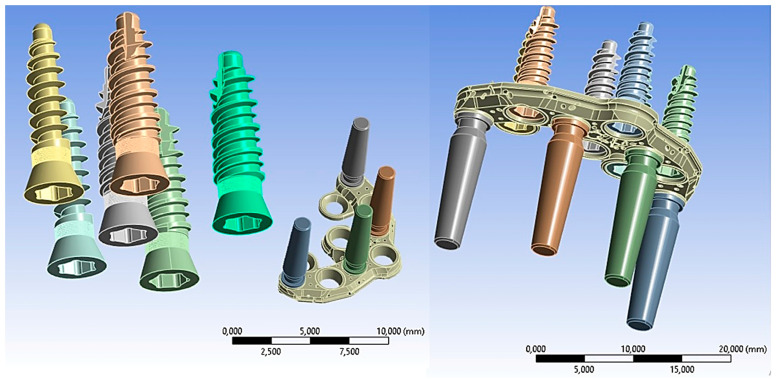
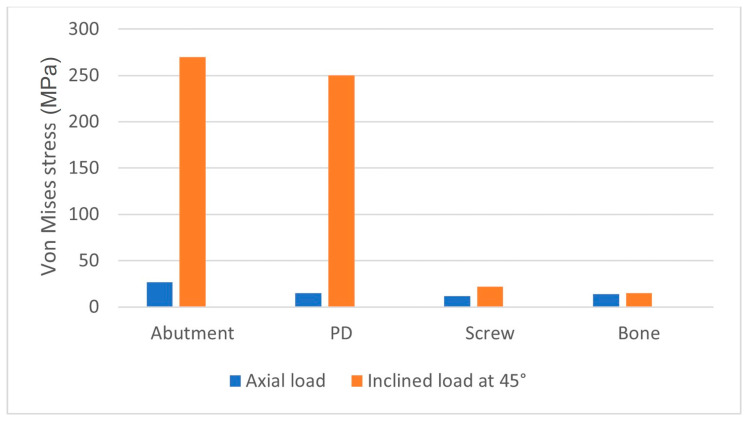
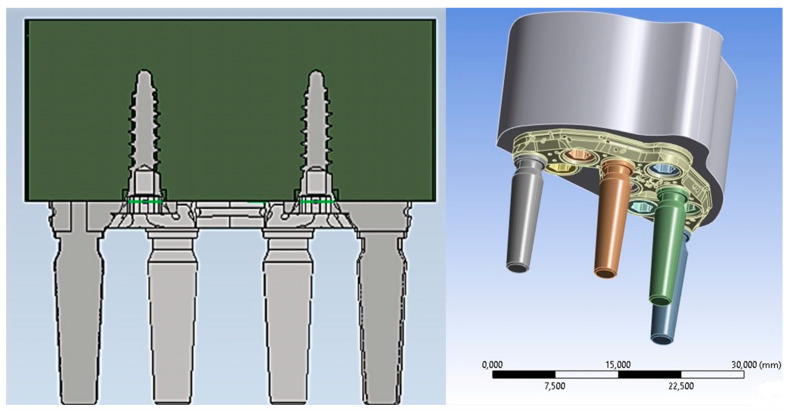
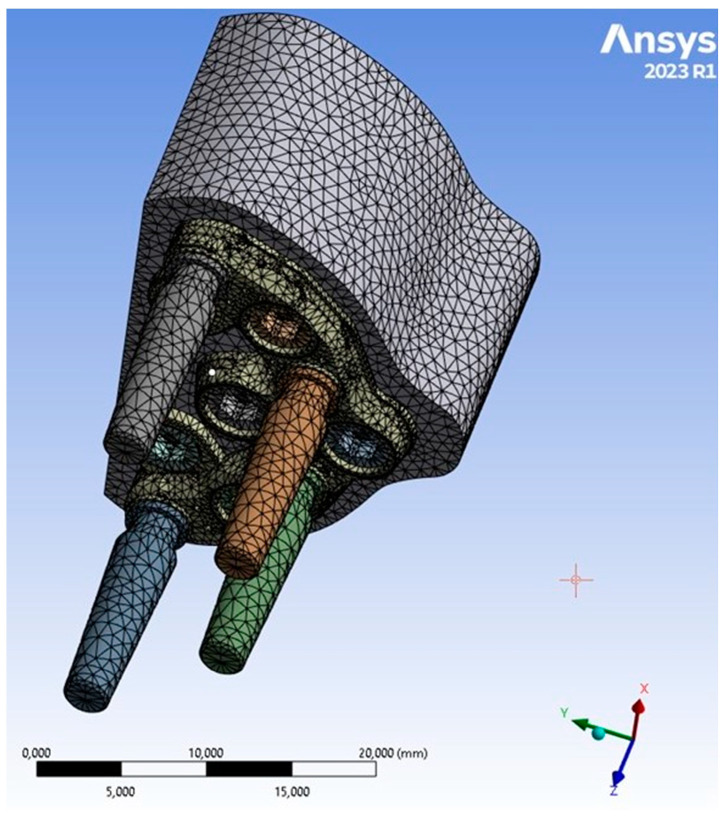
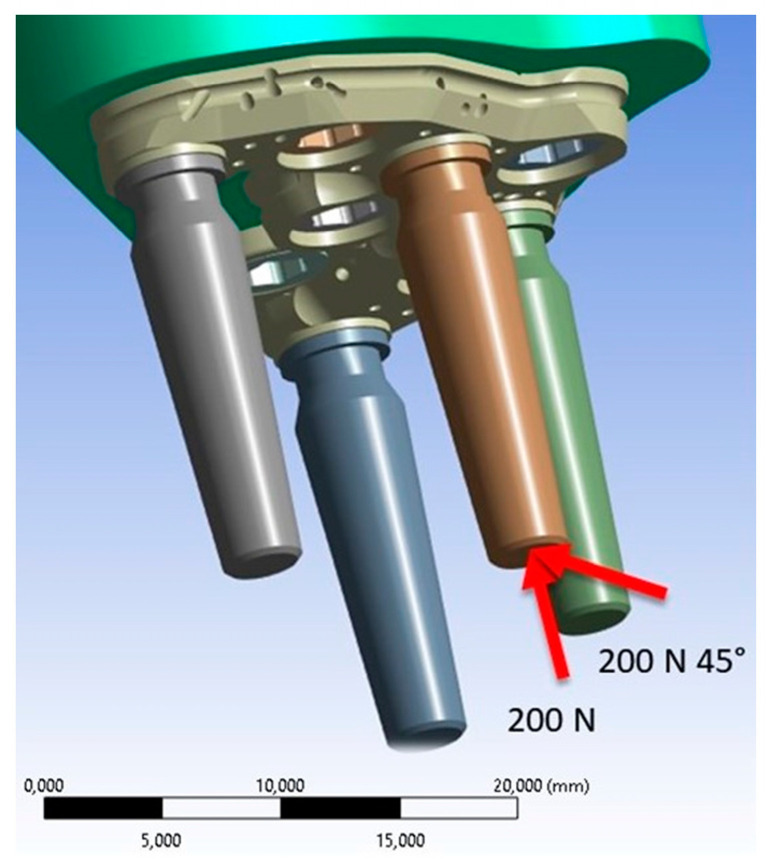
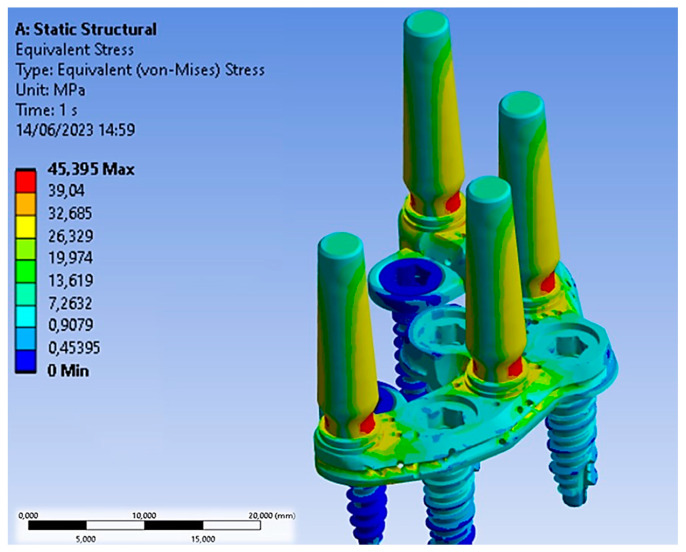
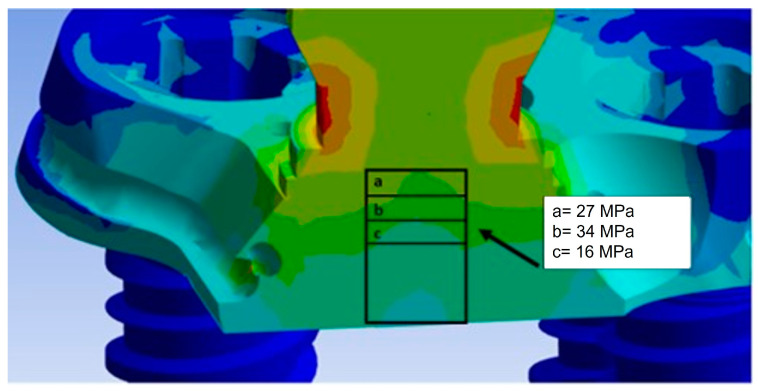
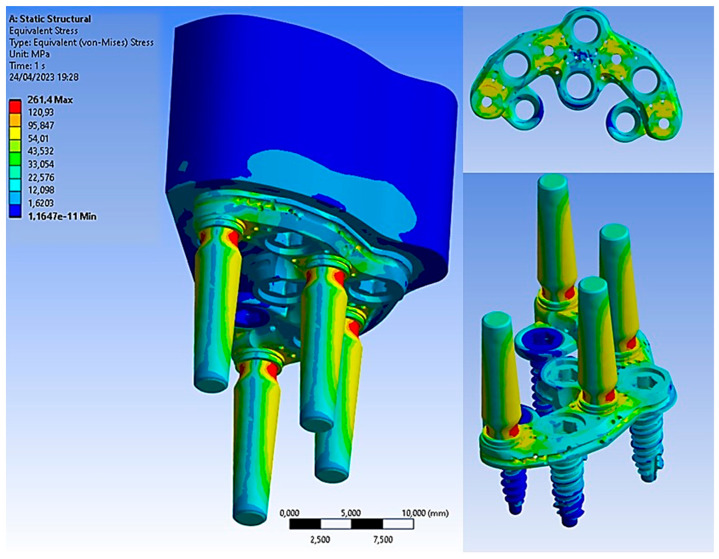
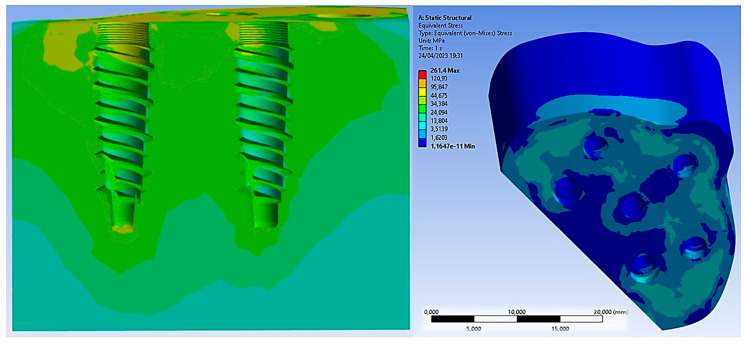
Extreme atrophy of the maxilla still poses challenges for clinicians. Some of the techniques used to address this issue can be complex, risky, expensive, and time consuming, often requiring skilled surgeons. While many commonly used techniques have achieved very high success rates, complications may arise in certain cases. In this context, the premaxillary device (PD) technique offers a simpler approach to reconstruct severely atrophic maxillae, aiming to avoid more complicated and risky surgical procedures. Finite element analysis (FEA) enables the evaluation of different aspects of dental implant biomechanics. Our results demonstrated that using a PD allows for an optimal distribution of stresses on the basal bone, avoiding tension peaks that can lead to bone resorption or implant failure. ANSYS was used to perform localized finite element analysis (FEA), enabling a more precise examination of the peri-crestal area and the PD through an accurate mesh element reconstruction, which facilitated the mathematical solution of FEA. The most favorable biomechanical behavior was observed for materials such as titanium alloys, which helped to reduce stress levels on bone, implants, screws, and abutments. Additionally, stress values remained within the limits of basal bone and titanium alloy strengths. In conclusion, from a biomechanical point of view, PDs appear to be viable alternatives for rehabilitating severe atrophic maxillae.
上颌骨的极度萎缩仍然给临床医生带来挑战。一些用于解决这一问题的技术可能很复杂、有风险、昂贵且耗时,通常需要技术娴熟的外科医生。虽然许多常用技术已取得非常高的成功率,但在某些情况下仍可能出现并发症。在此背景下,前颌骨装置(PD)技术为重建严重萎缩的上颌骨提供了一种更简单的方法,旨在避免更复杂且有风险的外科手术。有限元分析(FEA)能够评估牙种植体生物力学的不同方面。我们的结果表明,使用PD可使应力在基骨上实现最佳分布,避免可能导致骨吸收或种植体失败的张力峰值。使用ANSYS进行局部有限元分析(FEA),通过精确的网格单元重建能够更精确地检查牙槽嵴周围区域和PD,这有助于FEA的数学求解。对于钛合金等材料,观察到了最有利的生物力学行为,这有助于降低骨、种植体、螺钉和基台上的应力水平。此外,应力值保持在基骨和钛合金强度的范围内。总之,从生物力学角度来看,PD似乎是修复严重萎缩上颌骨的可行替代方案。