Department of Cardiology, Union Hospital, Tongji Medical College, Huazhong University of Science and Technology, Wuhan, 430022, China.
Hubei Key Laboratory of Biological Targeted Therapy, Union Hospital, Tongji Medical College, Huazhong University of Science and Technology, Wuhan, 430022, China.
J Nanobiotechnology. 2023 Aug 26;21(1):298. doi: 10.1186/s12951-023-02063-2.
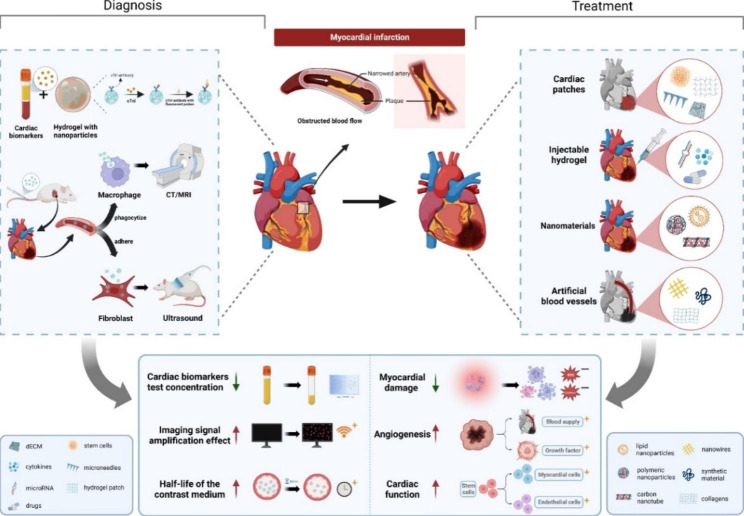
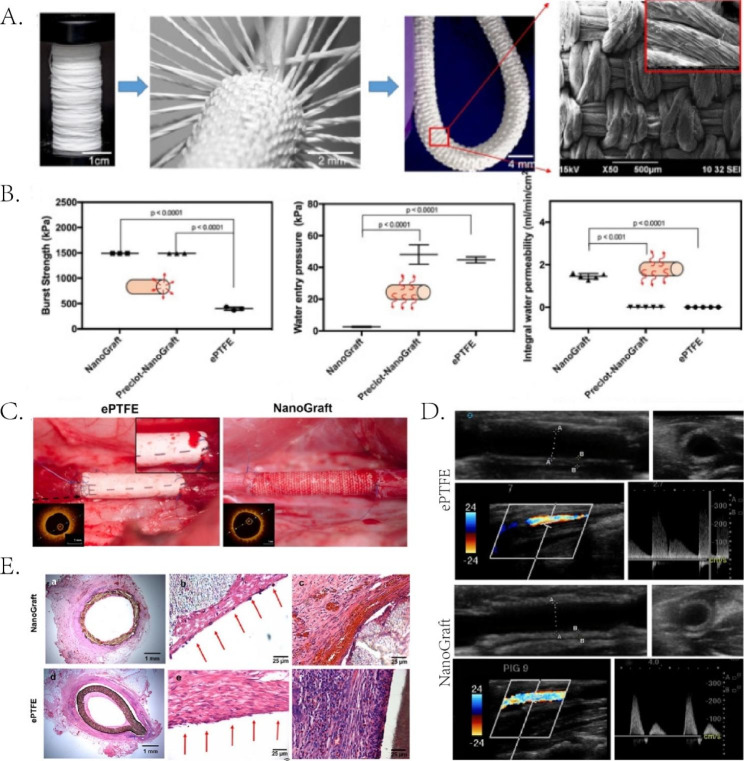
Myocardial infarction (MI) is a cardiovascular emergency and the leading cause of death worldwide. Inflammatory and immune responses are initiated immediately after MI, leading to myocardial death, scarring, and ventricular remodeling. Current therapeutic approaches emphasize early restoration of ischemic myocardial reperfusion, but there is no effective treatment for the pathological changes of infarction. Biomedical materials development has brought new hope for MI diagnosis and treatment. Biomedical materials, such as cardiac patches, hydrogels, nano biomaterials, and artificial blood vessels, have played an irreplaceable role in MI diagnosis and treatment. They improve the accuracy and efficacy of MI diagnosis and offer further possibilities for reducing inflammation, immunomodulation, inhibiting fibrosis, and cardiac regeneration. This review focuses on the advances in biomedical materials applications in MI diagnosis and treatment. The current studies are outlined in terms of mechanisms of action and effects. It is addressed how biomedical materials application can lessen myocardial damage, encourage angiogenesis, and enhance heart function. Their clinical transformation value and application prospect are discussed.
心肌梗死(MI)是一种心血管急症,也是全球范围内导致死亡的主要原因。MI 发生后,炎症和免疫反应立即被触发,导致心肌死亡、瘢痕形成和心室重构。目前的治疗方法强调早期恢复缺血性心肌再灌注,但对于梗死的病理变化还没有有效的治疗方法。生物医学材料的发展为 MI 的诊断和治疗带来了新的希望。心脏补片、水凝胶、纳米生物材料和人工血管等生物医学材料在 MI 的诊断和治疗中发挥了不可替代的作用。它们提高了 MI 诊断的准确性和疗效,为减少炎症、免疫调节、抑制纤维化和心脏再生提供了进一步的可能性。本综述重点介绍了生物医学材料在 MI 诊断和治疗中的应用进展。根据作用机制和效果概述了当前的研究。讨论了生物医学材料的应用如何减轻心肌损伤、促进血管生成和增强心脏功能。还讨论了它们的临床转化价值和应用前景。