Boukhibar Halima, Laouani Aicha, Touzout Soraya Naila, Alenazy Rawaf, Alqasmi Mohammed, Bokhari Yaseen, Saguem Khaled, Ben-Attia Mossadok, El-Bok Safia, Merghni Abderrahmen
Laboratory of Biodiversity, Biotechnologies and Climate Change (LR11/ES09), Faculty of Sciences of Tunis, University of Tunis El-Manar, Tunis 2092, Tunisia.
Laboratory of Metabolic Biophysics and Applied Pharmacology (LR12/ES02), Faculty of Medicine of Sousse, University of Sousse, Sousse 4002, Tunisia.
Antibiotics (Basel). 2023 Jul 29;12(8):1253. doi: 10.3390/antibiotics12081253.
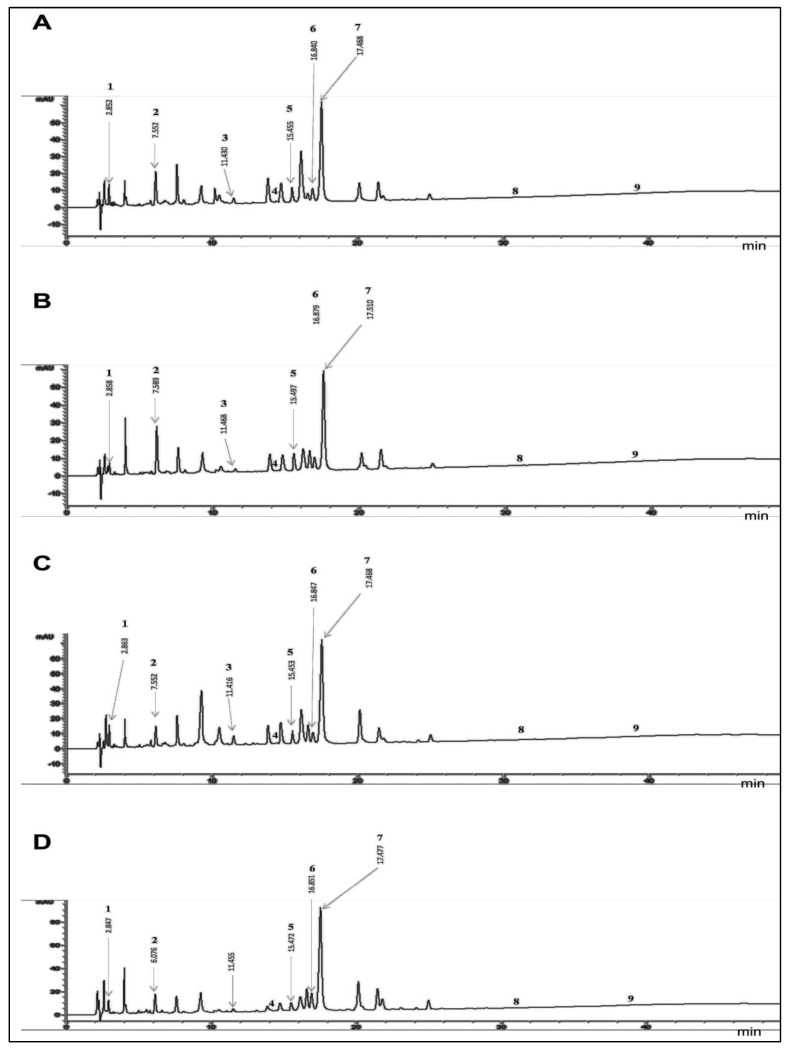
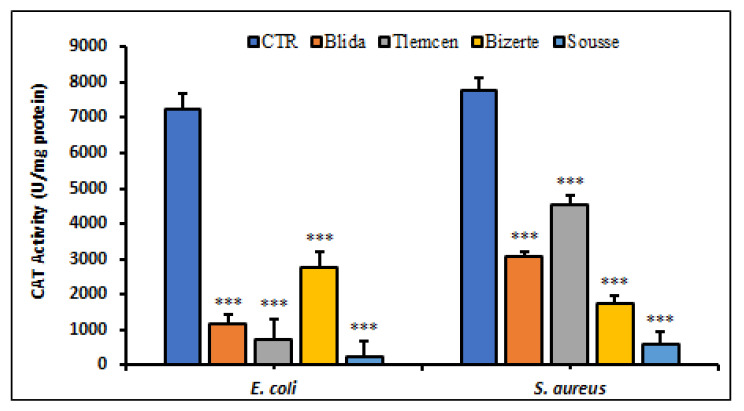
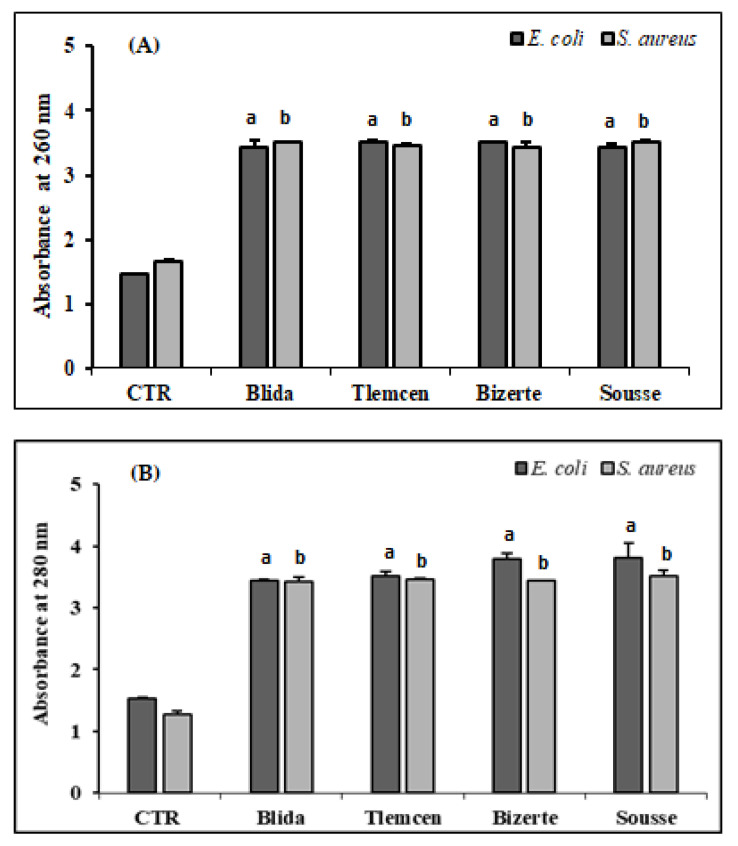
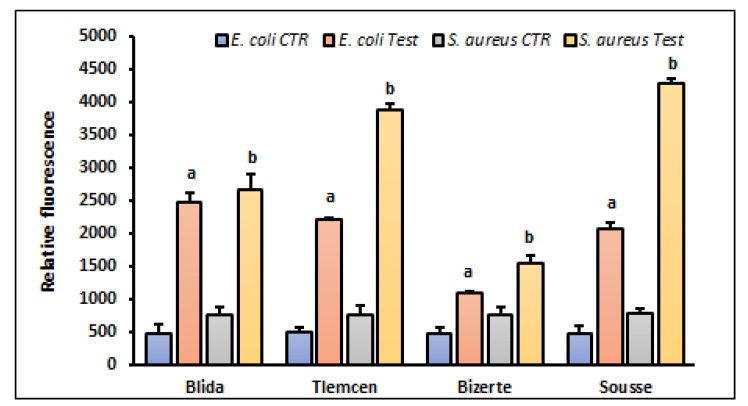
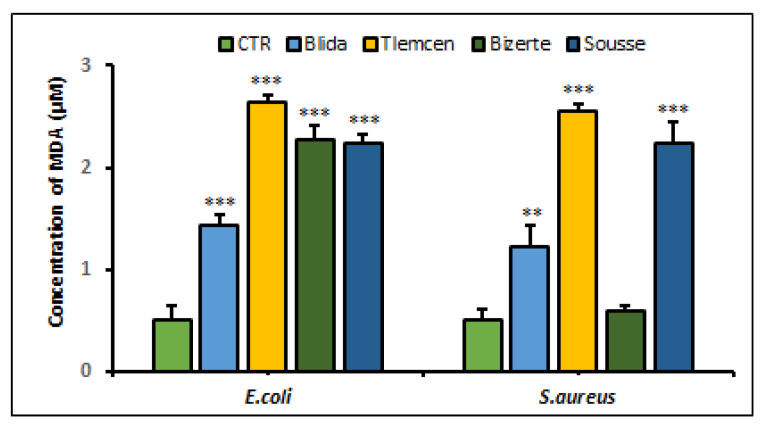
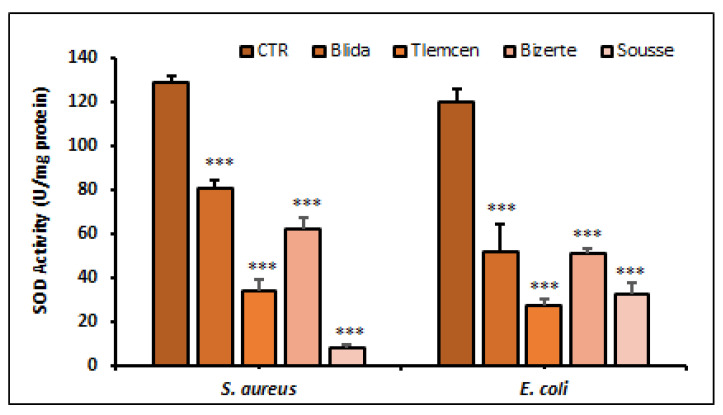
The present study was conducted to investigate the chemical composition of (Mill.) Swingle methanolic leaf extracts from geographically distinct regions and to assess their antimicrobial properties along with their ability to induce oxidative stress. The HPLC-DAD analysis revealed the presence of phenolic acids and flavonoids including chlorogenic acid, gallic acid, synapic acid, p-coumaric acid, apigenin, hyperoside, isoamnétine-3-O-beta-D-glucotrioside, quercetin, and isoquercetin in various amounts depending on the origin of tested extracts. The assessment of antibacterial activity showed the effectiveness of the extracts particularly against Gram-positive bacteria, with inhibition zone diameters reaching 14 ± 1 mm and minimum inhibitory concentrations ranging from 4 to 72.2 mg/mL. These bioactive substances also exhibited strong antibiofilm activity with an eradication percentage reaching 67.07%. Furthermore, they increased ROS production to levels two to five times higher than the control group, altered the membrane integrity and caused lipid peroxidation with MDA production exceeding 2.5 µmol/mg protein in the Gram-positive and Gram-negative strains. A decrease in the levels of the antioxidant enzymes SOD and CAT was also observed, indicating an impairment of the bacterial response to the oxidative stress caused by the tested extracts. These findings highlight the antibacterial properties of leaf extracts depending on their origins and promote their exploitation and application in the agro-food and pharmaceutical sectors.
本研究旨在调查来自不同地理区域的(米勒)斯文格甲醇叶提取物的化学成分,并评估其抗菌特性以及诱导氧化应激的能力。高效液相色谱 - 二极管阵列检测(HPLC - DAD)分析表明,根据受试提取物的来源不同,其含有不同量的酚酸和黄酮类化合物,包括绿原酸、没食子酸、芥子酸、对香豆酸、芹菜素、金丝桃苷、异鼠李素 - 3 - O - β - D - 葡萄糖三糖苷、槲皮素和异槲皮素。抗菌活性评估表明,该提取物对革兰氏阳性菌尤其有效,抑菌圈直径达14±1毫米,最低抑菌浓度范围为4至72.2毫克/毫升。这些生物活性物质还表现出很强的抗生物膜活性,根除率达67.07%。此外,它们使活性氧(ROS)生成量增加至对照组的两到五倍,改变了细胞膜完整性,并导致脂质过氧化,革兰氏阳性菌和革兰氏阴性菌中的丙二醛(MDA)生成量超过2.5微摩尔/毫克蛋白质。还观察到抗氧化酶超氧化物歧化酶(SOD)和过氧化氢酶(CAT)水平降低,表明受试提取物引起的氧化应激损害了细菌的反应。这些发现突出了不同来源的(植物名称未给出)叶提取物的抗菌特性,并促进了它们在农业食品和制药领域的开发与应用。