Chaudhry Tuba Shahid, Senapati Sidhartha Gautam, Gadam Srikanth, Mannam Hari Priya Sri Sai, Voruganti Hima Varsha, Abbasi Zainab, Abhinav Tushar, Challa Apurva Bhavana, Pallipamu Namratha, Bheemisetty Niharika, Arunachalam Shivaram P
Department of Neurology, Mayo Clinic, Rochester, MN 55905, USA.
Department of Cardiology, Mayo Clinic, Rochester, MN 55905, USA.
J Clin Med. 2023 Aug 11;12(16):5231. doi: 10.3390/jcm12165231.
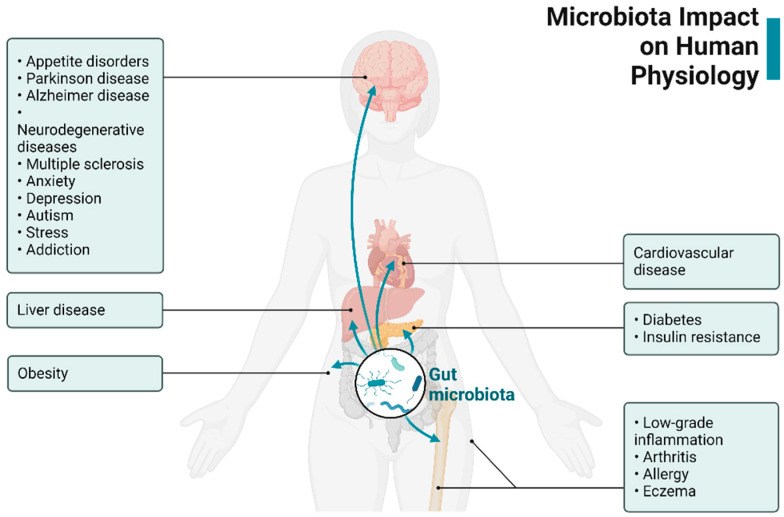
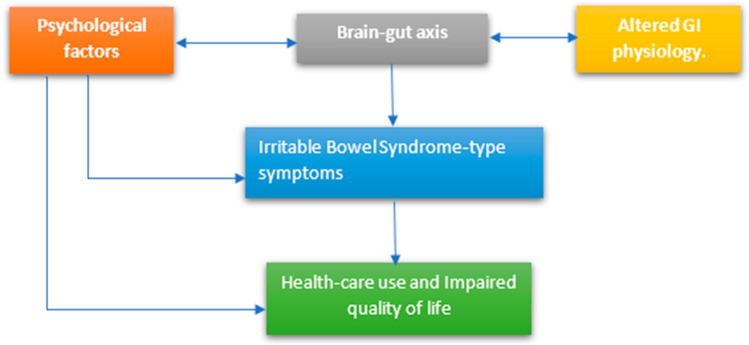
The association and interaction between the central nervous system (CNS) and enteric nervous system (ENS) is well established. Essentially ENS is the second brain, as we call it. We tried to understand the structure and function, to throw light on the functional aspect of neurons, and address various disease manifestations. We summarized how various neurological disorders influence the gut via the enteric nervous system and/or bring anatomical or physiological changes in the enteric nervous system or the gut and vice versa. It is known that stress has an effect on Gastrointestinal (GI) motility and causes mucosal erosions. In our literature review, we found that stress can also affect sensory perception in the central nervous system. Interestingly, we found that mutations in the neurohormone, serotonin (5-HT), would result in dysfunctional organ development and further affect mood and behavior. We focused on the developmental aspects of neurons and cognition and their relation to nutritional absorption via the gastrointestinal tract, the development of neurodegenerative disorders in relation to the alteration in gut microbiota, and contrariwise associations between CNS disorders and ENS. This paper further summarizes the synergetic relation between gastrointestinal and neuropsychological manifestations and emphasizes the need to include behavioral therapies in management plans.
中枢神经系统(CNS)与肠神经系统(ENS)之间的关联和相互作用已得到充分证实。本质上,ENS就是我们所说的“第二大脑”。我们试图了解其结构与功能,阐明神经元的功能方面,并探讨各种疾病表现。我们总结了各种神经系统疾病如何通过肠神经系统影响肠道和/或给肠神经系统或肠道带来解剖学或生理学变化,反之亦然。众所周知,压力会影响胃肠(GI)蠕动并导致黏膜糜烂。在我们的文献综述中,我们发现压力也会影响中枢神经系统的感觉认知。有趣的是,我们发现神经激素血清素(5-HT)的突变会导致器官发育功能障碍,并进一步影响情绪和行为。我们专注于神经元和认知的发育方面及其与胃肠道营养吸收的关系、与肠道微生物群改变相关的神经退行性疾病的发展,以及中枢神经系统疾病与肠神经系统之间的相反关联。本文进一步总结了胃肠道和神经心理表现之间的协同关系,并强调在管理计划中纳入行为疗法的必要性。