Division of Medicinal Chemistry, Amsterdam Institute of Molecular and Life Sciences (AIMMS), Vrije Universiteit Amsterdam, Amsterdam, The Netherlands.
Department of Neurosurgery, Amsterdam University Medical Centers, Cancer Center Amsterdam, Brain Tumor Center Amsterdam, Amsterdam, The Netherlands.
PLoS Comput Biol. 2023 Sep 5;19(9):e1011301. doi: 10.1371/journal.pcbi.1011301. eCollection 2023 Sep.
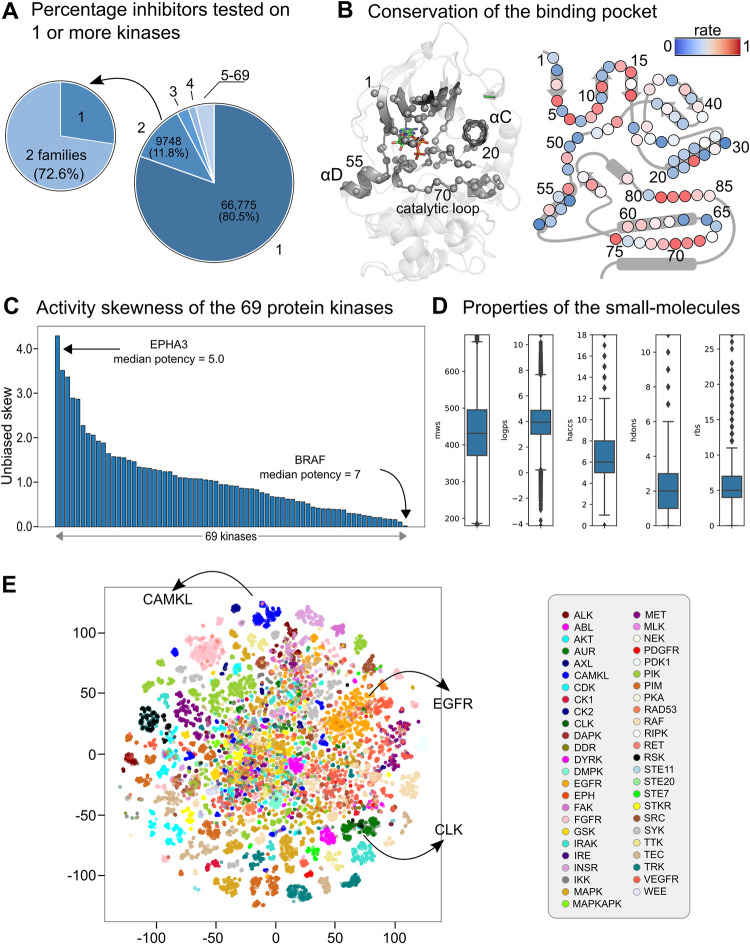
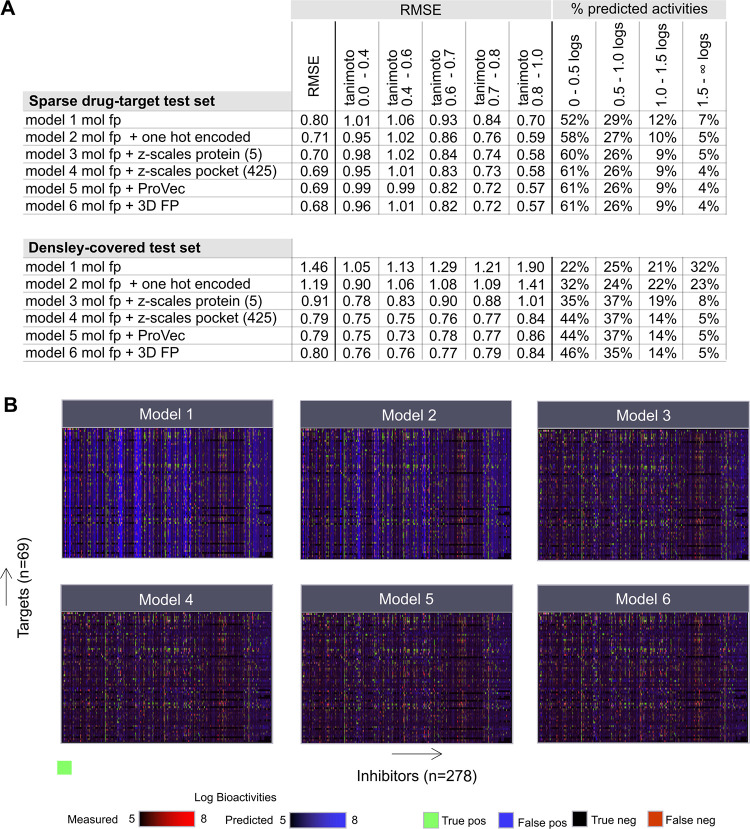
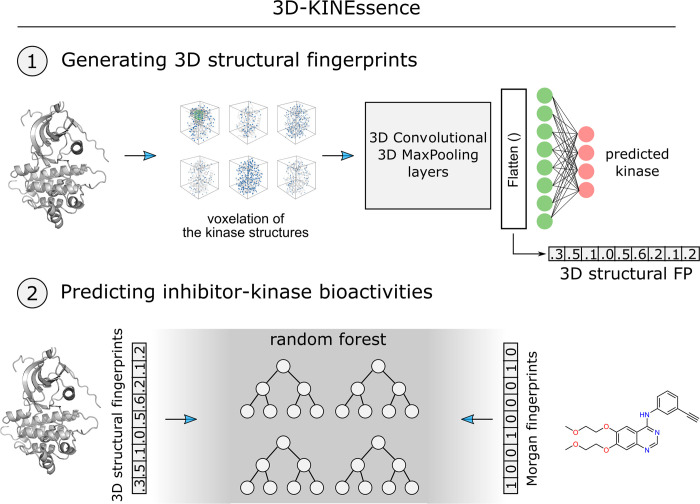
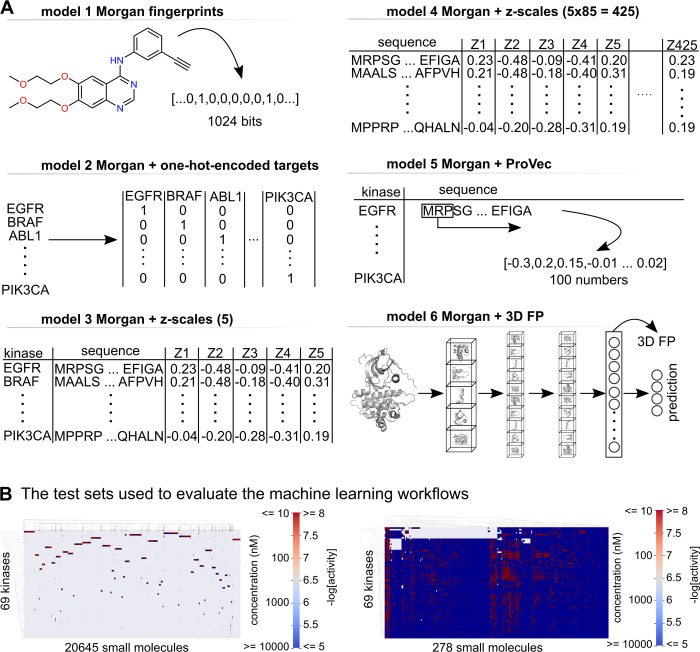
Many therapies in clinical trials are based on single drug-single target relationships. To further extend this concept to multi-target approaches using multi-targeted drugs, we developed a machine learning pipeline to unravel the target landscape of kinase inhibitors. This pipeline, which we call 3D-KINEssence, uses a new type of protein fingerprints (3D FP) based on the structure of kinases generated through a 3D convolutional neural network (3D-CNN). These 3D-CNN kinase fingerprints were matched to molecular Morgan fingerprints to predict the targets of each respective kinase inhibitor based on available bioactivity data. The performance of the pipeline was evaluated on two test sets: a sparse drug-target set where each drug is matched in most cases to a single target and also on a densely-covered drug-target set where each drug is matched to most if not all targets. This latter set is more challenging to train, given its non-exclusive character. Our model's root-mean-square error (RMSE) based on the two datasets was 0.68 and 0.8, respectively. These results indicate that 3D FP can predict the target landscape of kinase inhibitors at around 0.8 log units of bioactivity. Our strategy can be utilized in proteochemometric or chemogenomic workflows by consolidating the target landscape of kinase inhibitors.
许多临床试验中的疗法都是基于单药单靶关系。为了进一步将这一概念扩展到使用多靶药物的多靶方法,我们开发了一种机器学习管道来揭示激酶抑制剂的靶标景观。我们称之为 3D-KINEssence 的这个管道使用了一种基于通过 3D 卷积神经网络 (3D-CNN) 生成的激酶结构的新型蛋白质指纹(3D FP)。这些 3D-CNN 激酶指纹与分子摩根指纹相匹配,根据可用的生物活性数据预测每个激酶抑制剂的靶标。该管道的性能在两个测试集上进行了评估:一个是稀疏的药物-靶标集,其中大多数情况下每种药物都与单个靶标匹配,另一个是密集的药物-靶标集,其中每种药物都与大多数(如果不是全部)靶标匹配。由于其非排他性,后一组更具挑战性。我们的模型基于这两个数据集的均方根误差(RMSE)分别为 0.68 和 0.8。这些结果表明,3D FP 可以预测激酶抑制剂的靶标景观,大约在 0.8 个生物活性对数单位左右。我们的策略可以通过整合激酶抑制剂的靶标景观,在蛋白质组化学计量学或化学基因组学工作流程中得到利用。