Antonsen Erik L, Connell Erin, Anton Wilma, Reynolds Robert J, Buckland Daniel M, Van Baalen Mary
Center for Space Medicine, Department of Emergency Medicine, Baylor College of Medicine, Houston, TX, USA.
Leidos Innovations, Houston, TX, USA.
NPJ Microgravity. 2023 Sep 7;9(1):72. doi: 10.1038/s41526-023-00305-z.
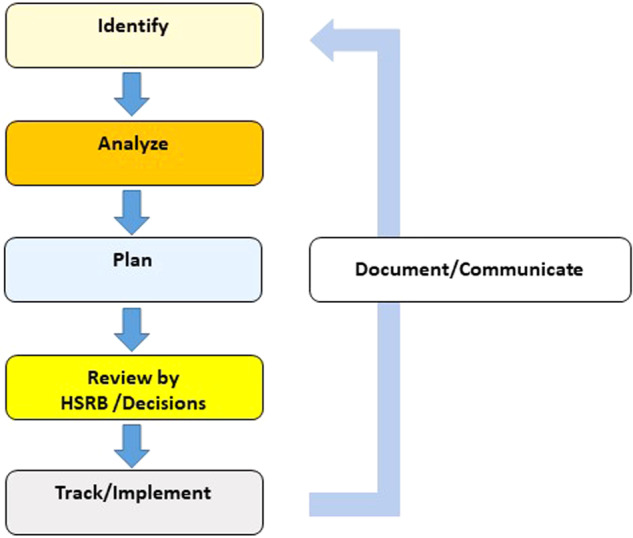
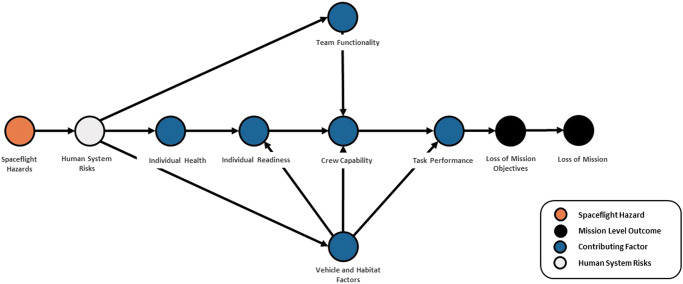
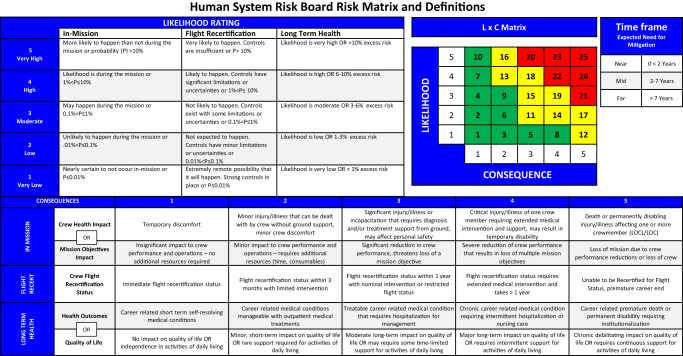
This paper describes updates to NASA's approach for assessing and mitigating spaceflight-induced risks to human health and performance. This approach continues to evolve to meet dynamically changing risk environments: lunar missions are currently being designed and the ultimate destination will be Mars. Understanding the risks that astronauts will face during a Mars mission will depend on building an evidence base that informs not only how the humans respond to the challenges of the spaceflight environment, but also how systems and vehicles can be designed to support human capabilities and limitations. This publication documents updates to the risk management process used by the Human System Risk Board at NASA and includes changes to the likelihood and consequence matrix used by the board, the design reference mission categories and parameters, and the standardized evaluation of the levels of evidence that the board accepts when setting risk posture. Causal diagramming, using directed acyclic graphs, provides all stakeholders with the current understanding of how each risk proceeds from a spaceflight hazard to a mission-level outcome. This standardized approach enables improved communication among stakeholders and delineates how and where more knowledge can improve perspective of human system risks and which countermeasures can best mitigate these risks.
本文介绍了美国国家航空航天局(NASA)评估和减轻太空飞行对人类健康和性能所造成风险的方法的更新情况。这种方法不断演进,以应对动态变化的风险环境:目前正在设计月球任务,而最终目的地将是火星。要了解宇航员在火星任务期间将面临的风险,将取决于建立一个证据库,该证据库不仅能说明人类如何应对太空飞行环境的挑战,还能说明如何设计系统和飞行器以支持人类的能力和局限。本出版物记录了NASA人类系统风险委员会所使用的风险管理流程的更新情况,包括该委员会所使用的可能性和后果矩阵的变化、设计参考任务类别和参数,以及该委员会在设定风险态势时所接受的证据水平的标准化评估。使用有向无环图的因果关系图为所有利益相关者提供了对每种风险如何从太空飞行危害发展到任务级结果的当前理解。这种标准化方法能够改善利益相关者之间的沟通,并描绘出更多知识如何以及在何处能够改善对人类系统风险的认识,以及哪些对策能够最好地减轻这些风险。