National Engineering Laboratory for AIDS Vaccine, School of Life Sciences, Jilin University, Changchun 130012, China.
Key Laboratory for Molecular Enzymology and Engineering of Ministry of Education, School of Life Sciences, Jilin University, Changchun 130012, China.
Int J Mol Sci. 2023 Sep 2;24(17):13587. doi: 10.3390/ijms241713587.
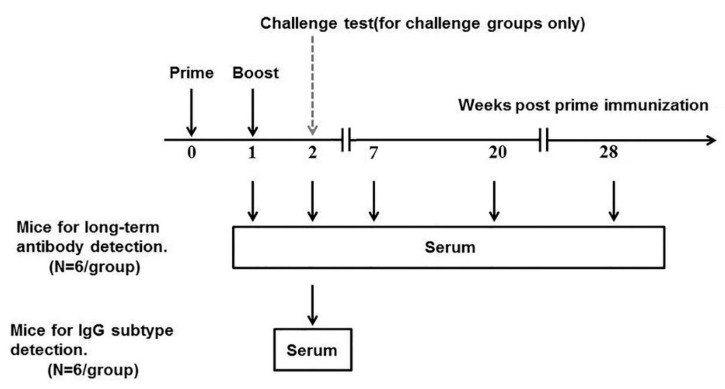
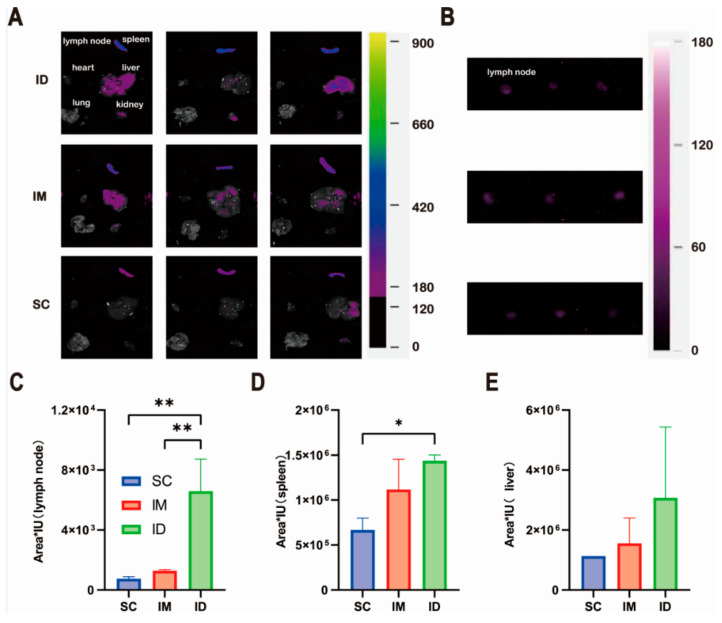
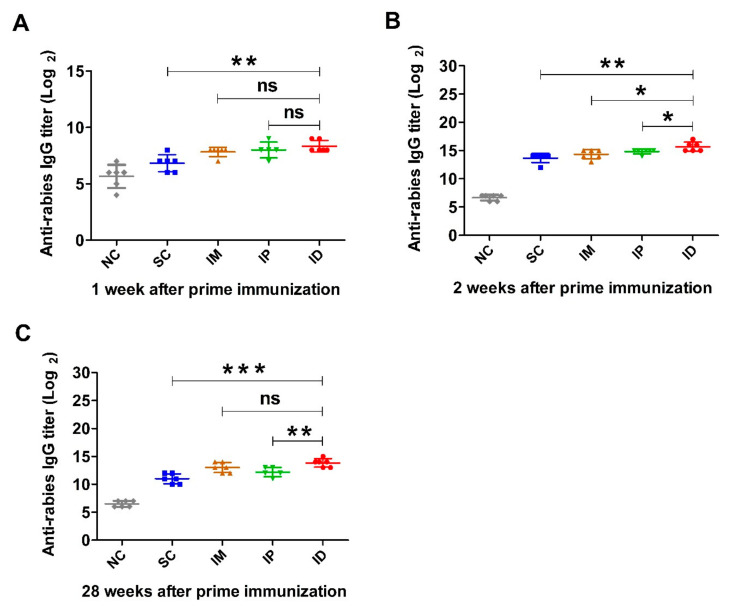
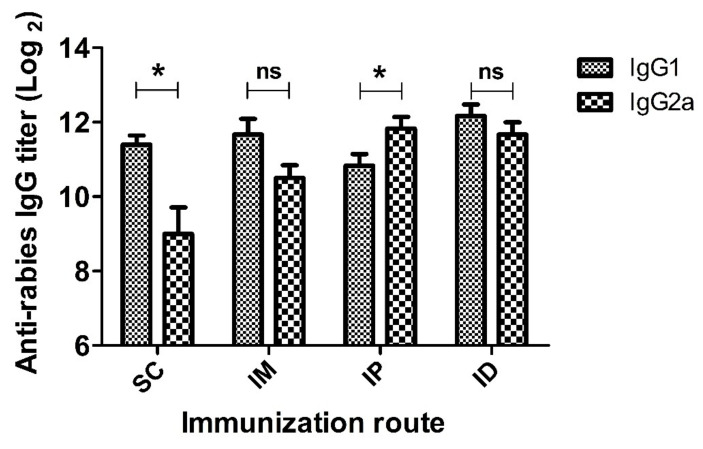
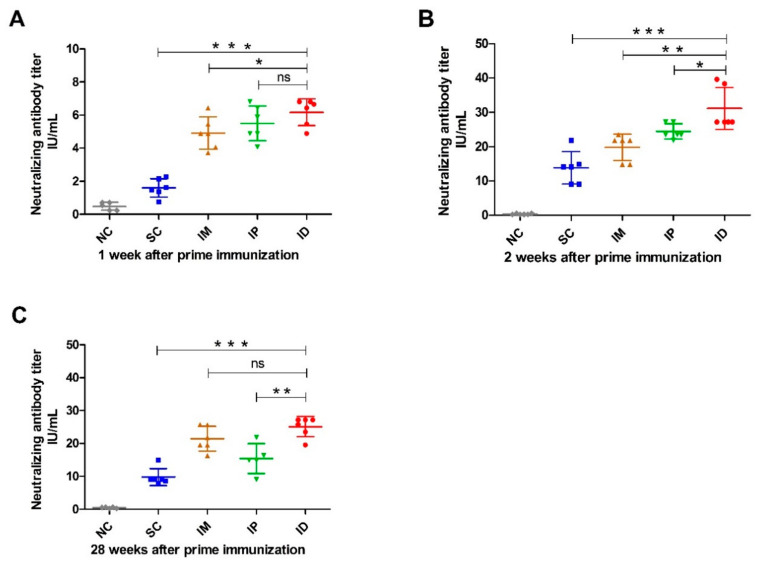
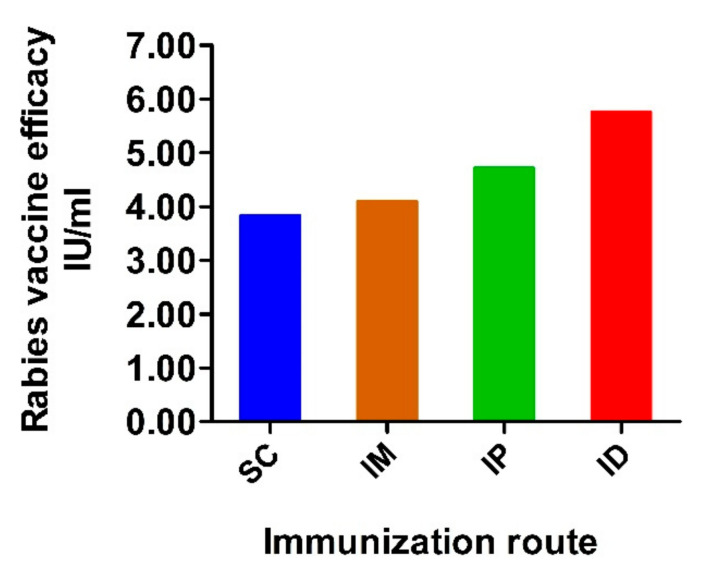
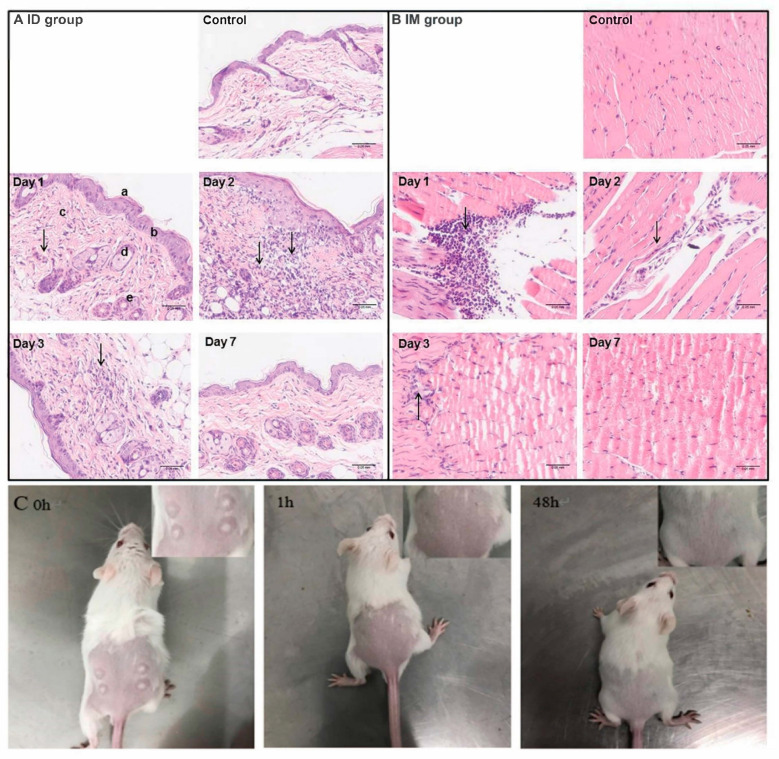
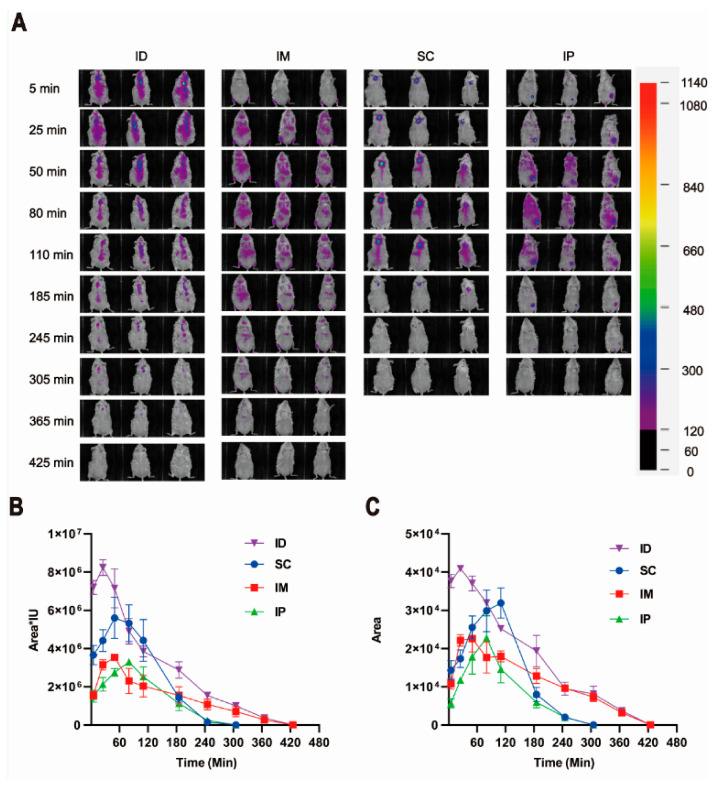
Inoculation routes may significantly affect vaccine performance due to the local microenvironment, antigen localization and presentation, and, therefore, final immune responses. In this study, we conducted a head-to-head comparison of immune response and safety of inactivated rabies vaccine inoculated via intraperitoneal (IP), intramuscular (IM), subcutaneous (SC) and needle-free injection technology-based intradermal (ID) routes in ICR mice. Immune response was assessed in terms of antigen-specific antibodies, antibody subtypes and neutralizing antibodies for up to 28 weeks. A live rabies virus challenge was also carried out to evaluate vaccine potency. The dynamics of inflammatory cell infiltration at the skin and muscle levels were determined via histopathological examination. The kinetics and distribution of a model antigen were also determined by using in vivo fluorescence imaging. Evidence is presented that the vaccine inoculated via the ID route resulted in the highest antigen-specific antibody and neutralizing antibody titers among all administration routes, while IP and IM routes were comparable, followed by the SC route. Antibody subtype analysis shows that the IP route elicited a Th1-biased immune response, while SC and IM administration elicited a prominent Th2-type immune response. Unexpectedly, the ID route leads to a balanced Th1 and Th2 immune response. In addition, the ID route conferred effective protection against lethal challenge with 40 LD50 of the rabies CVS strain, which was followed by IP and IM routes. Moreover, a one-third dose of the vaccine inoculated via the ID route provided comparable or higher efficacy to a full dose of the vaccine via the other three routes. The superior performance of ID inoculation over other routes is related to longer local retention at injection sites and higher lymphatic drainage. Histopathology examination reveals a transient inflammatory cell infiltration at ID and IM injection sites which peaked at 48 h and 24 h, respectively, after immunization, with all side effects disappearing within one week. These results suggest that needle-free injection technology-based ID inoculation is a promising strategy for rabies vaccination in regard to safety and efficacy.
接种途径可能会因局部微环境、抗原定位和呈递,以及最终的免疫反应而显著影响疫苗的性能。在这项研究中,我们在 ICR 小鼠中对头对头比较了经腹腔 (IP)、肌肉内 (IM)、皮下 (SC) 和无针注射技术皮内 (ID) 途径接种狂犬病灭活疫苗的免疫反应和安全性。在长达 28 周的时间内,根据抗原特异性抗体、抗体亚型和中和抗体评估免疫反应。还进行了活狂犬病病毒挑战以评估疫苗效力。通过组织病理学检查确定皮肤和肌肉水平的炎症细胞浸润动力学。还通过体内荧光成像确定模型抗原的动力学和分布。有证据表明,与所有给药途径相比,经 ID 途径接种的疫苗可引起最高的抗原特异性抗体和中和抗体滴度,而 IP 和 IM 途径相当,其次是 SC 途径。抗体亚型分析表明,IP 途径引起 Th1 偏向性免疫反应,而 SC 和 IM 给药引起明显的 Th2 型免疫反应。出乎意料的是,ID 途径导致平衡的 Th1 和 Th2 免疫反应。此外,ID 途径可有效预防 40 LD50 狂犬病 CVS 株的致死性挑战,其次是 IP 和 IM 途径。此外,经 ID 途径接种三分之一剂量的疫苗与经其他三种途径接种全剂量的疫苗具有相当或更高的疗效。ID 接种优于其他途径的表现与在注射部位的更长时间局部保留和更高的淋巴引流有关。组织病理学检查显示 ID 和 IM 注射部位的短暂炎症细胞浸润,分别在免疫后 48 小时和 24 小时达到峰值,所有副作用在一周内消失。这些结果表明,基于无针注射技术的 ID 接种在安全性和有效性方面是狂犬病疫苗接种的一种有前途的策略。