Wang Zhenjiang, Guo Mingyi, Li Jing, Jiang Chuangming, Yang Sen, Zheng Shizhuo, Li Mingzhe, Ai Xinbo, Xu Xiaohong, Zhang Wenbo, He Xingxiang, Wang Yinan, Chen Yuping
Department of Gastroenterology, Zhuhai Hospital Affiliated with Jinan University (Zhuhai People's Hospital) , Zhuhai, China.
School of Management, University of Science and Technology of China , Hefei, Anhui, China.
Microbiol Spectr. 2023 Sep 12;11(5):e0082923. doi: 10.1128/spectrum.00829-23.
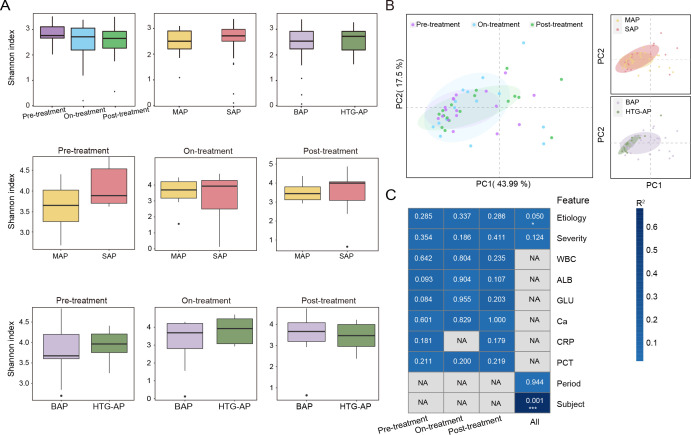
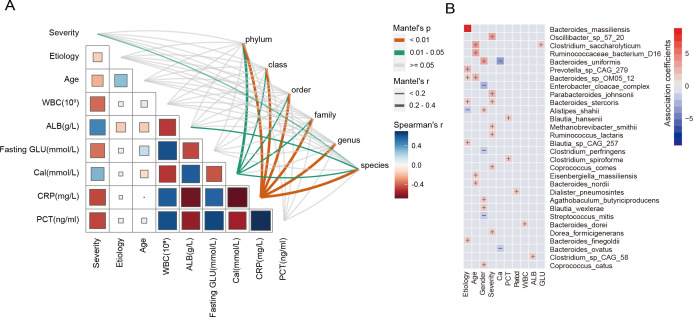
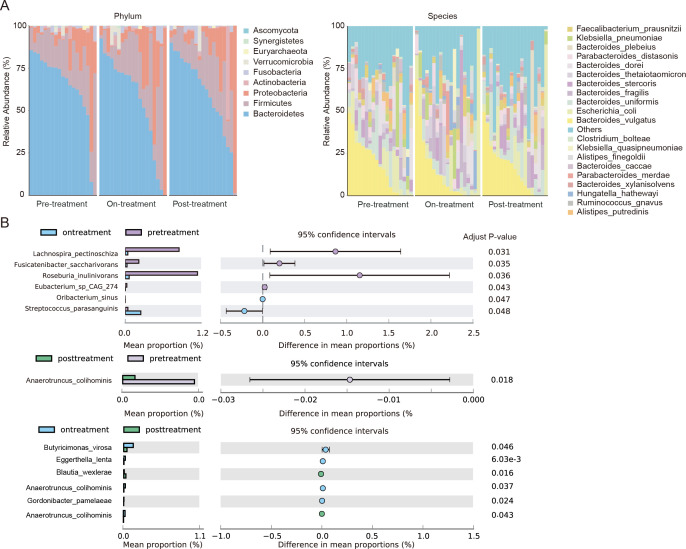
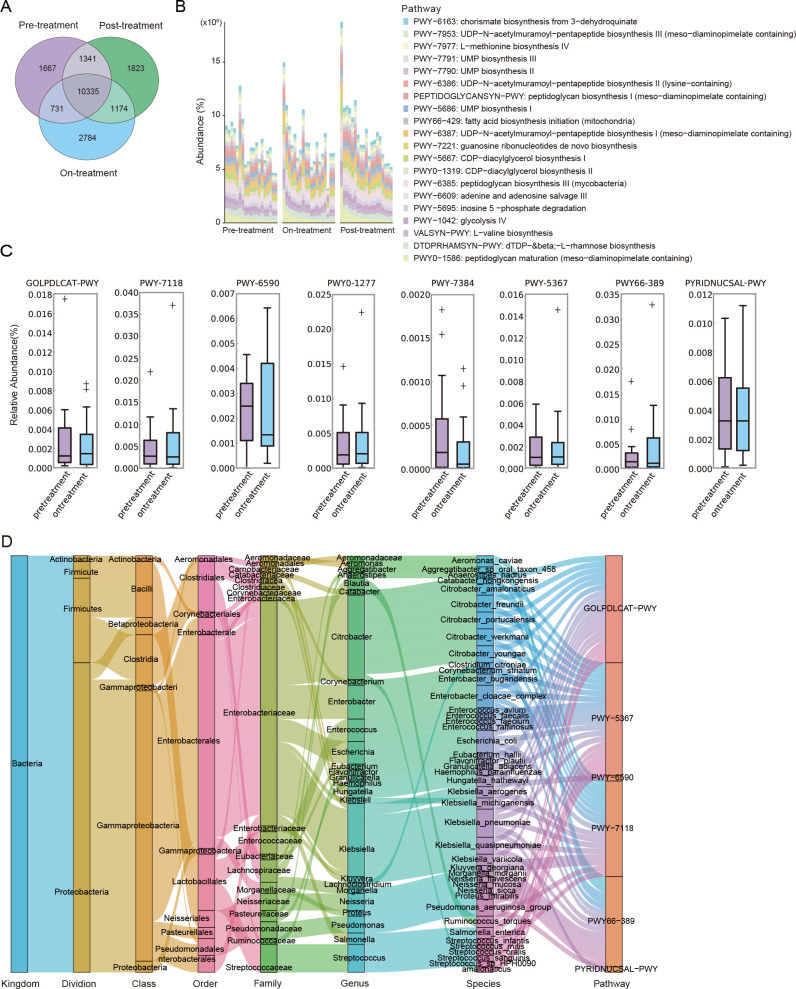
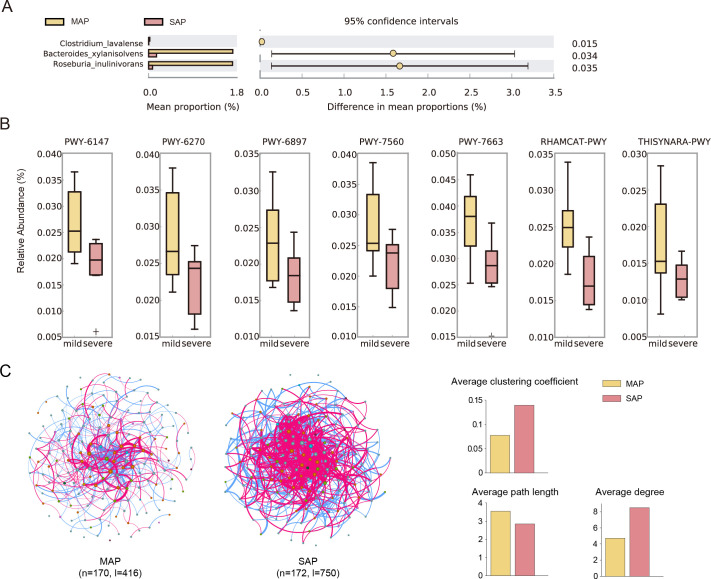
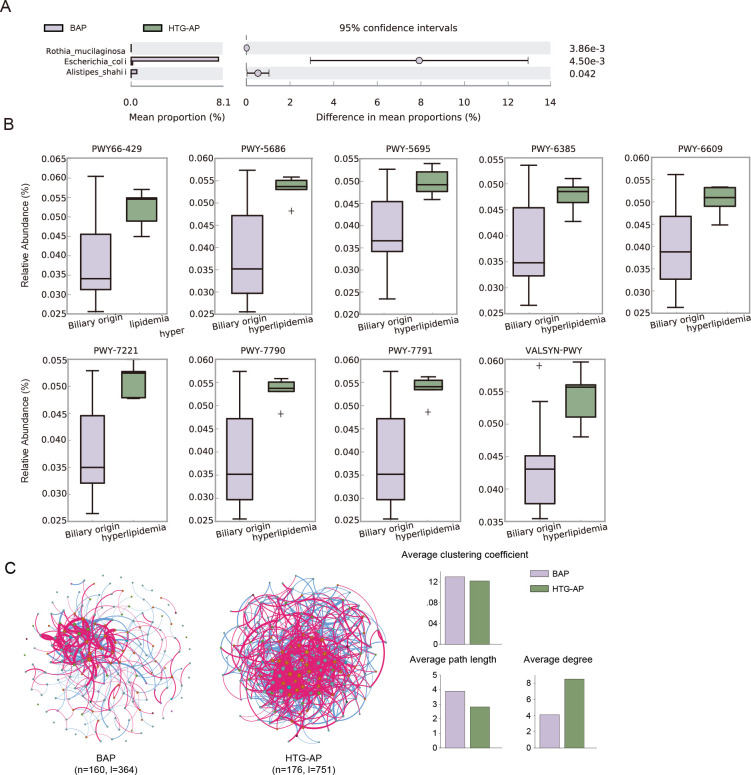
Acute pancreatitis (AP) is a type of digestive system disease with high mortality. Previous studies have shown that gut microbiota can participate in developing and treating acute pancreatitis by affecting the host's metabolism. In this study, we followed 20 AP patients to generate longitudinal gut microbiota profiles and activity during disease (before treatment, on the third day of treatment, and 1 month after discharge). We analyzed species composition and metabolic pathways' changes across the treatment phase, severity, and etiology. The diversity of the gut microbiome of patients with AP did not show much variation with treatment. In contrast, the metabolic functions of the gut microbiota, such as the essential chemical reactions that produce energy and maintain life, were partially reinstated after treatment. The severe AP (SAP) patients contained less beneficial bacteria (i.e., , and ) and weaker sugar degradation function than mild AP patients before treatment. Moreover, etiology was one of the drivers of gut microbiome composition and explained the 3.54% variation in species' relative abundance. The relative abundance of pathways related to lipid synthesis was higher in the gut of hyperlipidemia AP patients than in biliary AP patients. The composition and functional profiles of the gut microbiota reflect the severity and etiology of AP. Otherwise, we also identified bacterial species associated with SAP, i.e., sp 57_20 and , which have the potential to identify the SAP at an early stage. IMPORTANCE Acute pancreatitis (AP) is a type of digestive system disease with high mortality. Previous studies have shown that gut microbiota can participate in the development and treatment of acute pancreatitis by affecting the host's metabolism. However, fewer studies acquired metagenomic sequencing data to associate species to functions intuitively and performed longitudinal analysis to explore how gut microbiota influences the development of AP. We followed 20 AP patients to generate longitudinal gut microbiota profiles and activity during disease and studied the differences in intestinal flora under different severities and etiologies. We have two findings. First, the gut microbiota profile has the potential to identify the severity and etiology of AP at an early stage. Second, gut microbiota likely acts synergistically in the development of AP. This study provides a reference for characterizing the driver flora of severe AP to identify the severity of acute pancreatitis at an early stage.
急性胰腺炎(AP)是一种死亡率较高的消化系统疾病。先前的研究表明,肠道微生物群可通过影响宿主代谢参与急性胰腺炎的发生发展及治疗过程。在本研究中,我们追踪了20例急性胰腺炎患者,以生成疾病期间(治疗前、治疗第3天和出院后1个月)的肠道微生物群纵向图谱及活性。我们分析了整个治疗阶段、严重程度和病因方面的物种组成及代谢途径变化。急性胰腺炎患者肠道微生物群的多样性在治疗过程中变化不大。相比之下,肠道微生物群的代谢功能,如产生能量和维持生命的基本化学反应,在治疗后部分得以恢复。治疗前,重症急性胰腺炎(SAP)患者体内有益菌(即 、 和 )数量少于轻症急性胰腺炎患者,且糖降解功能较弱。此外,病因是肠道微生物群组成的驱动因素之一,解释了物种相对丰度3.54%的变化。高脂血症性急性胰腺炎患者肠道中与脂质合成相关途径的相对丰度高于胆源性急性胰腺炎患者。肠道微生物群的组成和功能图谱反映了急性胰腺炎的严重程度和病因。此外,我们还鉴定出了与重症急性胰腺炎相关的细菌物种,即sp 57_20和 ,它们有可能在早期识别出重症急性胰腺炎。重要性 急性胰腺炎(AP)是一种死亡率较高的消化系统疾病。先前的研究表明,肠道微生物群可通过影响宿主代谢参与急性胰腺炎的发生发展及治疗过程。然而,较少有研究获取宏基因组测序数据以直观地将物种与功能关联起来,并进行纵向分析以探究肠道微生物群如何影响急性胰腺炎的发展。我们追踪了20例急性胰腺炎患者,以生成疾病期间的肠道微生物群纵向图谱及活性,并研究了不同严重程度和病因下肠道菌群的差异。我们有两个发现。第一,肠道微生物群图谱有潜力在早期识别急性胰腺炎的严重程度和病因。第二,肠道微生物群可能在急性胰腺炎的发展过程中协同发挥作用。本研究为表征重症急性胰腺炎的驱动菌群以在早期识别急性胰腺炎的严重程度提供了参考。