Center for Advanced Innate Cell Therapy, Texas Children's Cancer Center, Department of Pediatrics, Baylor College of Medicine, Houston, TX, USA; Center for Cell and Gene Therapy, Baylor College of Medicine, Houston, TX, USA.
Center for Advanced Innate Cell Therapy, Texas Children's Cancer Center, Department of Pediatrics, Baylor College of Medicine, Houston, TX, USA.
Mol Ther. 2023 Nov 1;31(11):3210-3224. doi: 10.1016/j.ymthe.2023.09.008. Epub 2023 Sep 13.
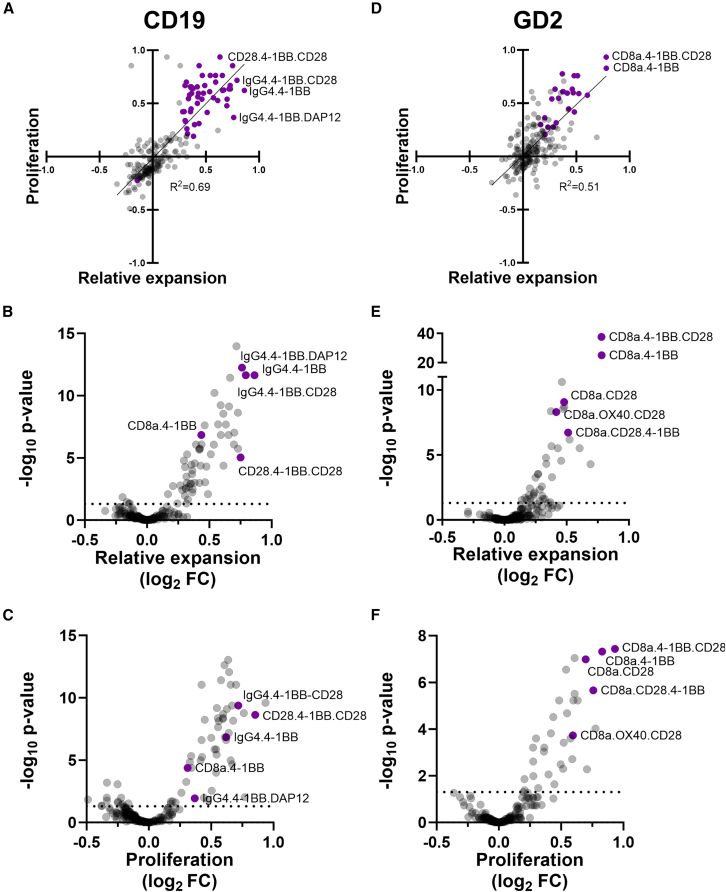
Chimeric antigen receptor (CAR)-T cells represent a promising frontier in cancer immunotherapy. However, the current process for developing new CAR constructs is time consuming and inefficient. To address this challenge and expedite the evaluation and comparison of full-length CAR designs, we have devised a novel cloning strategy. This strategy involves the sequential assembly of individual CAR domains using blunt ligation, with each domain being assigned a unique DNA barcode. Applying this method, we successfully generated 360 CAR constructs that specifically target clinically validated tumor antigens CD19 and GD2. By quantifying changes in barcode frequencies through next-generation sequencing, we characterize CARs that best mediate proliferation and expansion of transduced T cells. The screening revealed a crucial role for the hinge domain in CAR functionality, with CD8a and IgG4 hinges having opposite effects in the surface expression, cytokine production, and antitumor activity in CD19- versus GD2-based CARs. Importantly, we discovered two novel CD19-CAR architectures containing the IgG4 hinge domain that mediate superior in vivo antitumor activity compared with the construct used in Kymriah, a U.S. Food and Drug Administration (FDA)-approved therapy. This novel screening approach represents a major advance in CAR engineering, enabling accelerated development of cell-based cancer immunotherapies.
嵌合抗原受体 (CAR)-T 细胞代表癌症免疫治疗的一个有前途的前沿领域。然而,开发新的 CAR 结构的当前过程既耗时又低效。为了解决这一挑战并加快全长 CAR 设计的评估和比较,我们设计了一种新的克隆策略。该策略涉及使用平头连接顺序组装单个 CAR 结构域,每个结构域都被分配一个独特的 DNA 条码。应用这种方法,我们成功地生成了 360 种专门针对临床验证的肿瘤抗原 CD19 和 GD2 的 CAR 构建体。通过下一代测序定量测量条码频率的变化,我们表征了最佳介导转导 T 细胞增殖和扩增的 CAR。筛选结果表明铰链结构域在 CAR 功能中起着关键作用,CD8a 和 IgG4 铰链在基于 CD19 和 GD2 的 CAR 中的表面表达、细胞因子产生和抗肿瘤活性方面具有相反的作用。重要的是,我们发现了两种含有 IgG4 铰链结构域的新型 CD19-CAR 结构,与美国食品和药物管理局 (FDA) 批准的疗法 Kymriah 中使用的构建体相比,介导了更好的体内抗肿瘤活性。这种新的筛选方法是 CAR 工程的重大进展,能够加速基于细胞的癌症免疫疗法的开发。