Mallinckrodt Institute of Radiology, Neuroradiology Division, Washington University in St. Louis, MO, USA.
Pacific Brain Health Center, Pacific Neuroscience Institute and Foundation, Santa Monica, CA, USA.
Aging Dis. 2024 Aug 1;15(4):1831-1842. doi: 10.14336/AD.2023.0820.
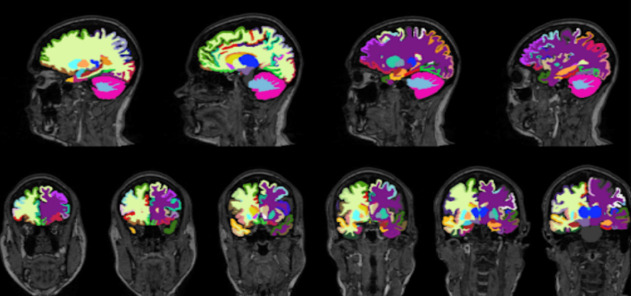
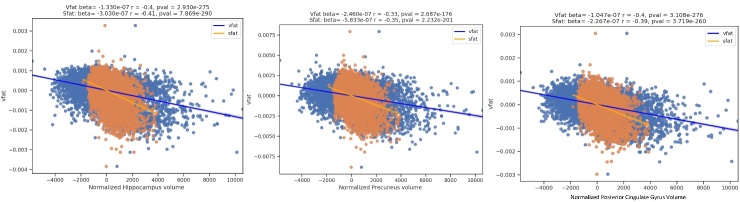
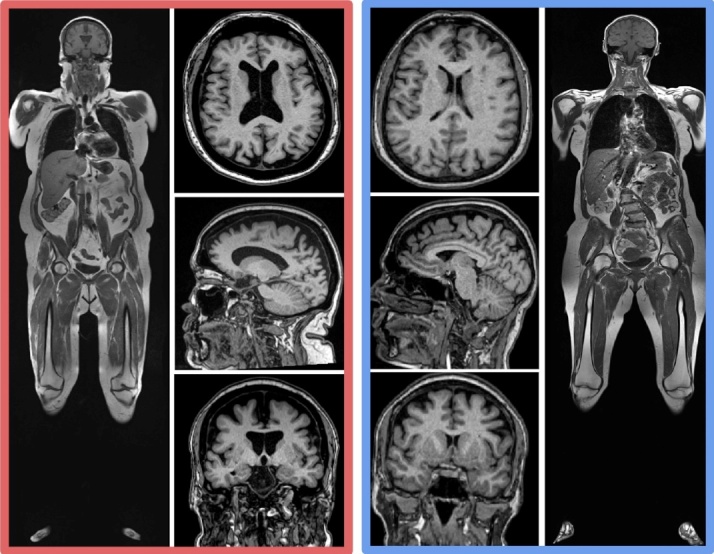
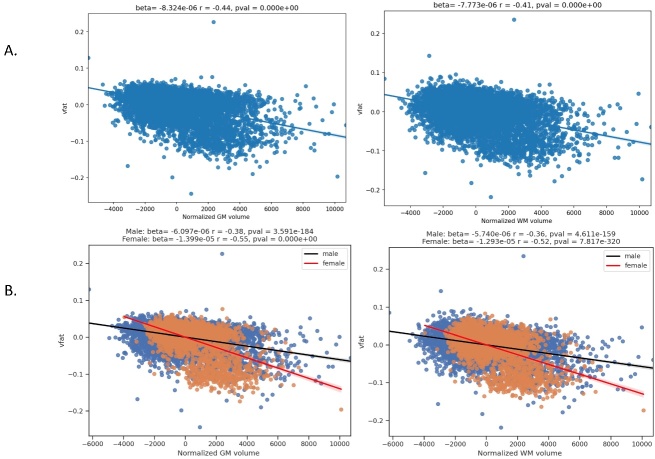
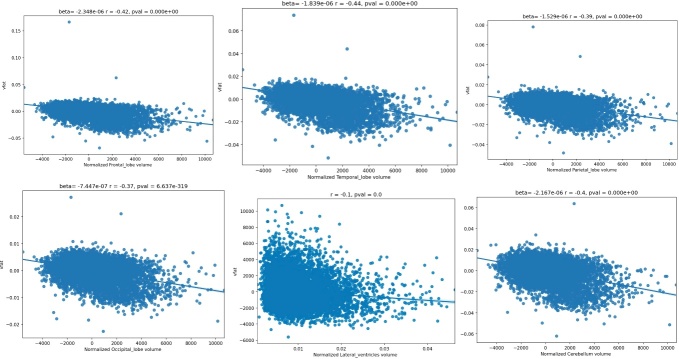
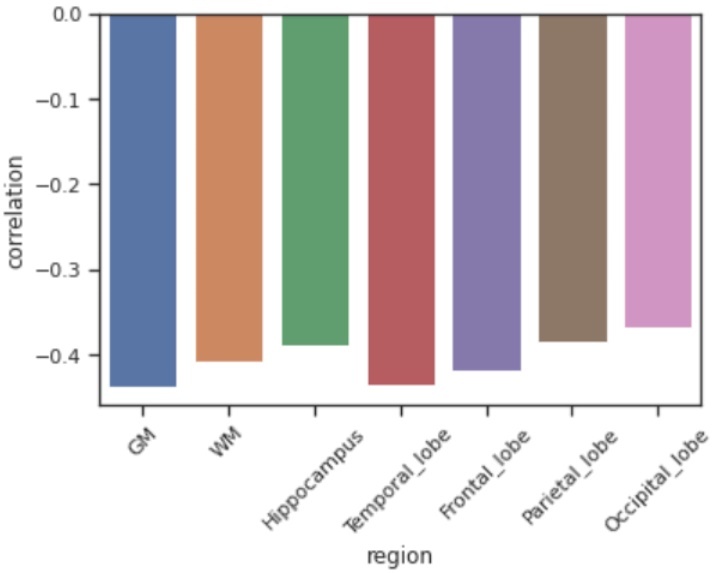
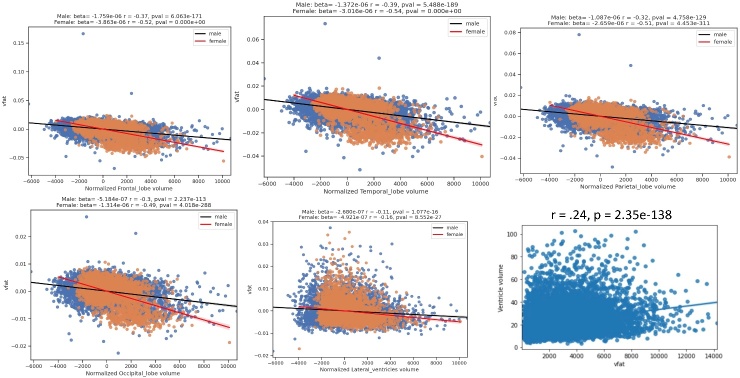
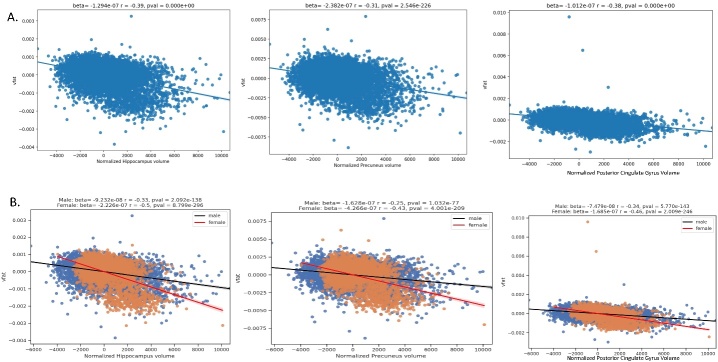
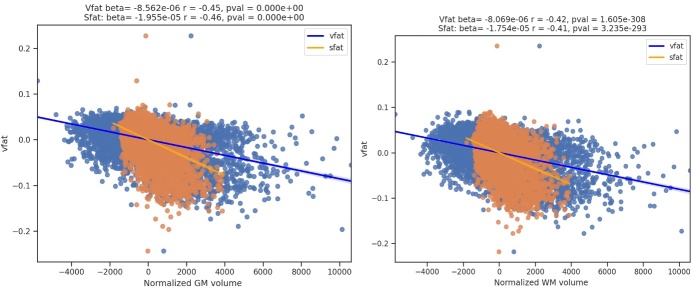
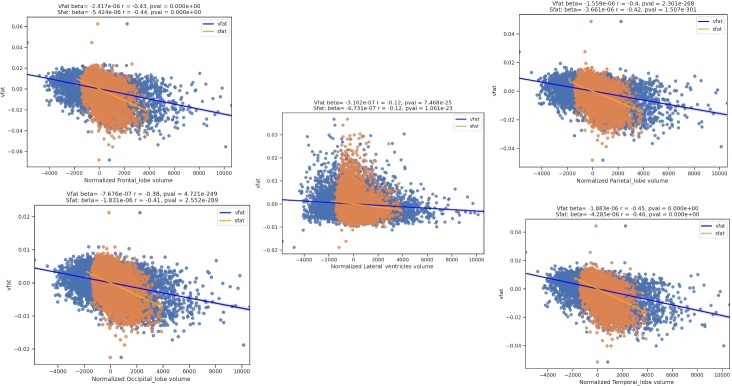
Abdominal fat is increasingly linked to brain health. A total of 10,001 healthy participants were scanned on 1.5T MRI with a short whole-body MR imaging protocol. Deep learning with FastSurfer segmented 96 brain regions. Separate models segmented visceral and subcutaneous abdominal fat. Regression analyses of abdominal fat types and normalized brain volumes were evaluated, controlling for age and sex. Logistic regression models determined the risk of brain total gray and white matter volume loss from the highest quartile of visceral fat and lowest quartile of these brain volumes. This cohort had an average age of 52.9 ± 13.1 years with 52.8% men and 47.2% women. Segmented visceral abdominal fat predicted lower volumes in multiple regions including: total gray matter volume (r = -.44, p<.001), total white matter volume (r =-.41, p<.001), hippocampus (r = -.39, p< .001), frontal cortex (r = -.42, p<.001), temporal lobes (r = -.44, p<.001), parietal lobes (r = -.39, p<.001), occipital lobes (r =-.37, p<.001). Women showed lower brain volumes than men related to increased visceral fat. Visceral fat predicted increased risk for lower total gray matter (age 20-39: OR = 5.9; age 40-59, OR = 5.4; 60-80, OR = 5.1) and low white matter volume: (age 20-39: OR = 3.78; age 40-59, OR = 4.4; 60-80, OR = 5.1). Higher subcutaneous fat is related to brain volume loss. Elevated visceral and subcutaneous fat predicted lower brain volumes and may represent novel modifiable factors in determining brain health.
腹部脂肪与大脑健康的关系越来越密切。共有 10001 名健康参与者接受了 1.5T MRI 扫描,使用了短全身 MR 成像方案。使用 FastSurfer 进行深度学习,对 96 个大脑区域进行分割。分别对内脏和皮下腹部脂肪的模型进行分割。评估了腹部脂肪类型与标准化脑容量的回归分析,同时控制年龄和性别。逻辑回归模型确定了内脏脂肪最高四分位数和这些脑容量最低四分位数与脑总灰质和白质容积损失风险的关系。该队列的平均年龄为 52.9±13.1 岁,其中 52.8%为男性,47.2%为女性。分割的内脏腹部脂肪预测多个区域的体积较低,包括:总灰质体积(r = -.44,p<.001)、总白质体积(r = -.41,p<.001)、海马体(r = -.39,p<.001)、额叶皮质(r = -.42,p<.001)、颞叶(r = -.44,p<.001)、顶叶(r = -.39,p<.001)、枕叶(r = -.37,p<.001)。女性与内脏脂肪增加相关的脑容量低于男性。内脏脂肪预测总灰质(年龄 20-39:OR = 5.9;年龄 40-59,OR = 5.4;60-80,OR = 5.1)和低白质体积的风险增加:(年龄 20-39:OR = 3.78;年龄 40-59,OR = 4.4;60-80,OR = 5.1)。较高的皮下脂肪与脑容量损失有关。内脏和皮下脂肪升高预测脑容量降低,可能是确定大脑健康的新的可调节因素。