Department of Radiology, Faculty of Medicine, University of Peradeniya, Peradeniya, 20400, Sri Lanka.
Department of Radiography/Radiotherapy, Faculty of Allied Health Sciences, University of Peradeniya, Peradeniya, 20400, Sri Lanka.
Sci Rep. 2023 Sep 22;13(1):15772. doi: 10.1038/s41598-023-41353-5.
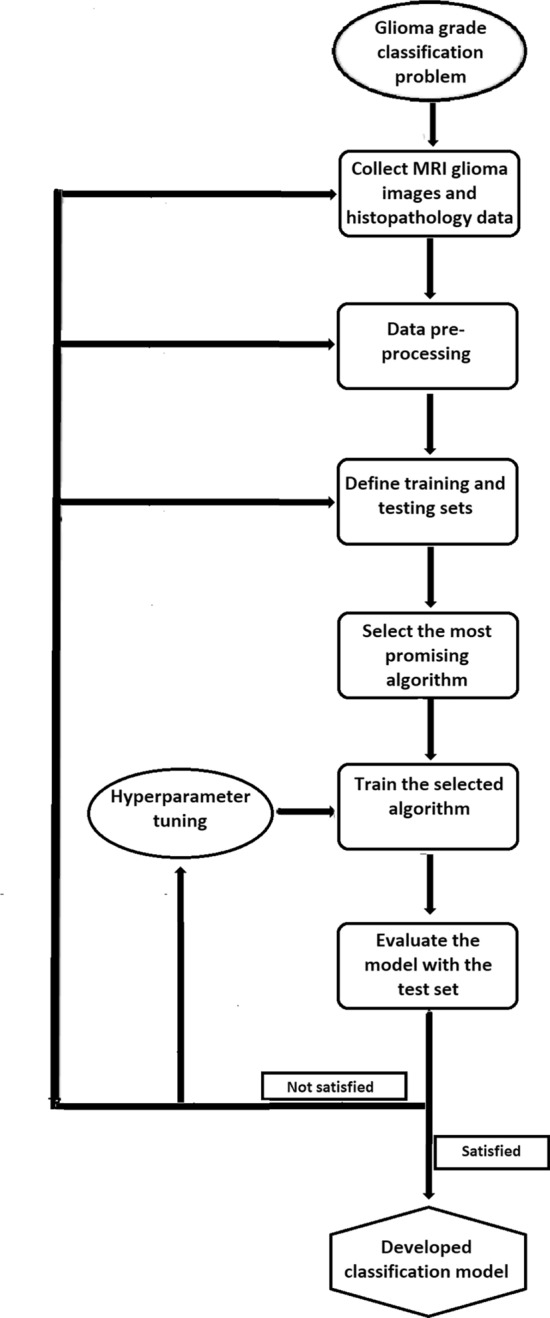
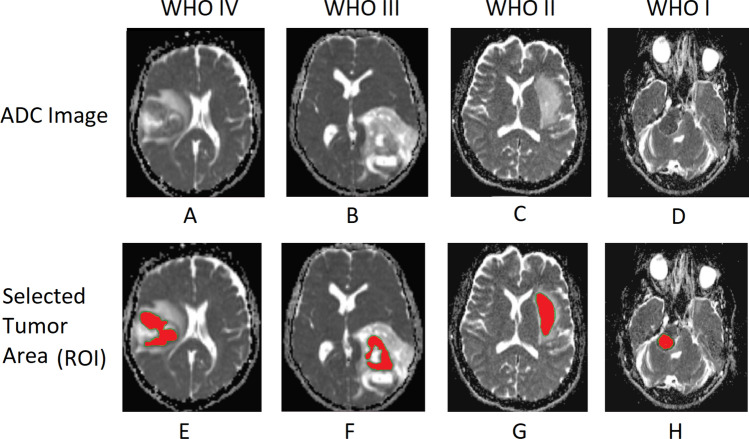
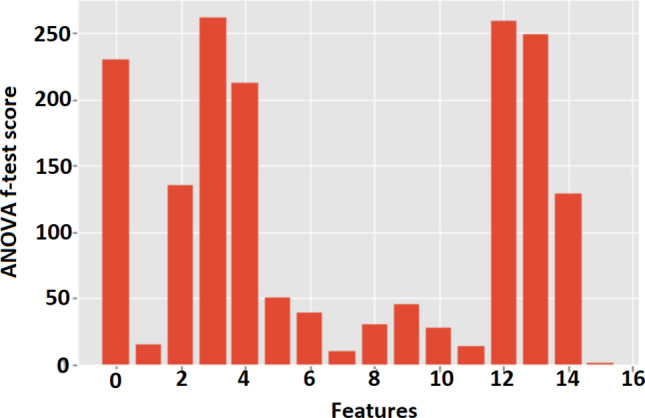
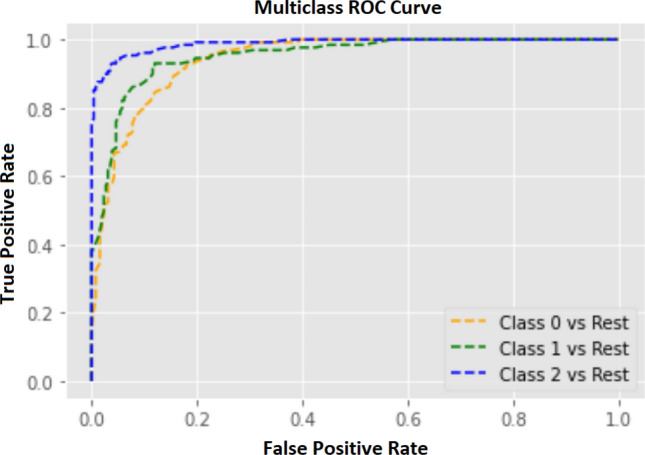
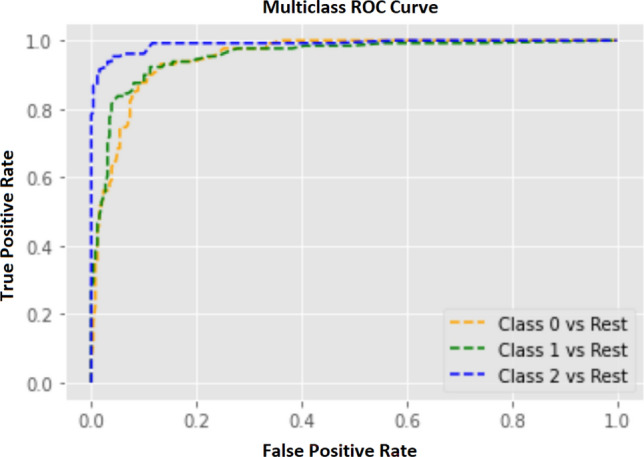
Apparent diffusion coefficient (ADC) of magnetic resonance imaging (MRI) is an indispensable imaging technique in clinical neuroimaging that quantitatively assesses the diffusivity of water molecules within tissues using diffusion-weighted imaging (DWI). This study focuses on developing a robust machine learning (ML) model to predict the aggressiveness of gliomas according to World Health Organization (WHO) grading by analyzing patients' demographics, higher-order moments, and grey level co-occurrence matrix (GLCM) texture features of ADC. A population of 722 labeled MRI-ADC brain image slices from 88 human subjects was selected, where gliomas are labeled as glioblastoma multiforme (WHO-IV), high-grade glioma (WHO-III), and low-grade glioma (WHO I-II). Images were acquired using 3T-MR systems and a region of interest (ROI) was delineated manually over tumor areas. Skewness, kurtosis, and statistical texture features of GLCM (mean, variance, energy, entropy, contrast, homogeneity, correlation, prominence, and shade) were calculated using ADC values within ROI. The ANOVA f-test was utilized to select the best features to train an ML model. The data set was split into training (70%) and testing (30%) sets. The train set was fed into several ML algorithms and selected most promising ML algorithm using K-fold cross-validation. The hyper-parameters of the selected algorithm were optimized using random grid search technique. Finally, the performance of the developed model was assessed by calculating accuracy, precision, recall, and F1 values reported for the test set. According to the ANOVA f-test, three attributes; patient gender (1.48), GLCM energy (9.48), and correlation (13.86) that performed minimum scores were excluded from the dataset. Among the tested algorithms, the random forest classifier(0.8772 ± 0.0237) performed the highest mean-cross-validation score and selected to build the ML model which was able to predict tumor categories with an accuracy of 88.14% over the test set. The study concludes that the developed ML model using the above features except for patient gender, GLCM energy, and correlation, has high prediction accuracy in glioma grading. Therefore, the outcomes of this study enable to development of advanced tumor classification applications that assist in the decision-making process in a real-time clinical environment.
磁共振成像(MRI)的表观扩散系数(ADC)是临床神经影像学中不可或缺的成像技术,它使用扩散加权成像(DWI)定量评估组织内水分子的扩散性。本研究专注于开发一个稳健的机器学习(ML)模型,通过分析患者的人口统计学、高阶矩和灰度共生矩阵(GLCM)纹理特征的 ADC,根据世界卫生组织(WHO)分级预测胶质瘤的侵袭性。从 88 名人类受试者中选择了 722 个标记的 MRI-ADC 脑图像切片的人群,其中胶质瘤被标记为多形性胶质母细胞瘤(WHO-IV)、高级别胶质瘤(WHO-III)和低级别胶质瘤(WHO I-II)。图像是使用 3T-MR 系统采集的,手动在肿瘤区域划定感兴趣区域(ROI)。使用 ROI 内的 ADC 值计算偏度、峰度和 GLCM 的统计纹理特征(均值、方差、能量、熵、对比度、同质性、相关性、显著性和阴影)。使用方差分析(ANOVA)f 检验选择最佳特征来训练 ML 模型。数据集分为训练集(70%)和测试集(30%)。将训练集输入到几种 ML 算法中,并使用 K 折交叉验证选择最有前途的 ML 算法。使用随机网格搜索技术优化选定算法的超参数。最后,通过计算报告的测试集的准确性、精度、召回率和 F1 值来评估所开发模型的性能。根据 ANOVA f 检验,三个属性;患者性别(1.48)、GLCM 能量(9.48)和相关性(13.86)得分最低,从数据集中排除。在测试的算法中,随机森林分类器(0.8772±0.0237)表现出最高的平均交叉验证分数,并被选择来构建 ML 模型,该模型能够在测试集上以 88.14%的准确率预测肿瘤类别。该研究得出结论,使用上述特征(除患者性别、GLCM 能量和相关性)开发的 ML 模型在胶质瘤分级中具有较高的预测准确性。因此,本研究的结果能够开发出高级肿瘤分类应用程序,以协助实时临床环境中的决策过程。