Immunology Translational Research Programme, Yong Loo Lin School of Medicine, National University of Singapore, Singapore, Singapore.
Department of Microbiology and Immunology, Yong Loo Lin School of Medicine, National University of Singapore, Singapore, Singapore.
EMBO J. 2023 Nov 2;42(21):e112963. doi: 10.15252/embj.2022112963. Epub 2023 Sep 25.
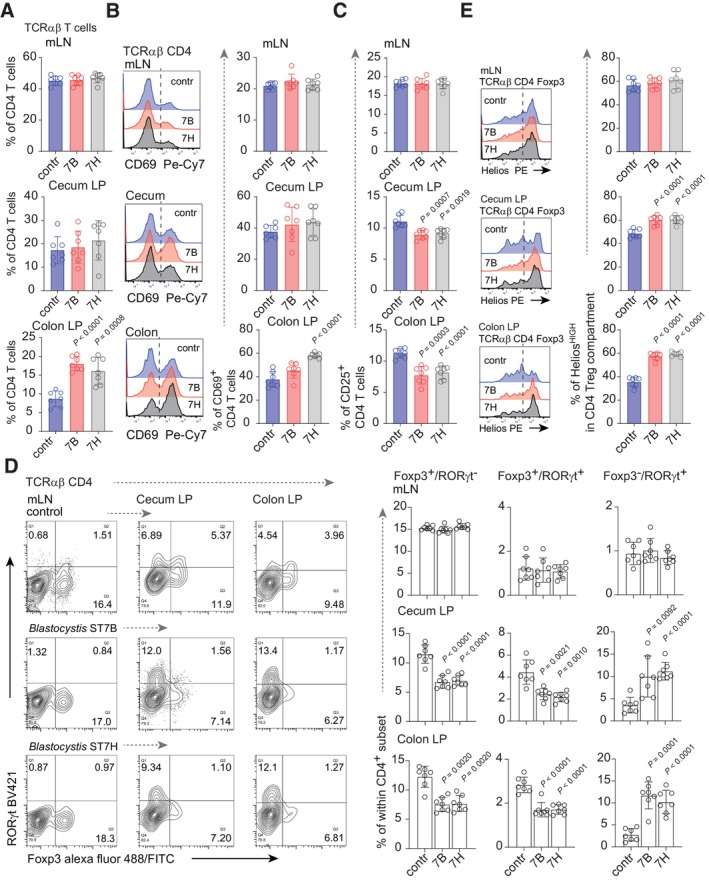
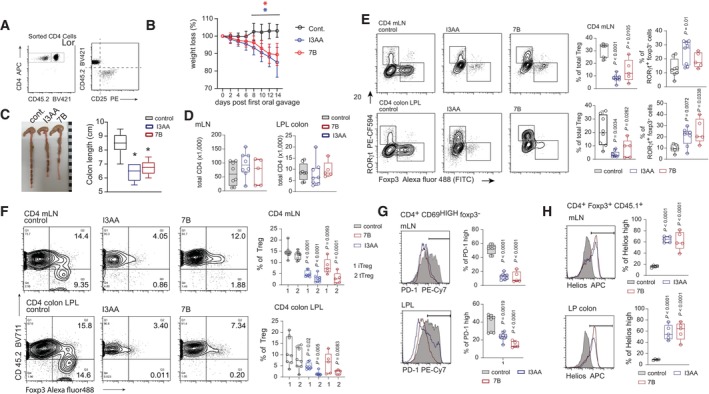
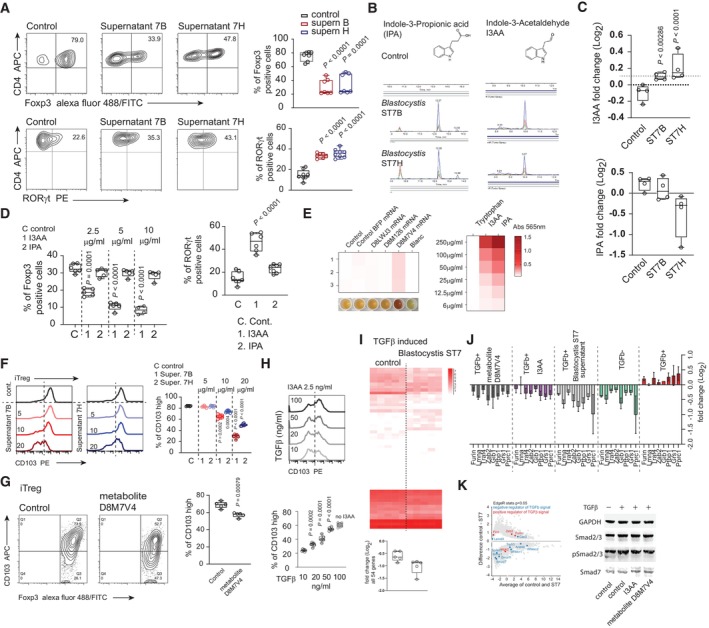
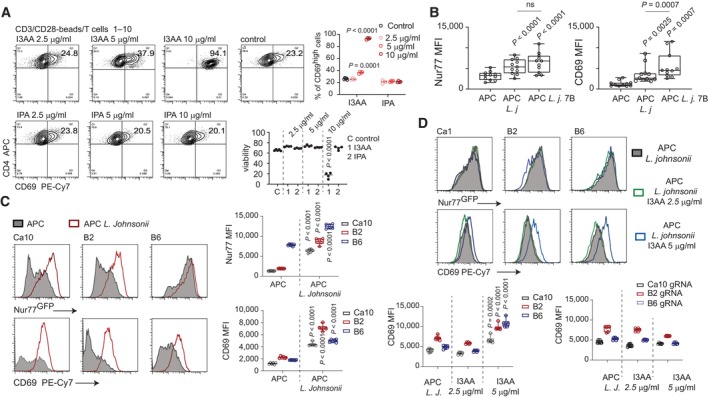
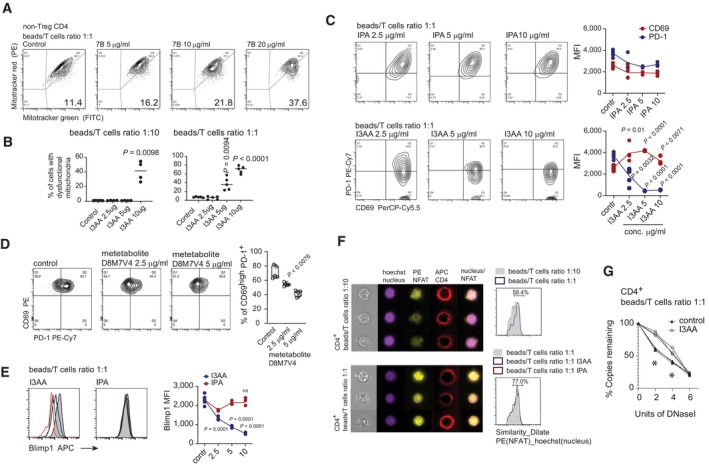
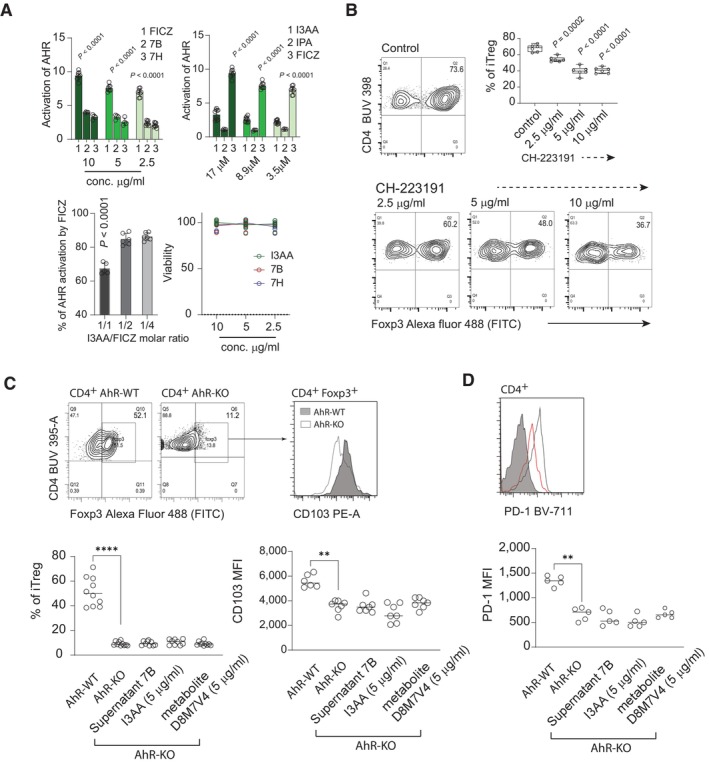
The large intestine harbors microorganisms playing unique roles in host physiology. The beneficial or detrimental outcome of host-microbiome coexistence depends largely on the balance between regulators and responder intestinal CD4 T cells. We found that ulcerative colitis-like changes in the large intestine after infection with the protist Blastocystis ST7 in a mouse model are associated with reduction of anti-inflammatory Treg cells and simultaneous expansion of pro-inflammatory Th17 responders. These alterations in CD4 T cells depended on the tryptophan metabolite indole-3-acetaldehyde (I3AA) produced by this single-cell eukaryote. I3AA reduced the Treg subset in vivo and iTreg development in vitro by modifying their sensing of TGFβ, concomitantly affecting recognition of self-flora antigens by conventional CD4 T cells. Parasite-derived I3AA also induces over-exuberant TCR signaling, manifested by increased CD69 expression and downregulation of co-inhibitor PD-1. We have thus identified a new mechanism dictating CD4 fate decisions. The findings thus shine a new light on the ability of the protist microbiome and tryptophan metabolites, derived from them or other sources, to modulate the adaptive immune compartment, particularly in the context of gut inflammatory disorders.
大肠中栖息着在宿主生理学中发挥独特作用的微生物。宿主-微生物共生的有益或有害结果在很大程度上取决于调节因子和应答性肠道 CD4 T 细胞之间的平衡。我们发现,在小鼠模型中感染原生动物 Blastocystis ST7 后,大肠出现溃疡性结肠炎样变化,与抗炎性 Treg 细胞减少和促炎性 Th17 应答细胞同时扩张有关。这些 CD4 T 细胞的改变依赖于这种单细胞真核生物产生的色氨酸代谢物吲哚-3-乙醛(I3AA)。I3AA 通过改变其对 TGFβ的感知,在体内减少 Treg 亚群,并在体外减少 iTreg 的发育,同时影响常规 CD4 T 细胞对自身菌群抗原的识别。寄生虫衍生的 I3AA 还诱导过度活跃的 TCR 信号,表现为 CD69 表达增加和共抑制因子 PD-1 下调。因此,我们确定了一个决定 CD4 命运决定的新机制。这些发现为原生动物微生物组及其色氨酸代谢物(源自它们或其他来源)调节适应性免疫区室的能力提供了新的认识,特别是在肠道炎症性疾病的背景下。