Haase Fabian, Siemers Carsten, Rösler Joachim
Institute for Materials Science, Technische Universität Braunschweig, Braunschweig, Germany.
Front Bioeng Biotechnol. 2023 Sep 7;11:1260925. doi: 10.3389/fbioe.2023.1260925. eCollection 2023.
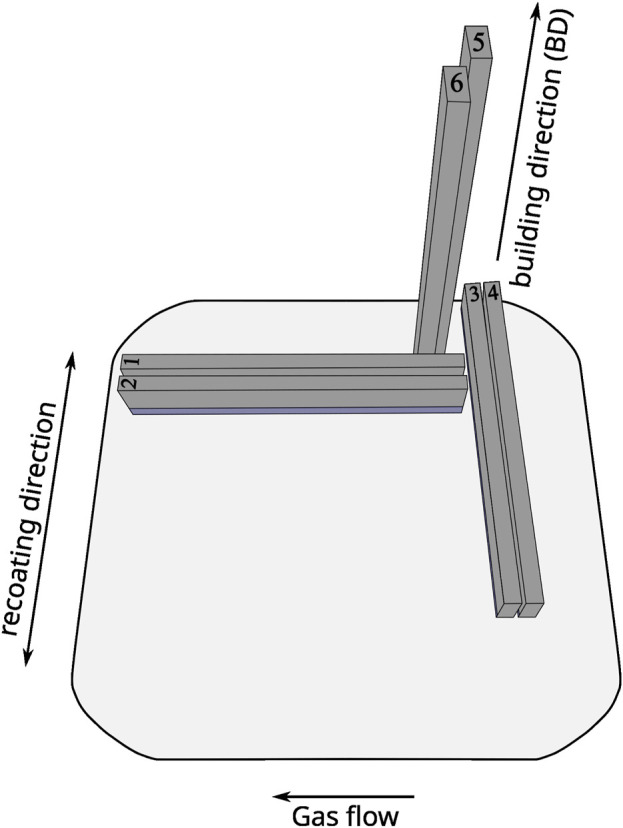
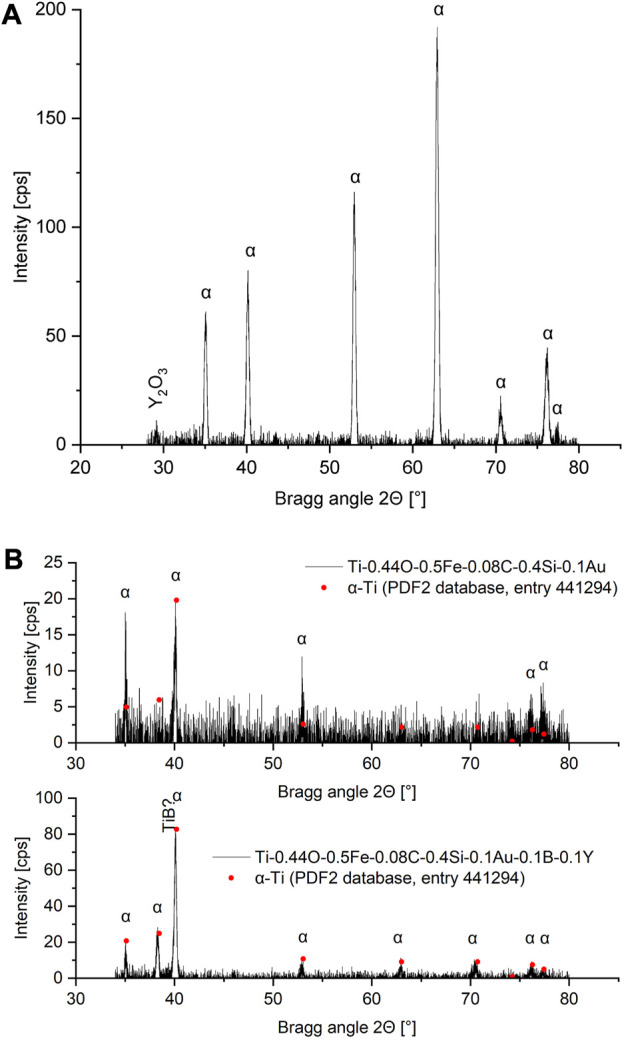
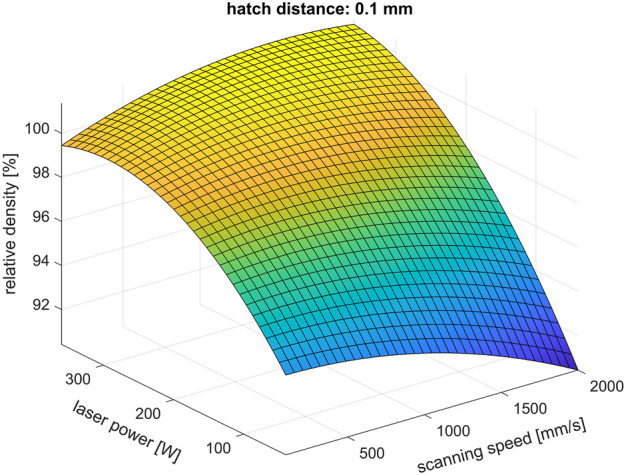
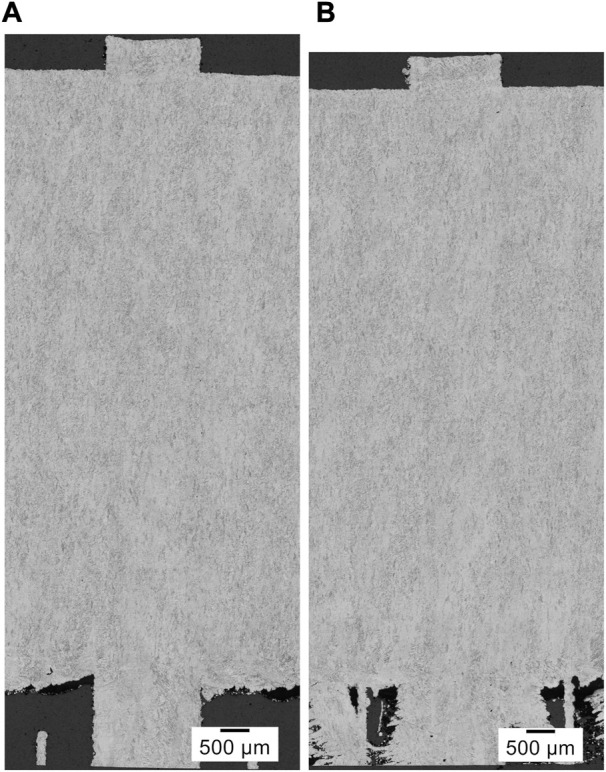
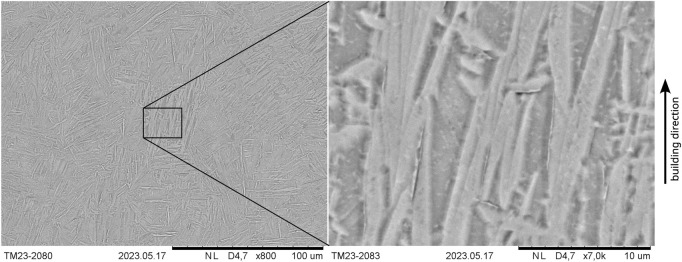
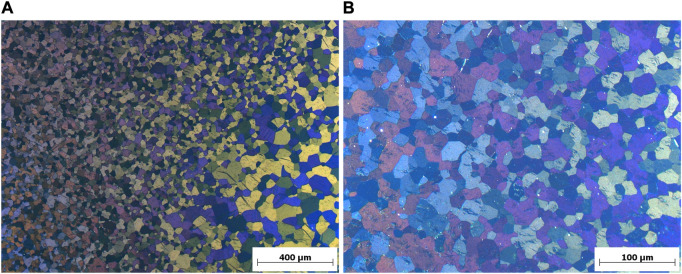
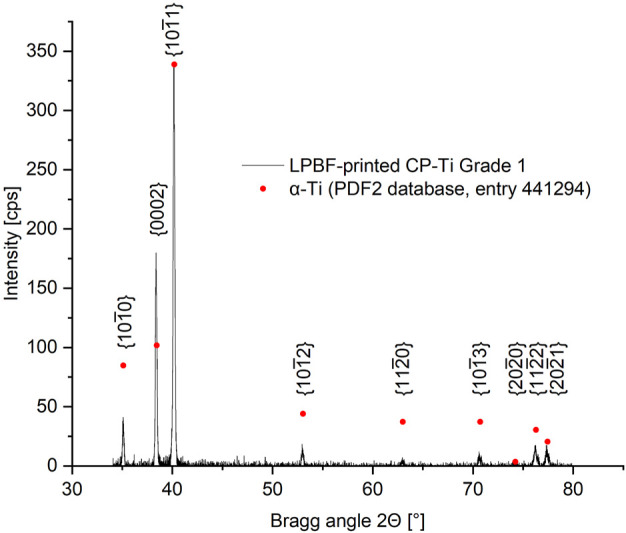
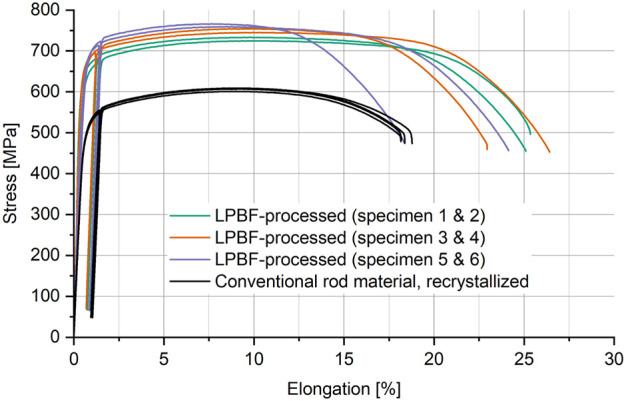
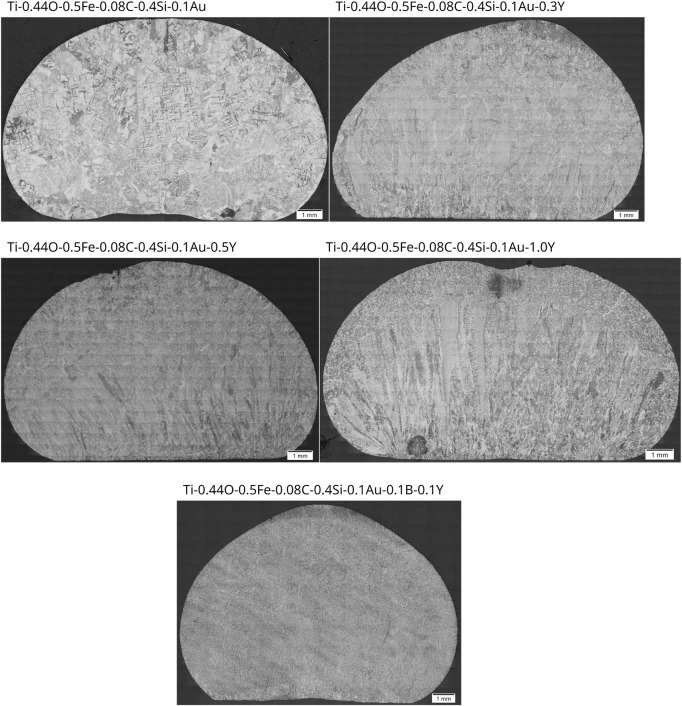
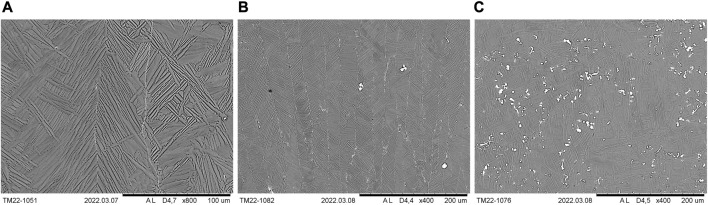
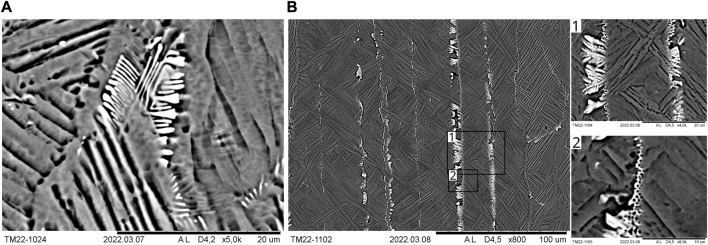
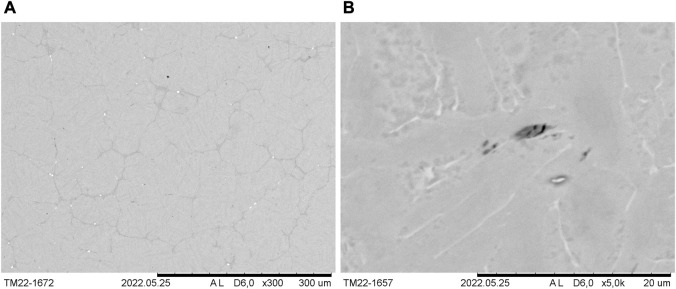
Laser powder bed fusion (LPBF) of titanium or titanium alloys allows fabrication of geometrically more complex and, possibly, individualized implants or osteosynthesis products and could thus improve the outcome of medical treatments considerably. However, insufficient LPBF process parameters can result in substantial porosity, decreasing mechanical properties and requiring post-treatment. Furthermore, texturized parts with anisotropic properties are usually obtained after LPBF processing, limiting their usage in medical applications. The present study addresses both: first, a design of experiments is used in order to establish a set of optimized process parameters and a process window for LPBF printing of small commercially pure (CP) titanium parts with minimized volume porosity. Afterward, the first results on the development of a biocompatible titanium alloy designed for LPBF processing of medical implants with improved solidification and more isotropic properties are presented on the basis of conventionally melted alloys. This development was performed on the basis of Ti-0.44O-0.5Fe-0.08C-0.4Si-0.1Au, a near-α alloy presented by the authors for medical applications and conventional manufacturing, with yttrium and boron additions as additional growth restriction solutes. In terms of LPBF processing of CP titanium grade 1 powder, a high relative density of approximately 99.9% was obtained in the as-printed state of the volume of a small cubical sample by using optimized laser power, scanning speed, and hatch distance in combination with a rotating scanning pattern. Moreover, tensile specimens processed with these volume settings and tested in the as-printed milled state exhibited a high average yield and ultimate tensile strength of approximately 663 and 747 N/mm, respectively, combined with a high average ductility of approximately 24%. X-ray diffraction results suggest anisotropic mechanical properties, which are, however, less pronounced in terms of the tested specimens. Regarding alloy development, the results show that yttrium additions lead to a considerable microstructure refinement but have to be limited due to the occurrence of a large amount of precipitations and a supposed higher propensity for the formation of long columnar prior β-grains. However, phase/texture and microstructure analyses indicate that Ti-0.44O-0.5Fe-0.08C-0.4Si-0.1Au-0.1B-0.1Y is a promising candidate to achieve lower anisotropy during LPBF processing, but further investigations on LPBF printing and YO formation are necessary.
钛或钛合金的激光粉末床熔融(LPBF)技术能够制造出几何形状更为复杂、甚至可能实现个性化定制的植入物或骨接合产品,从而显著改善医疗治疗效果。然而,LPBF工艺参数设置不当会导致大量孔隙,降低机械性能,进而需要进行后处理。此外,经过LPBF加工后通常会得到具有各向异性的纹理化部件,这限制了它们在医疗应用中的使用。本研究针对这两个问题展开:首先,通过实验设计来确定一组优化的工艺参数以及一个工艺窗口,用于以最小化的体积孔隙率对小型商业纯(CP)钛部件进行LPBF打印。之后,基于传统熔炼合金,展示了为LPBF加工医疗植入物而设计的具有更好凝固性能和更各向同性的生物相容性钛合金的初步研发成果。这种研发是在Ti-0.44O-0.5Fe-0.08C-0.4Si-0.1Au基础上进行的,这是一种作者提出用于医疗应用和传统制造的近α合金,并添加了钇和硼作为额外的生长限制溶质。就CP1级钛粉的LPBF加工而言,通过使用优化的激光功率、扫描速度和扫描间距,并结合旋转扫描模式,在一个小立方体样品的打印状态下获得了约99.9%的高相对密度。此外,用这些体积设置加工并在打印后铣削状态下测试的拉伸试样,分别展现出约663和747N/mm的高平均屈服强度和极限抗拉强度,以及约24%的高平均延展性。X射线衍射结果表明存在各向异性的机械性能,不过就测试试样而言,这种各向异性不太明显。关于合金研发,结果表明添加钇会导致显著的微观结构细化,但由于出现大量析出物以及推测形成长柱状先β晶粒的倾向较高,钇的添加量必须受到限制。然而,相/织构和微观结构分析表明,Ti-0.44O-0.5Fe-0.08C-0.4Si-0.1Au-0.1B-0.1Y是在LPBF加工过程中实现较低各向异性的一个有潜力的候选材料,但还需要对LPBF打印和氧化钇形成进行进一步研究。