Bargeri Silvia, Scalea Sabrina, Agosta Federica, Banfi Giuseppe, Corbetta Davide, Filippi Massimo, Sarasso Elisabetta, Turolla Andrea, Castellini Greta, Gianola Silvia
IRCCS Istituto Ortopedico Galeazzi, Unit of Clinical Epidemiology, Milan, Italy.
Vita-Salute San Raffaele University, Milan, Italy.
EClinicalMedicine. 2023 Sep 14;64:102220. doi: 10.1016/j.eclinm.2023.102220. eCollection 2023 Oct.
Virtual reality (VR) is an innovative neurorehabilitation modality that has been variously examined in systematic reviews. We assessed VR effectiveness and safety after cerebral stroke.
In this overview of systematic reviews, we searched eleven databases (Cochrane Database of Systematic Reviews, EMBASE, MEDLINE, SCOPUS, ISI Web of Science, CINAHL, PsycINFO, Pedro, Otseeker, Healthevidence.org, Epistemonikos) and grey literature from inception to January 17, 2023. Studies eligible for inclusion were systematic reviews published in English that included adult patients with a clinical diagnosis of stroke (acute to chronic phase) undergoing any kind of immersive, semi-immersive or non-immersive VR intervention with or without conventional therapy versus conventional therapy alone. The primary outcome was motor upper limb function and activity. The secondary outcomes were gait and balance, cognitive and mental function, limitation of activities, participation, and adverse events. We calculated the degree of overlap between reviews based on the corrected covered area (CCA). Methodological quality was assessed using the A MeaSurement Tool to Assess systematic Reviews (AMSTAR 2) and the Certainty of Evidence (CoE) using the Grading of Recommendations, Assessment, Development, and Evaluations (GRADE) approach. Discordances between results were examined using a conceptual framework based on the Jadad algorithm. This overview is registered with PROSPERO, CRD42022329263.
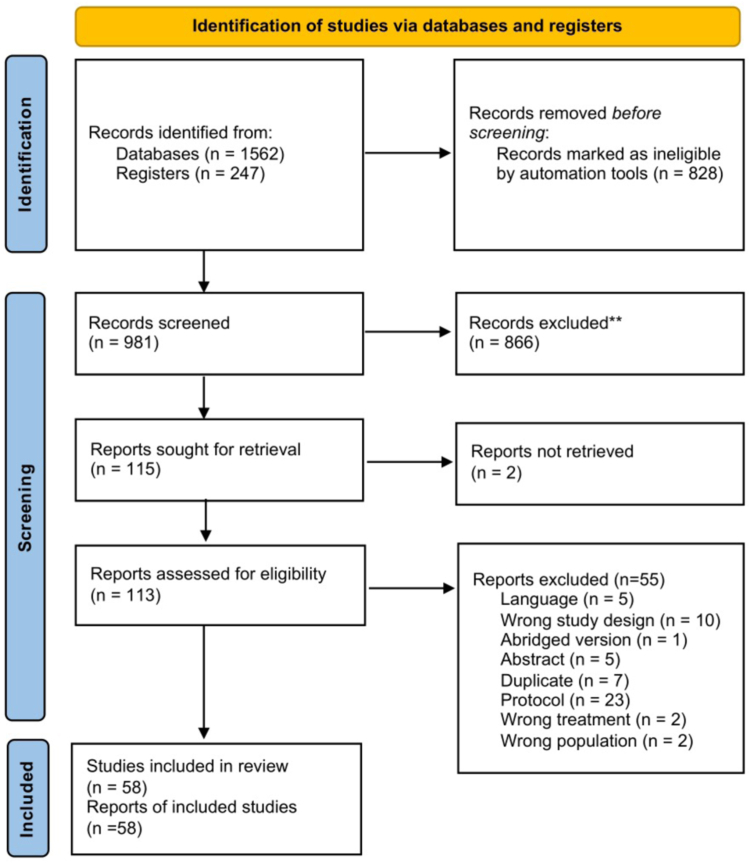
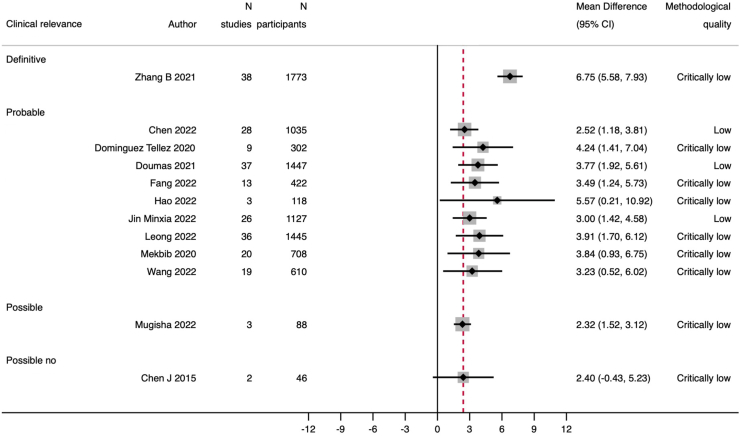
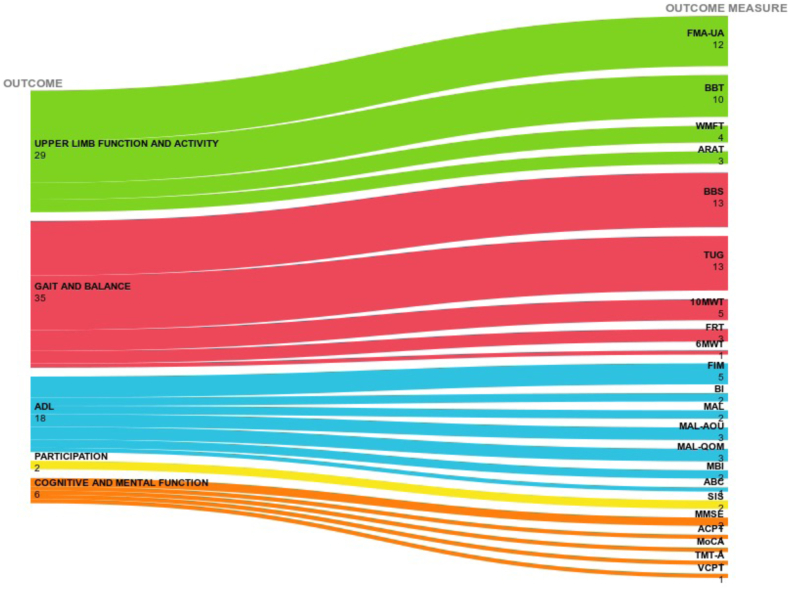
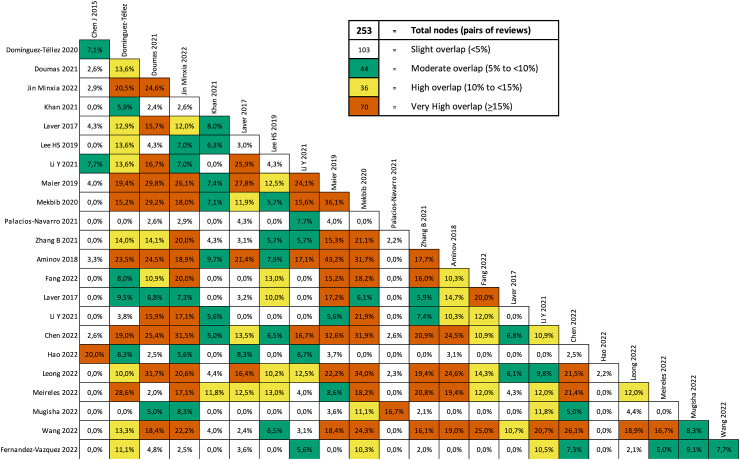
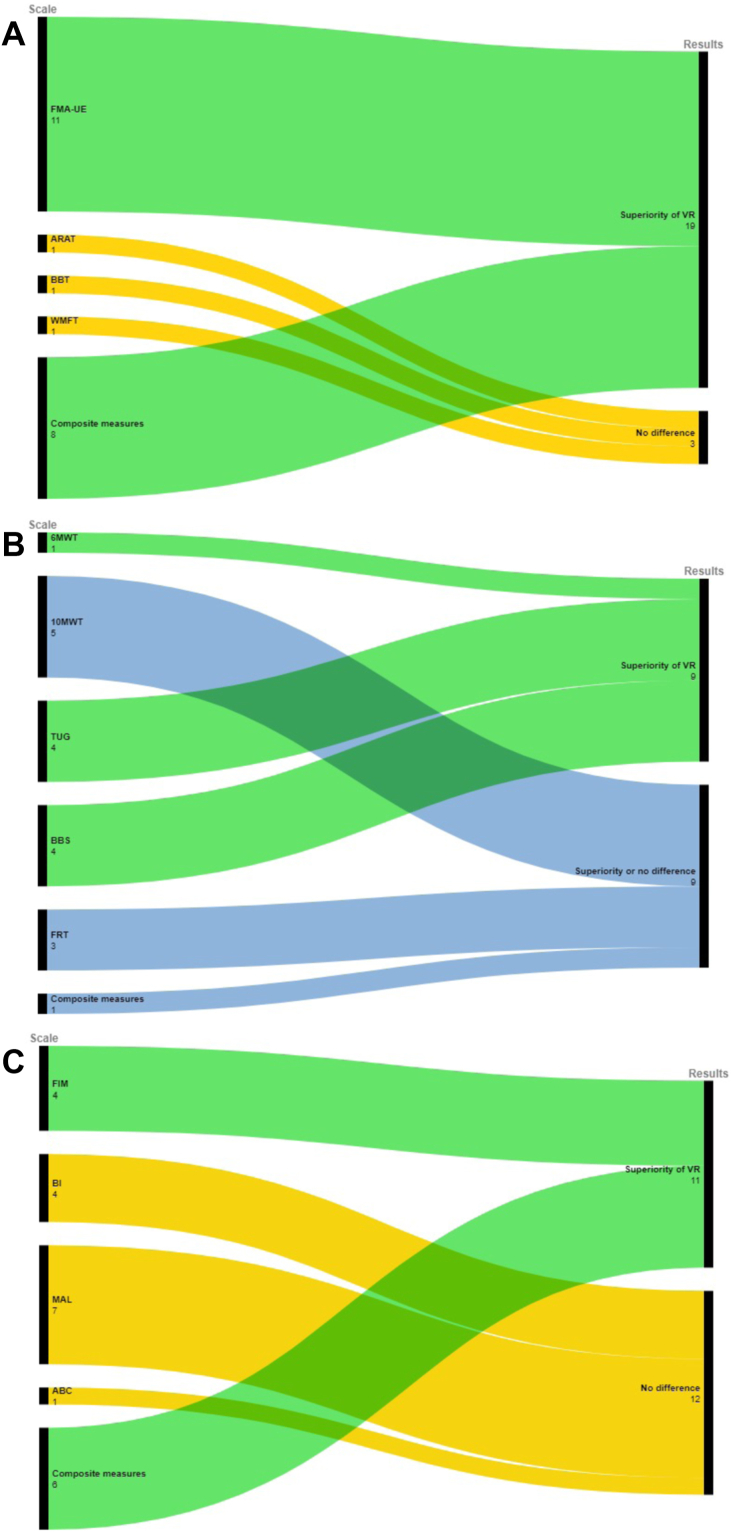
Of the 58 reviews included (n = 345 unique primary studies), 42 (72.4%) had conducted meta-analysis. More than half of the reviews (58.6%) were published between 2020 and 2022 and many (77.6%) were judged critically low in quality by AMSTAR 2. Most reported the Fugl Meyer Assessment scale (FMA-UE) to measure upper limb function and activity. For the primary outcome, there was a moderate overlap of primary studies (CCA 9.0%) with discordant findings. Focusing on upper limb function (FMA-UE), VR with or without conventional therapy seems to be more effective than conventional therapy alone, with low to moderate CoE and probable to definite clinical relevance. For secondary outcomes there was uncertainty about the superiority or no difference between groups due to substantial heterogeneity of measurement scales (eg, methodological choices). A few reviews (n = 6) reported the occurrence of mild adverse events.
Current evidence suggests that multiple meta-analyses agreed on the superiority of VR with or without conventional therapy over conventional therapy on FME-UE for upper limb. Clinicians may consider embedding VR technologies into their practice as appropriate with patient's goals, abilities, and preferences. However, caution is needed given the poor methodological quality of reviews.
Italian Ministry of Health.
虚拟现实(VR)是一种创新的神经康复方式,已在系统评价中得到多方面研究。我们评估了脑卒中后VR的有效性和安全性。
在这项系统评价概述中,我们检索了11个数据库(Cochrane系统评价数据库、EMBASE、MEDLINE、SCOPUS、ISI科学网、CINAHL、PsycINFO、Pedro、Otseeker、Healthevidence.org、Epistemonikos)以及自起始至2023年1月17日的灰色文献。纳入的研究为以英文发表的系统评价,纳入临床诊断为脑卒中(急性期至慢性期)的成年患者,这些患者接受任何类型的沉浸式、半沉浸式或非沉浸式VR干预,可联合或不联合传统治疗,并与单纯传统治疗进行比较。主要结局为上肢运动功能和活动。次要结局为步态和平衡、认知和心理功能、活动受限、参与度及不良事件。我们基于校正覆盖面积(CCA)计算了各评价之间的重叠程度。使用评估系统评价的测量工具(AMSTAR 2)评估方法学质量,并使用推荐分级、评估、制定与评价(GRADE)方法评估证据确定性(CoE)。使用基于Jadad算法的概念框架检查结果之间的不一致性。本概述已在PROSPERO注册,注册号为CRD42022329263。
纳入的58项评价(n = 345项独立的原始研究)中,42项(72.4%)进行了荟萃分析。超过一半的评价(58.6%)发表于2020年至2022年之间,许多评价(77.6%)被AMSTAR 2判定为质量极低。大多数评价报告使用Fugl Meyer评估量表(FMA - UE)来测量上肢功能和活动。对于主要结局,原始研究存在中度重叠(CCA 9.0%),结果不一致。聚焦于上肢功能(FMA - UE),联合或不联合传统治疗的VR似乎比单纯传统治疗更有效,CoE为低至中度,临床相关性为可能至肯定。对于次要结局,由于测量量表存在实质性异质性(例如方法学选择),组间优越性或无差异存在不确定性。少数评价(n = 6)报告了轻度不良事件的发生。
当前证据表明,多项荟萃分析一致认为,联合或不联合传统治疗的VR在FME - UE上肢方面优于传统治疗。临床医生可根据患者的目标、能力和偏好,酌情考虑将VR技术纳入其临床实践。然而,鉴于评价的方法学质量较差,仍需谨慎。
意大利卫生部。