Wiedmann Isabella, Weerts Guillaume, Brixius Klara, Seemüller Anna, Mittelstädt Justin, Herssens Nolan, Weber Tobias
Institute for Cardiovascular Research and Sports Medicine, German Sports University Cologne, Cologne, Germany.
KBR GmbH, Cologne, Germany.
Sports Med. 2023 Nov;53(11):2267-2280. doi: 10.1007/s40279-023-01891-4. Epub 2023 Sep 25.
In 2022, the European Space Agency (ESA) held the first astronaut selection since the beginning of space flight that allowed physically impaired astronaut candidates to be selected in an inclusive European astronaut corp. The main objective of the 'parastronaut feasibility project' is to investigate if physical performance tests (PPTs) should be part of future astronaut recruitments for an inclusive ESA astronaut corps to test their flight readiness. The objectives of this study are (1) to assess if future (para-)astronaut recruitment campaigns should include PPTs to ensure flight readiness, safety, and mission success; (2) if so, which areas of physical performance should be tested to mimic nominal and off-nominal crew activities during all phases of a space mission; and (3) to assess whether PPTs are compatible with the ethical principles of equal opportunity for an inclusive pool of astronaut candidates.
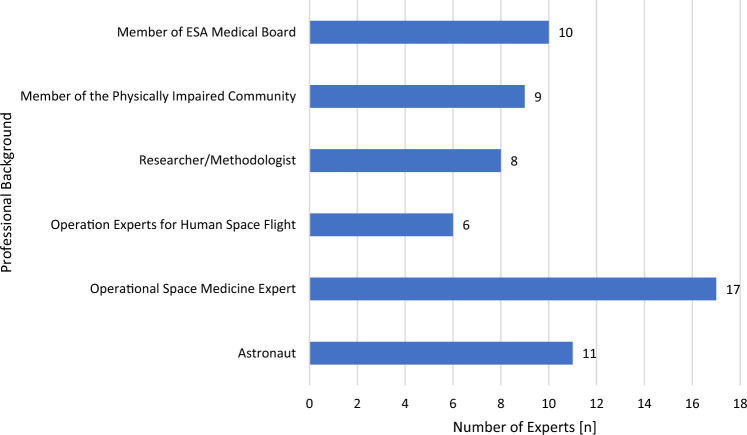
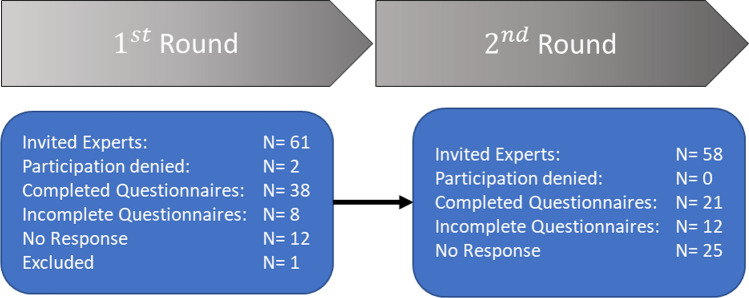
58 subject matter experts with specialisations in space physiology, operational human space flight, space medicine, medical ethics or parasports were interviewed in two rounds using the Delphi method. Both qualitative and quantitative data were obtained, analysed, categorised, and visualised using the qualitative research tool NVivo and Excel.
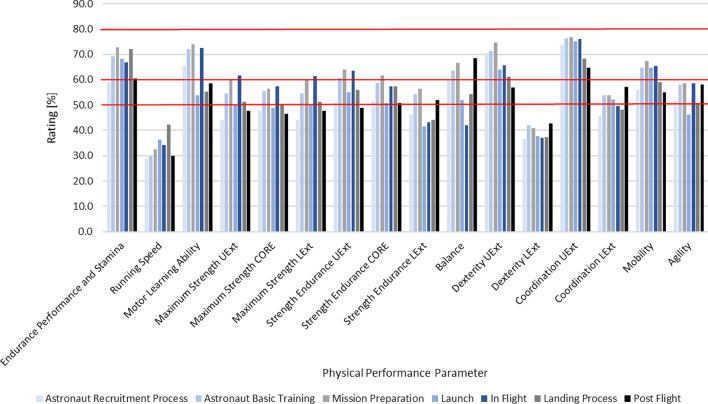
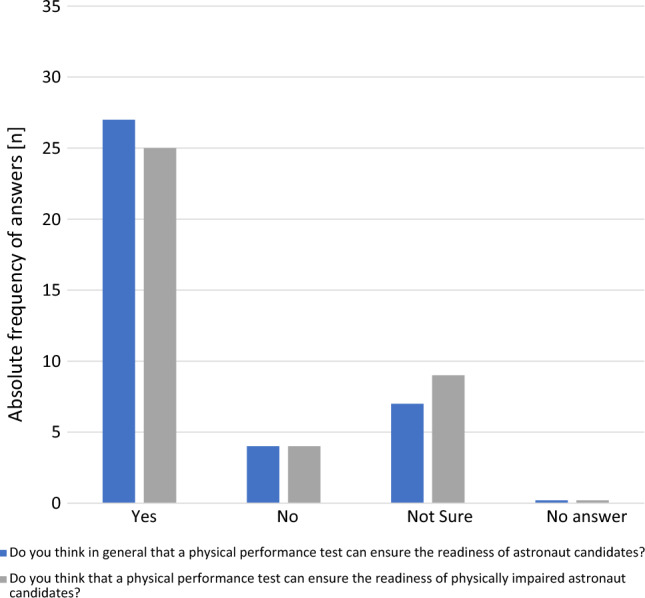
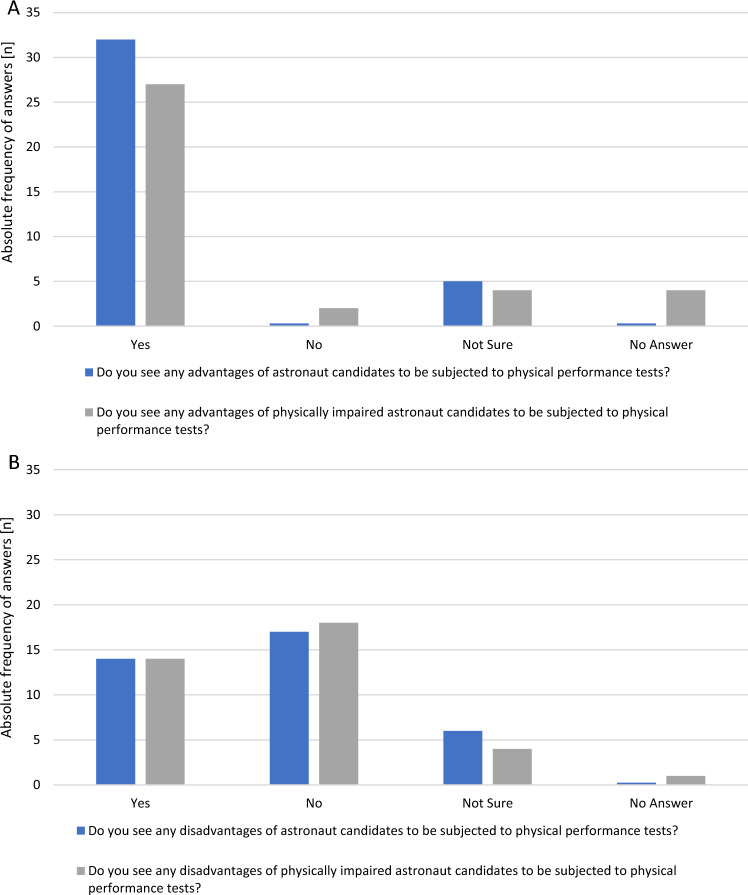
Two thirds of the experts were in favour of adding PPTs to future astronaut selections and recommended to implement them for both physically unimpaired and physically impaired astronaut candidates. The main physical skills that should be examined are space-related, mission-specific coordination skills of the upper extremities, followed by endurance performance and stamina, dexterity of the upper extremities, motor learning ability and mobility.
Based on this study, it is clear that PPTs should be part of future astronaut selection campaigns. However, the content of these PPTs must be carefully evaluated and validated using existing data on crew activities before, during, and after space flight, while considering equal opportunities in the context of human space flight. Historical considerations have influenced current astronaut requirements, but this study's findings indicate a need to reassess these requirements for future inclusive selection campaigns, as their validity and necessity remain uncertain.
2022年,欧洲航天局(ESA)举行了自太空飞行开始以来的首次宇航员选拔,此次选拔允许身体有缺陷的宇航员候选人入选包容性的欧洲宇航员队伍。“准宇航员可行性项目”的主要目标是调查体能测试(PPTs)是否应成为未来ESA包容性宇航员队伍招募宇航员时的一部分,以测试他们的飞行准备情况。本研究的目的包括:(1)评估未来(准)宇航员招募活动是否应包括体能测试,以确保飞行准备情况、安全和任务成功;(2)如果是,应测试哪些体能领域,以模拟太空任务各阶段的正常和异常乘员活动;(3)评估体能测试是否符合面向包容性宇航员候选人库的平等机会伦理原则。
采用德尔菲法对58名在太空生理学、载人航天飞行操作、太空医学、医学伦理学或残疾人体育方面具有专业知识的主题专家进行两轮访谈。使用定性研究工具NVivo和Excel获取、分析、分类和可视化定性和定量数据。
三分之二的专家赞成在未来的宇航员选拔中增加体能测试,并建议对身体无缺陷和身体有缺陷的宇航员候选人都实施该测试。应检查的主要身体技能是与太空相关的、特定任务的上肢协调技能,其次是耐力表现和体力、上肢灵活性、运动学习能力和机动性。
基于本研究,很明显体能测试应成为未来宇航员选拔活动的一部分。然而,在考虑载人航天飞行中的平等机会的同时,必须使用太空飞行前、飞行中和飞行后乘员活动的现有数据,仔细评估和验证这些体能测试的内容。历史因素影响了当前的宇航员要求,但本研究的结果表明,有必要重新评估这些要求,以用于未来的包容性选拔活动,因为其有效性和必要性仍不确定。