Palomäki Jussi, Turner Nigel, Macey Joseph, Castrén Sari
1Health and Well-Being Promotion Unit, Finnish Institute for Health and Welfare, P.O. Box 30, FI-00271, Helsinki, Finland.
2Institute for Mental Health Policy Research, and Campbell Family Mental Health Research Institute, Centre for Addiction and Mental Health, Toronto, ON, Canada.
J Behav Addict. 2023 Sep 25;12(3):711-20. doi: 10.1556/2006.2023.00048.
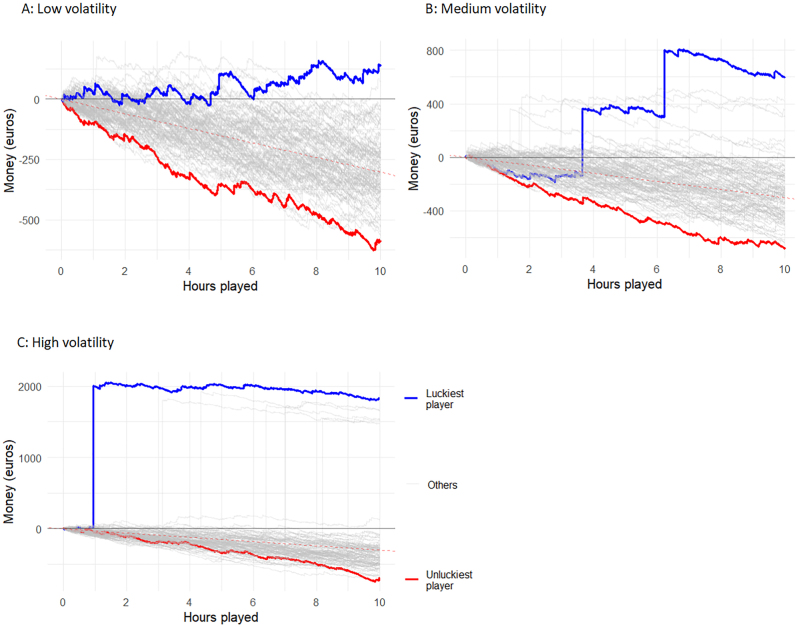
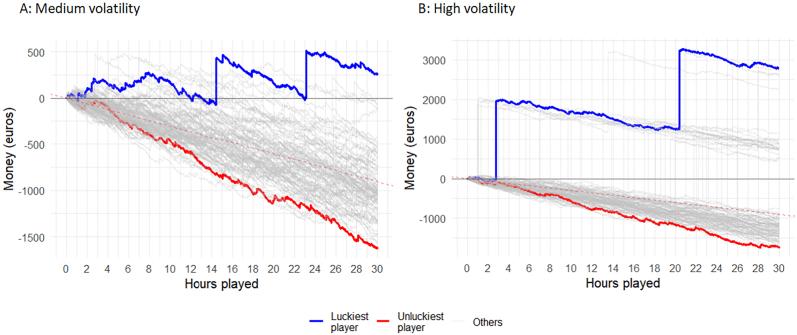
Electronic gambling machines are a prominent cause of significant gambling harms globally. We use simulations of a simplified video poker game to show how changes in game volatility, defined primarily by the size of the main prize, affect patterns of wins and losses as well as winning streaks.
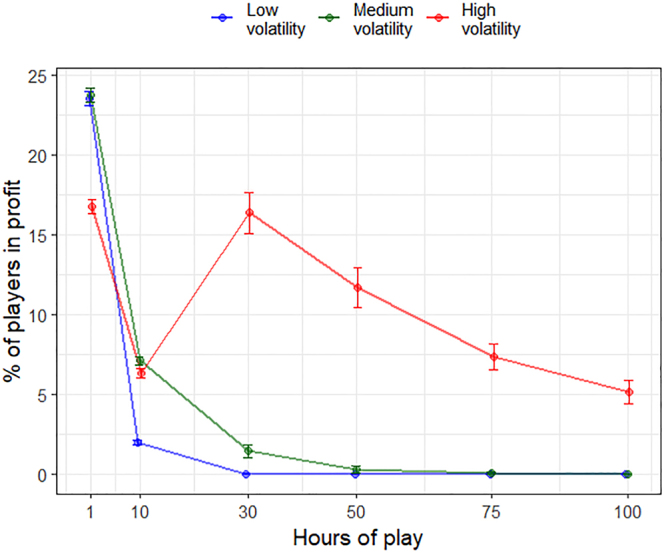
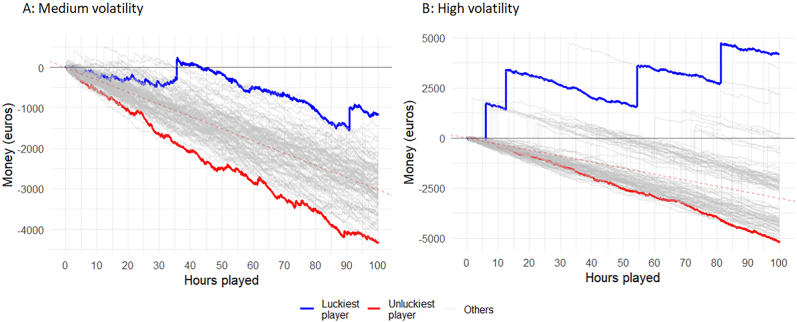
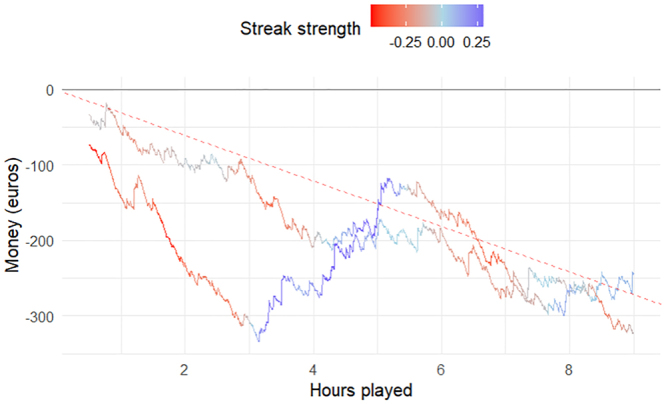
We found that in low- and medium volatility games the proportion of winning players quickly drops to zero after about 30 h of play, while in the high volatility game 5% of players are still winning after playing for 100 h. However, the proportion of winning streaks was significantly higher in the low- and medium volatility games compared with high volatility: the simulated players were on a winning streak about 26.3, 25.6 and 18% of the time in the low-, medium- and high volatility games, respectively.
Fast-paced video poker with varying volatility levels but identical return-to-player rates and win frequencies can yield highly different result patterns across individuals. These patterns may be counter-intuitive for players and difficult to realize without simulations and visualizations. We argue that the findings have relevance for responsible gambling communication and for building a better understanding of how cognitive biases influence gambling behaviour.
电子赌博机是全球重大赌博危害的一个突出原因。我们通过对一个简化视频扑克游戏的模拟,来展示主要由头奖大小定义的游戏波动性变化如何影响输赢模式以及连胜情况。
我们发现,在低波动性和中等波动性游戏中,大约30小时游戏后,获胜玩家的比例迅速降至零,而在高波动性游戏中,100小时游戏后仍有5%的玩家在赢。然而,低波动性和中等波动性游戏中的连胜比例显著高于高波动性游戏:在低、中、高波动性游戏中,模拟玩家处于连胜状态的时间分别约为26.3%、25.6%和18%。
具有不同波动性水平但玩家回报率和赢牌频率相同的快节奏视频扑克,在不同个体间可能产生截然不同的结果模式。这些模式对玩家来说可能违反直觉,且若无模拟和可视化则难以理解。我们认为这些发现与负责任的赌博宣传相关,也有助于更好地理解认知偏差如何影响赌博行为。