Reproductive Health Research Department, UCL Elizabeth Garrett Anderson Institute for Women's Health, London, UK.
San Francisco (UCSF) School of Medicine, Department of Obstetrics, Gynecology and Reproductive Sciences, Advancing New Standards in Reproductive Health (ANSIRH), University of California, San Francisco, USA.
Reprod Health. 2023 Sep 25;20(1):144. doi: 10.1186/s12978-023-01687-9.
A longstanding gap in the reproductive health field has been the availability of a screening instrument that can reliably predict a person's likelihood of becoming pregnant. The Desire to Avoid Pregnancy Scale is a new measure; understanding its sensitivity and specificity as a screening tool for pregnancy as well as its predictive ability and how this varies by socio-demographic factors is important to inform its implementation.
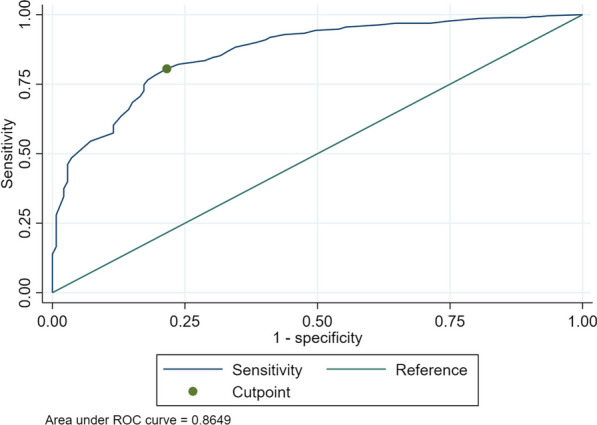
This analysis was conducted on a cohort of 994 non-pregnant participants recruited in October 2018 and followed up for one year. The cohort was recruited using social media as well as advertisements in a university, school, abortion clinic and outreach sexual health service. Almost 90% of eligible participants completed follow-up at 12 months; those lost to follow-up were not significantly different on key socio-demographic factors. We used baseline DAP score and a binary variable of whether participants experienced pregnancy during the study to assess the sensitivity, specificity, area under the ROC curve (AUROC) and positive and negative predictive values (PPV and NPV) of the DAP at a range of cut-points. We also examined how the predictive ability of the DAP varied according to socio-demographic factors and by the time frame considered (e.g., pregnancy within 3, 6, 9 and 12 months).
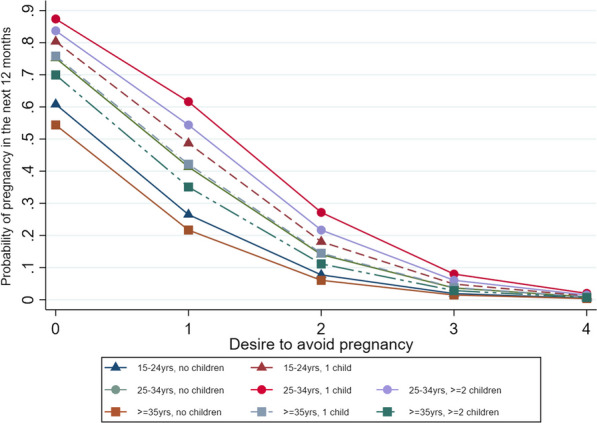
At a cut-point of 2 on the 0-4 range of the DAP scale, the DAP had a sensitivity of 0.78, a specificity of 0.81 and an excellent AUROC of 0.87. In this sample the cumulative incidence of pregnancy was 16% (95%CI 13%, 18%) making the PPV 43% and the NPV 95% at this cut-point. The DAP score was the factor most strongly associated with pregnancy, even after age and number of children were taken into account. The association between baseline DAP score and pregnancy did not differ across time frames.
This is the first study to assess the DAP scale as a screening tool and shows that its predictive ability is superior to the limited pre-existing pregnancy prediction tools. Based on our findings, the DAP could be used with a cut-point selected according to the purpose.
生殖健康领域长期存在的一个差距是缺乏一种能够可靠预测一个人怀孕可能性的筛查工具。《生育意愿回避量表》是一种新的测量工具;了解其作为妊娠筛查工具的敏感性和特异性,以及其预测能力及其如何因社会人口因素而变化,对于告知其实施情况非常重要。
本分析基于 2018 年 10 月招募的 994 名非孕妇参与者队列进行,随访时间为一年。该队列通过社交媒体以及大学、学校、堕胎诊所和外展性健康服务处的广告招募。近 90%的合格参与者在 12 个月时完成了随访;在关键社会人口因素方面,失访者与随访者无显著差异。我们使用基线 DAP 评分和参与者在研究期间是否经历妊娠的二分变量来评估 DAP 在一系列切点处的敏感性、特异性、ROC 曲线下面积 (AUROC)以及阳性和阴性预测值 (PPV 和 NPV)。我们还检查了 DAP 的预测能力如何根据社会人口因素以及考虑的时间框架(例如,3、6、9 和 12 个月内怀孕)而变化。
在 DAP 量表 0-4 范围的 2 分切点处,DAP 的敏感性为 0.78,特异性为 0.81,AUROC 非常好,为 0.87。在该样本中,妊娠累积发生率为 16%(95%CI 13%,18%),使得该切点处的 PPV 为 43%,NPV 为 95%。DAP 评分是与妊娠最密切相关的因素,即使在考虑了年龄和孩子数量后也是如此。基线 DAP 评分与妊娠之间的关联在不同时间框架内没有差异。
这是第一项评估 DAP 量表作为筛查工具的研究,表明其预测能力优于有限的现有妊娠预测工具。基于我们的发现,可以根据目的选择切点使用 DAP。