Department of Medicine, Graduate School, Ewha Womans University, Seoul, Korea.
Department of Molecular Medicine, Ewha Womans University College of Medicine, Seoul, Korea.
Diabetes Metab J. 2024 Mar;48(2):215-230. doi: 10.4093/dmj.2022.0332. Epub 2023 Sep 26.
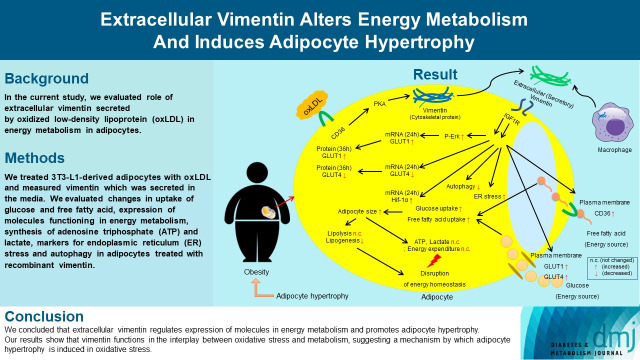
Previous studies have reported that oxidative stress contributes to obesity characterized by adipocyte hypertrophy. However, mechanism has not been studied extensively. In the current study, we evaluated role of extracellular vimentin secreted by oxidized low-density lipoprotein (oxLDL) in energy metabolism in adipocytes.
We treated 3T3-L1-derived adipocytes with oxLDL and measured vimentin which was secreted in the media. We evaluated changes in uptake of glucose and free fatty acid, expression of molecules functioning in energy metabolism, synthesis of adenosine triphosphate (ATP) and lactate, markers for endoplasmic reticulum (ER) stress and autophagy in adipocytes treated with recombinant vimentin.
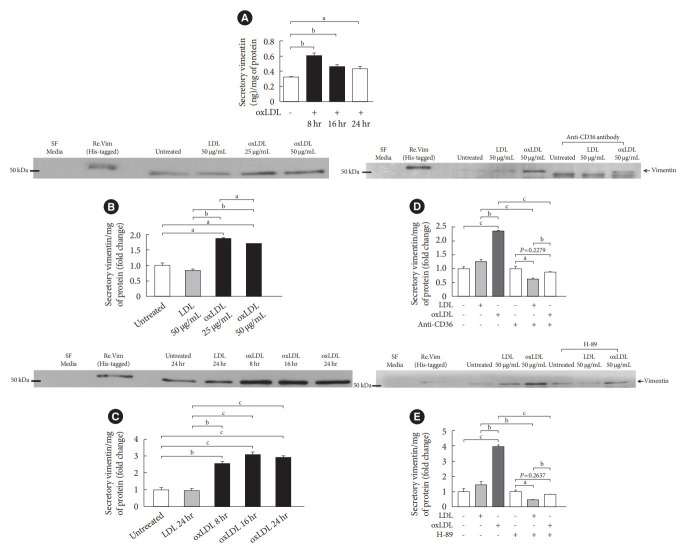
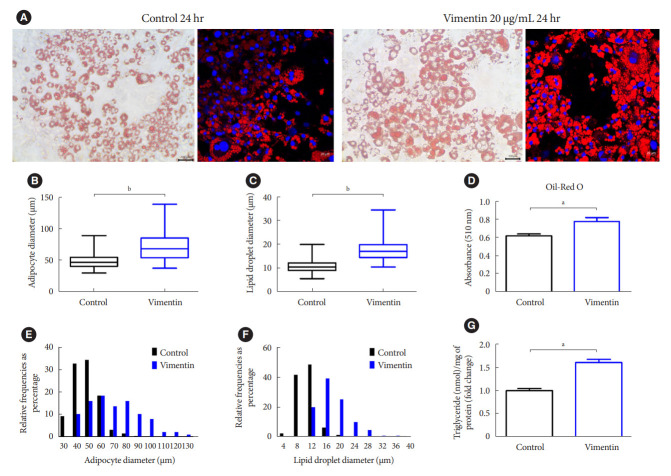
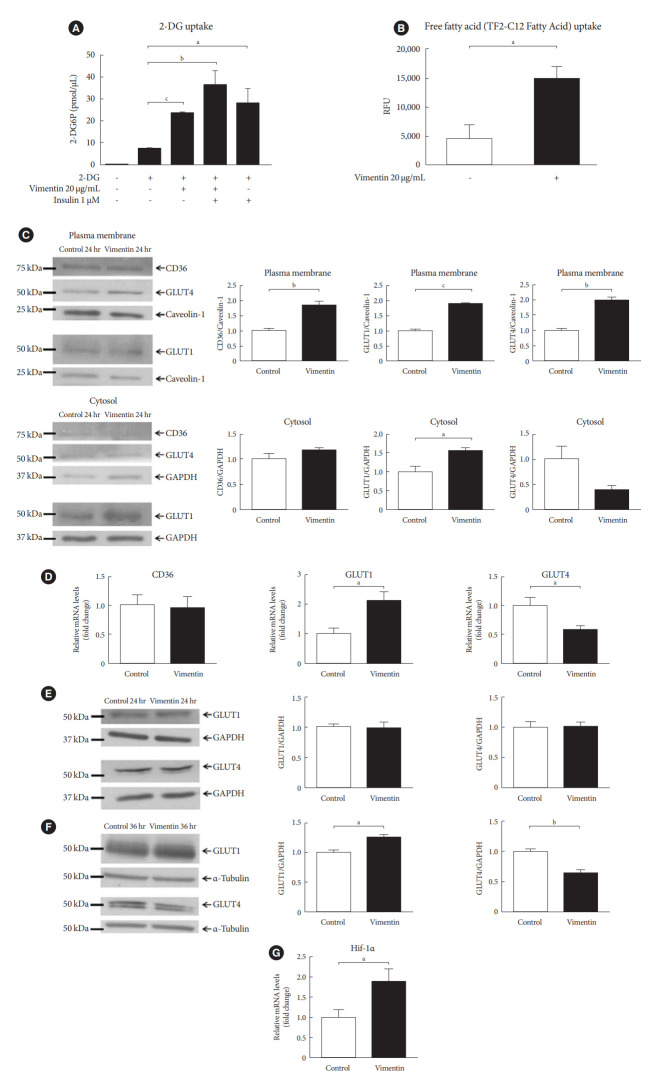
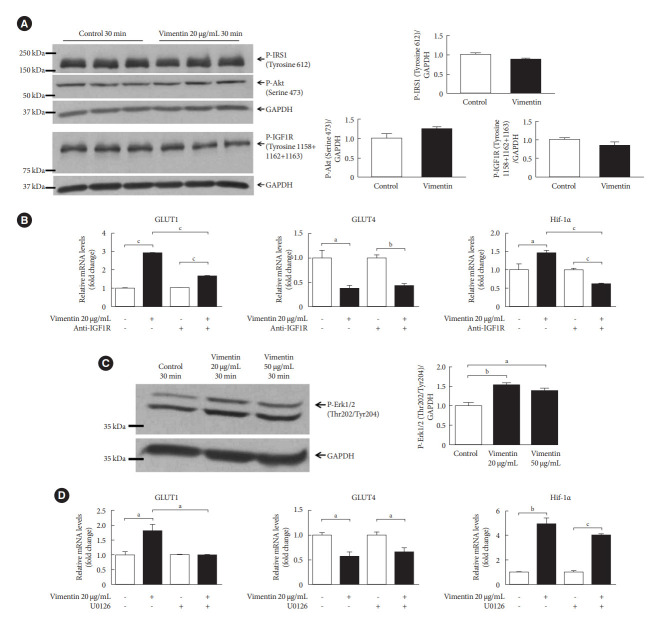
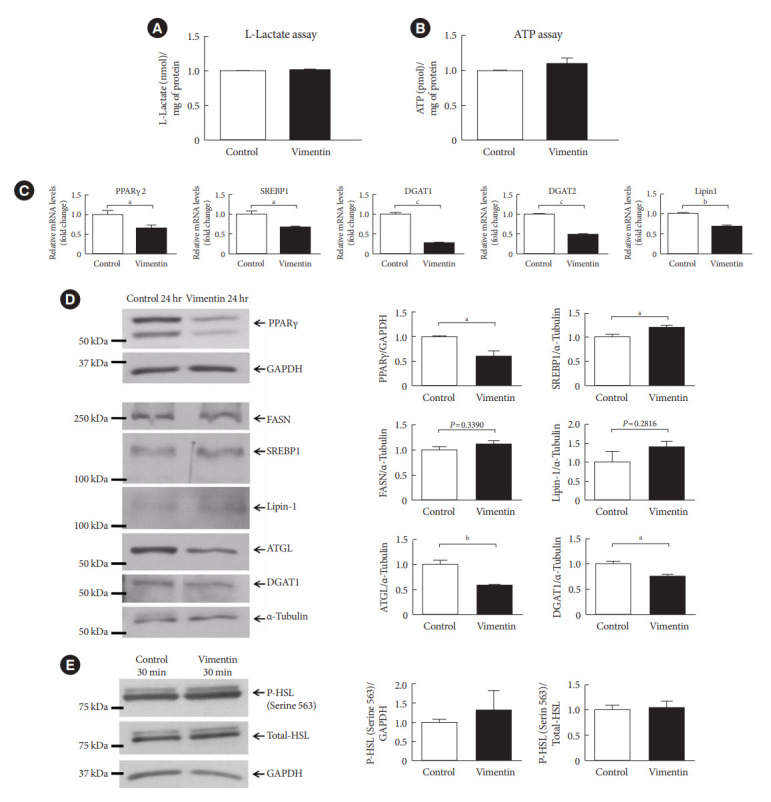
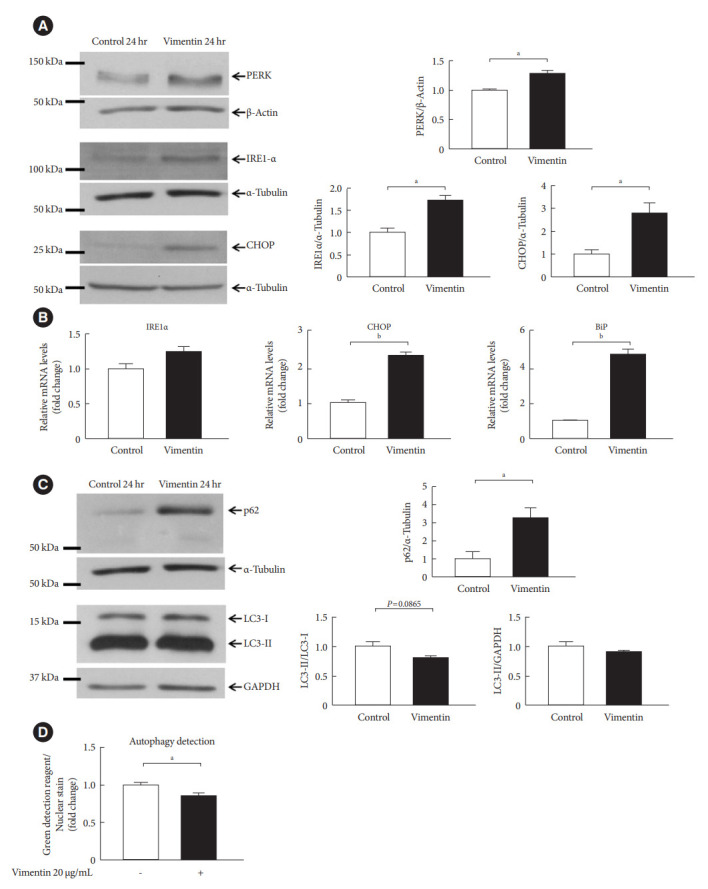
Adipocytes secreted vimentin in response to oxLDL. Microscopic evaluation revealed that vimentin treatment induced increase in adipocyte size and increase in sizes of intracellular lipid droplets with increased intracellular triglyceride. Adipocytes treated with vimentin showed increased uptake of glucose and free fatty acid with increased expression of plasma membrane glucose transporter type 1 (GLUT1), GLUT4, and CD36. Vimentin treatment increased transcription of GLUT1 and hypoxia-inducible factor 1α (Hif-1α) but decreased GLUT4 transcription. Adipose triglyceride lipase (ATGL), peroxisome proliferator-activated receptor γ (PPARγ), sterol regulatory element-binding protein 1 (SREBP1), diacylglycerol O-acyltransferase 1 (DGAT1) and 2 were decreased by vimentin treatment. Markers for ER stress were increased and autophagy was impaired in vimentin-treated adipocytes. No change was observed in synthesis of ATP and lactate in the adipocytes treated with vimentin.
We concluded that extracellular vimentin regulates expression of molecules in energy metabolism and promotes adipocyte hypertrophy. Our results show that vimentin functions in the interplay between oxidative stress and metabolism, suggesting a mechanism by which adipocyte hypertrophy is induced in oxidative stress.
先前的研究报告指出,氧化应激导致脂肪细胞肥大,从而导致肥胖。然而,其机制尚未得到广泛研究。在本研究中,我们评估了氧化低密度脂蛋白(oxLDL)分泌的细胞外中间丝蛋白在脂肪细胞能量代谢中的作用。
我们用 oxLDL 处理 3T3-L1 来源的脂肪细胞,并测量分泌到培养基中的中间丝蛋白。我们评估了重组中间丝蛋白处理的脂肪细胞中葡萄糖和游离脂肪酸摄取、参与能量代谢的分子表达、三磷酸腺苷(ATP)和乳酸合成、内质网(ER)应激和自噬的标志物的变化。
脂肪细胞对 oxLDL 反应分泌中间丝蛋白。显微镜评估显示,中间丝蛋白处理诱导脂肪细胞增大,细胞内脂质滴增大,细胞内甘油三酯增加。用中间丝蛋白处理的脂肪细胞显示葡萄糖和游离脂肪酸摄取增加,质膜葡萄糖转运蛋白 1(GLUT1)、GLUT4 和 CD36 表达增加。中间丝蛋白处理增加 GLUT1 和缺氧诱导因子 1α(Hif-1α)的转录,但降低 GLUT4 转录。脂肪甘油三酯脂酶(ATGL)、过氧化物酶体增殖物激活受体 γ(PPARγ)、固醇调节元件结合蛋白 1(SREBP1)、二酰基甘油 O-酰基转移酶 1(DGAT1)和 2 被中间丝蛋白处理下调。中间丝蛋白处理的脂肪细胞中 ER 应激标志物增加,自噬受损。用中间丝蛋白处理的脂肪细胞中 ATP 和乳酸的合成没有变化。
我们得出结论,细胞外中间丝蛋白调节能量代谢中分子的表达,并促进脂肪细胞肥大。我们的结果表明,中间丝蛋白在氧化应激和代谢之间的相互作用中发挥作用,提示了氧化应激诱导脂肪细胞肥大的机制。