Neonatal Intensive Care Unit with Neonatology, "G.F. Ingrassia" Hospital Unit, ASP 6, 90131 Palermo, Italy.
Neonatology and Neonatal Intensive Care Unit, University Hospital Policlinic "Paolo Giaccone", 90127 Palermo, Italy.
Nutrients. 2023 Sep 16;15(18):4014. doi: 10.3390/nu15184014.
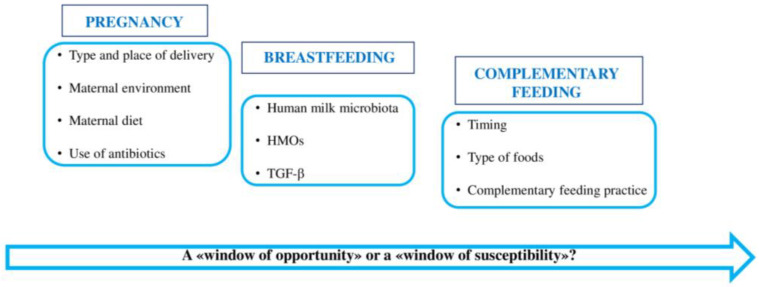
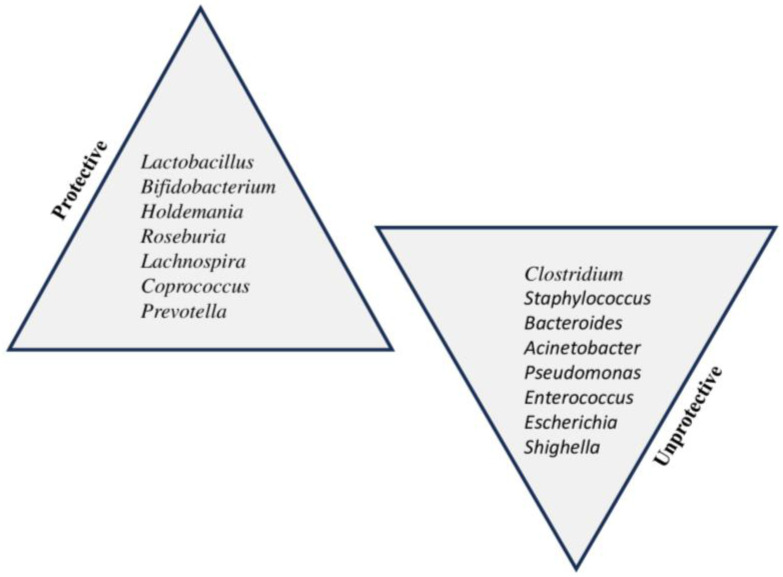
Allergic disease, including food allergies (FA)s, has been identified as a major global disease. The first 1000 days of life can be a "window of opportunity" or a "window of susceptibility", during which several factors can predispose children to FA development. Changes in the composition of the gut microbiota from pregnancy to infancy may play a pivotal role in this regard: some bacterial genera, such as and , seem to be protective against FA development. On the contrary, and appear to be unprotective.
We conducted research on the most recent literature (2013-2023) using the PubMed and Scopus databases. We included original papers, clinical trials, meta-analyses, and reviews in English. Case reports, series, and letters were excluded.
During pregnancy, the maternal diet can play a fundamental role in influencing the gut microbiota composition of newborns. After birth, human milk can promote the development of protective microbial species via human milk oligosaccharides (HMOs), which play a prebiotic role. Moreover, complementary feeding can modify the gut microbiota's composition.
The first two years of life are a critical period, during which several factors can increase the risk of FA development in genetically predisposed children.
过敏疾病,包括食物过敏(FA),已被确定为一种主要的全球性疾病。生命的头 1000 天是一个“机会之窗”或“易感性之窗”,在此期间,几个因素可能使儿童易患 FA。从怀孕到婴儿期,肠道微生物群的组成变化可能在此方面发挥关键作用:一些细菌属,如 和 ,似乎对 FA 的发展具有保护作用。相反, 和 似乎没有保护作用。
我们使用 PubMed 和 Scopus 数据库对 2013 年至 2023 年的最新文献进行了研究。我们纳入了英文的原始论文、临床试验、荟萃分析和综述。排除了病例报告、系列和信件。
在怀孕期间,母体饮食可以在很大程度上影响新生儿的肠道微生物群组成。出生后,人乳可以通过人乳寡糖(HMO)促进保护性微生物种类的发育,发挥益生元的作用。此外,补充喂养可以改变肠道微生物群的组成。
生命的头两年是一个关键时期,在此期间,一些因素可能会增加遗传易感性儿童患 FA 的风险。