Department of Ecology and Evolution, University of Chicago, Chicago, IL, United States.
Grainger Bioinformatics Center, Field Museum of Natural History, Chicago, IL, United States.
Front Public Health. 2023 Sep 22;11:1212018. doi: 10.3389/fpubh.2023.1212018. eCollection 2023.
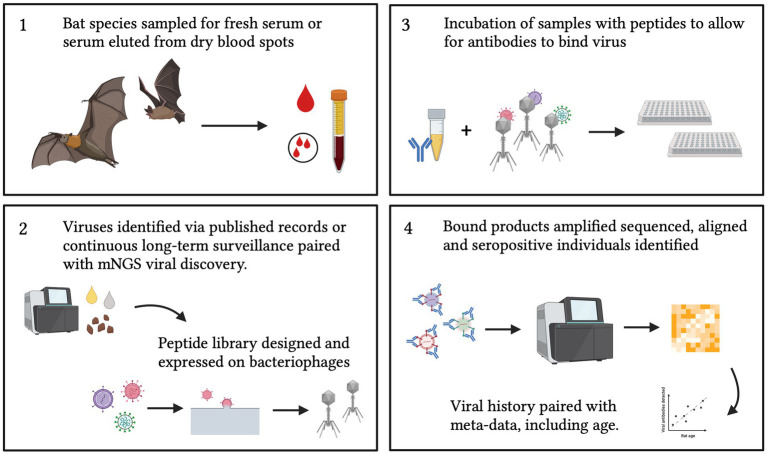
Bats are important providers of ecosystem services such as pollination, seed dispersal, and insect control but also act as natural reservoirs for virulent zoonotic viruses. Bats host multiple viruses that cause life-threatening pathology in other animals and humans but, themselves, experience limited pathological disease from infection. Despite bats' importance as reservoirs for several zoonotic viruses, we know little about the broader viral diversity that they host. Bat virus surveillance efforts are challenged by difficulties of field capture and the limited scope of targeted PCR- or ELISA-based molecular and serological detection. Additionally, virus shedding is often transient, thus also limiting insights gained from nucleic acid testing of field specimens. Phage ImmunoPrecipitation Sequencing (PhIP-Seq), a broad serological tool used previously to comprehensively profile viral exposure history in humans, offers an exciting prospect for viral surveillance efforts in wildlife, including bats.
Here, for the first time, we apply PhIP-Seq technology to bat serum, using a viral peptide library originally designed to simultaneously assay exposures to the entire human virome.
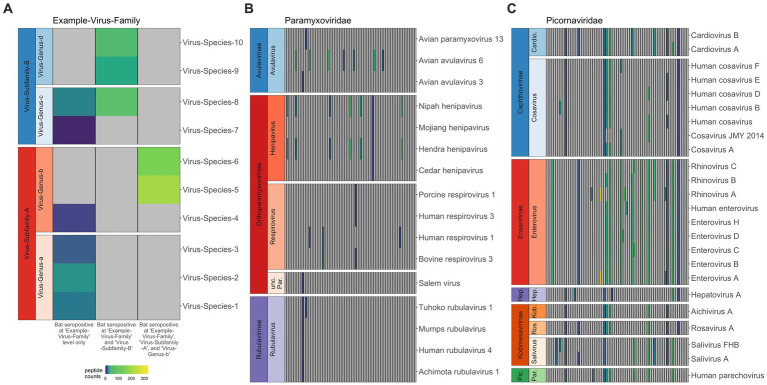
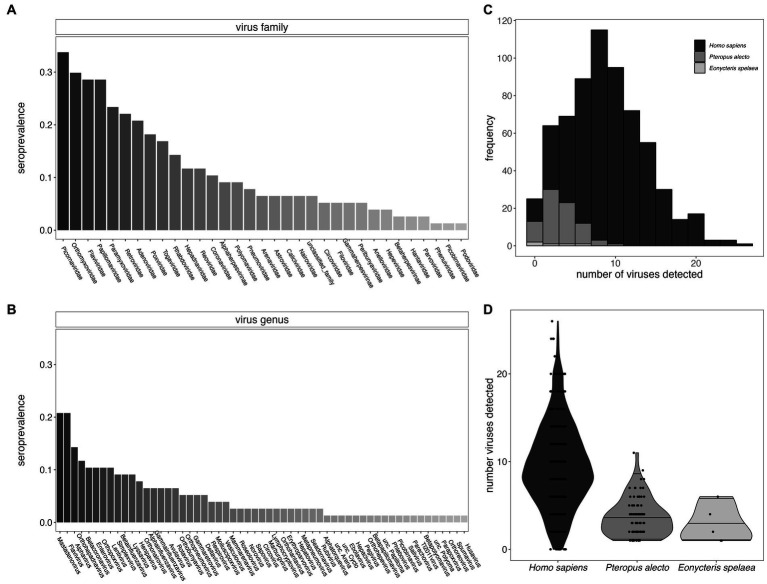
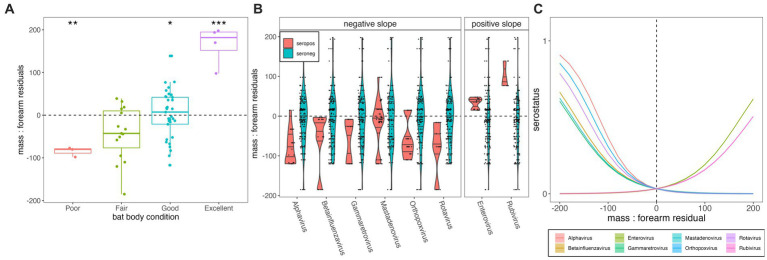
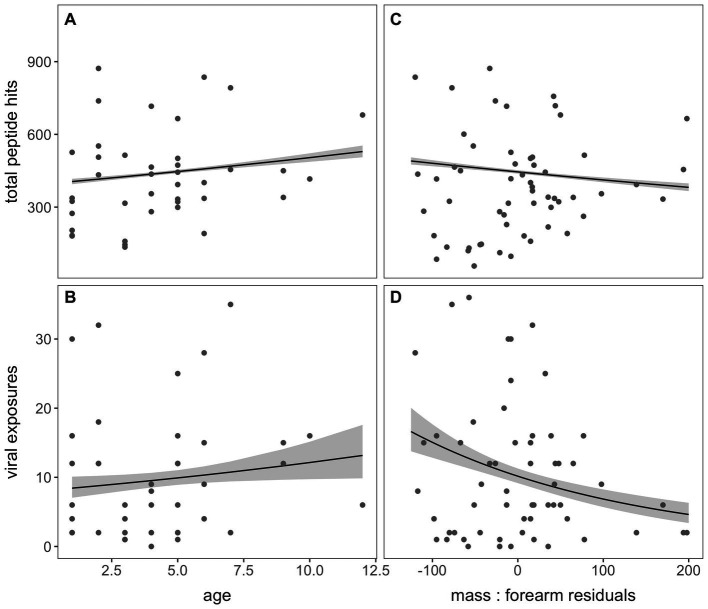
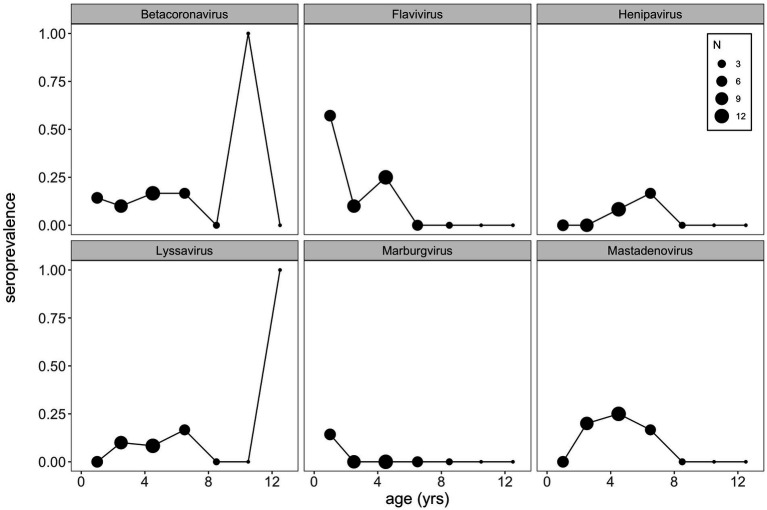
Using VirScan, we identified past exposures to 57 viral genera-including betacoronaviruses, henipaviruses, lyssaviruses, and filoviruses-in semi-captive and to nine viral genera in captive . Consistent with results from humans, we find that both total peptide hits (the number of enriched viral peptides in our library) and the corresponding number of inferred past virus exposures in bat hosts were correlated with poor bat body condition scores and increased with age. High and low body condition scores were associated with either seropositive or seronegative status for different viruses, though in general, virus-specific age-seroprevalence curves defied assumptions of lifelong immunizing infection, suggesting that many bat viruses may circulate via complex transmission dynamics.
Overall, our work emphasizes the utility of applying biomedical tools, like PhIP-Seq, first developed for humans to viral surveillance efforts in wildlife, while highlighting opportunities for taxon-specific improvements.
蝙蝠在传粉、种子传播和昆虫控制等方面提供了重要的生态系统服务,但它们也是致命人畜共患病病毒的天然宿主。蝙蝠携带多种病毒,这些病毒会导致其他动物和人类出现危及生命的病理变化,但它们自身感染病毒后只会出现有限的病理疾病。尽管蝙蝠作为几种人畜共患病病毒的宿主具有重要意义,但我们对它们所携带的更广泛的病毒多样性知之甚少。蝙蝠病毒监测工作面临着实地捕获的困难以及基于 PCR 或 ELISA 的分子和血清学检测的有限范围的挑战。此外,病毒脱落通常是短暂的,因此也限制了从现场标本的核酸检测中获得的见解。噬菌体免疫沉淀测序(PhIP-Seq)是一种以前用于全面分析人类病毒暴露史的广泛血清学工具,为野生动物(包括蝙蝠)的病毒监测工作提供了一个令人兴奋的前景。
在这里,我们首次将 PhIP-Seq 技术应用于蝙蝠血清,使用最初设计用于同时检测整个人类病毒组的病毒肽文库。
使用 VirScan,我们在半圈养和圈养中确定了过去对 57 种病毒属的暴露,包括β冠状病毒、亨德拉病毒、狂犬病毒和丝状病毒。与人类的结果一致,我们发现蝙蝠宿主中总肽命中数(文库中富集的病毒肽数量)和推断的过去病毒暴露数都与蝙蝠身体状况评分差相关,并随年龄增长而增加。高和低身体状况评分与不同病毒的血清阳性或血清阴性状态相关,尽管总的来说,病毒特异性的年龄血清阳性率曲线违反了终身免疫感染的假设,表明许多蝙蝠病毒可能通过复杂的传播动力学循环。
总的来说,我们的工作强调了将首先为人类开发的生物医学工具,如 PhIP-Seq,应用于野生动物病毒监测工作的效用,同时突出了针对特定分类群的改进机会。