Rasquinha Mahima T, Lasrado Ninaad, Petro-Turnquist Erika, Weaver Eric, Venkataraman Thiagarajan, Anderson Daniel, Laserson Uri, Larman H Benjamin, Reddy Jay
School of Veterinary Medicine and Biomedical Sciences, University of Nebraska-Lincoln, Lincoln, NE 68583, USA.
Center for Virology and Vaccine Research, Beth Israel Deaconess Medical Center, Harvard Medical School, Boston, MA 02215, USA.
Biology (Basel). 2022 Jul 13;11(7):1055. doi: 10.3390/biology11071055.
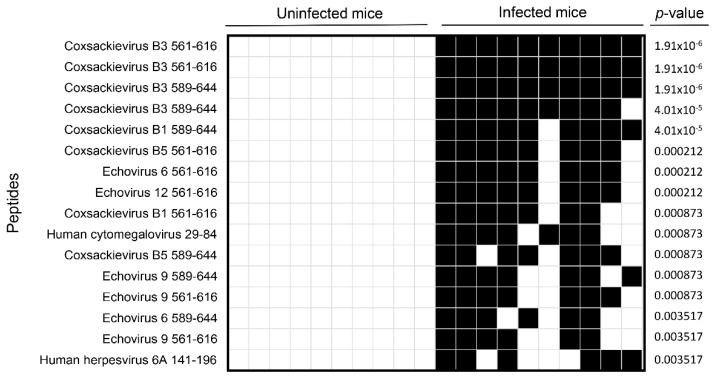
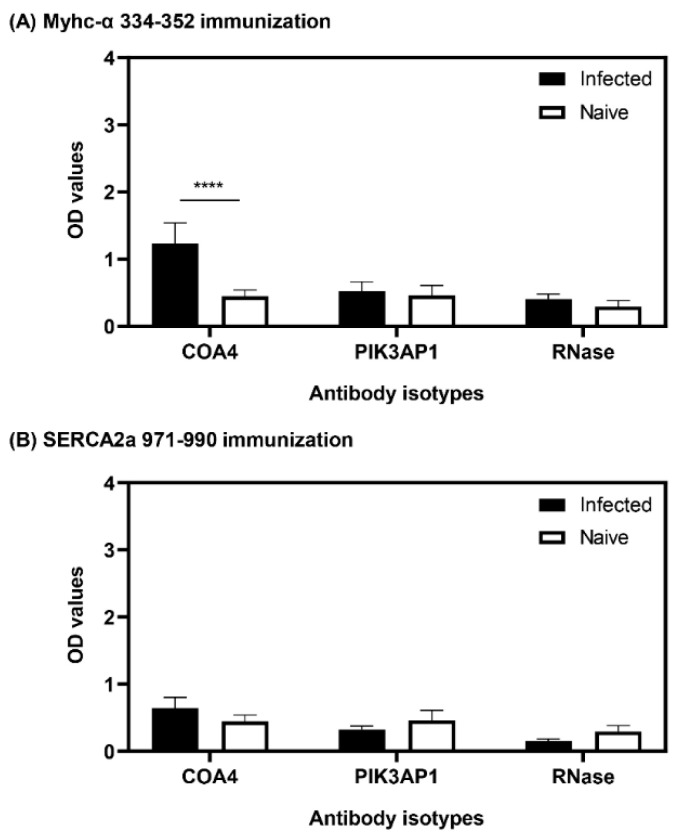
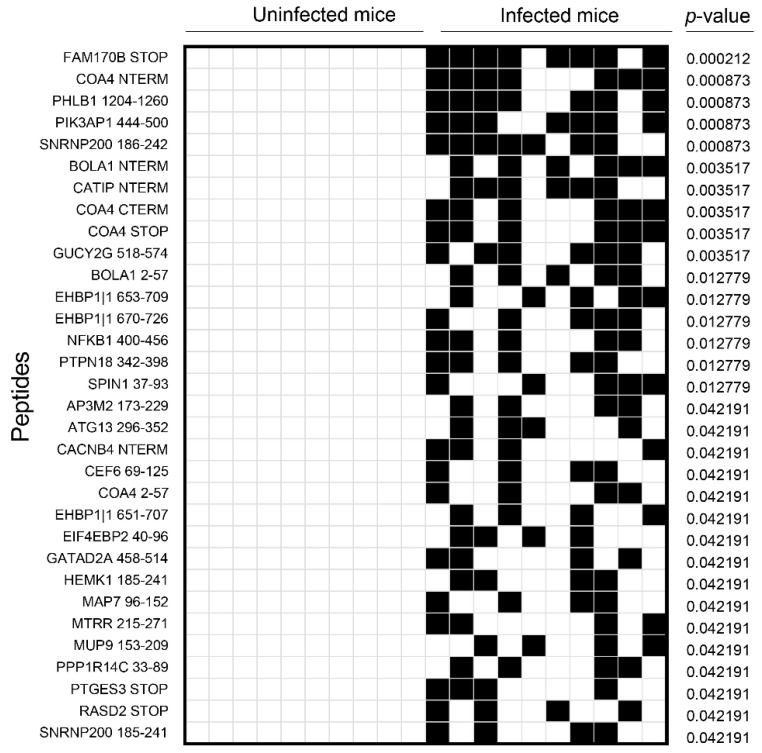
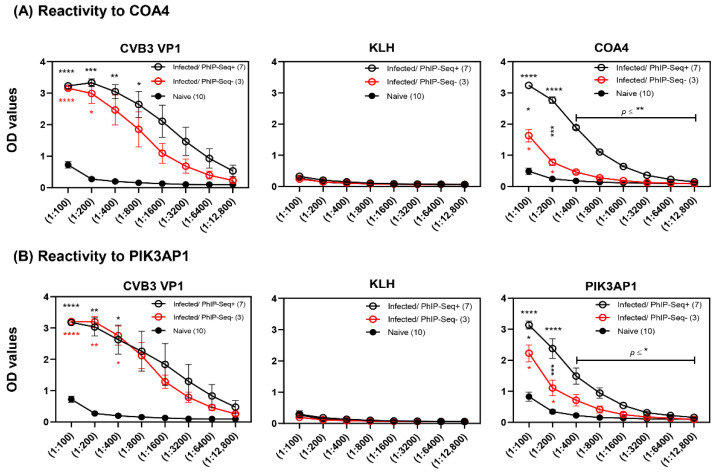
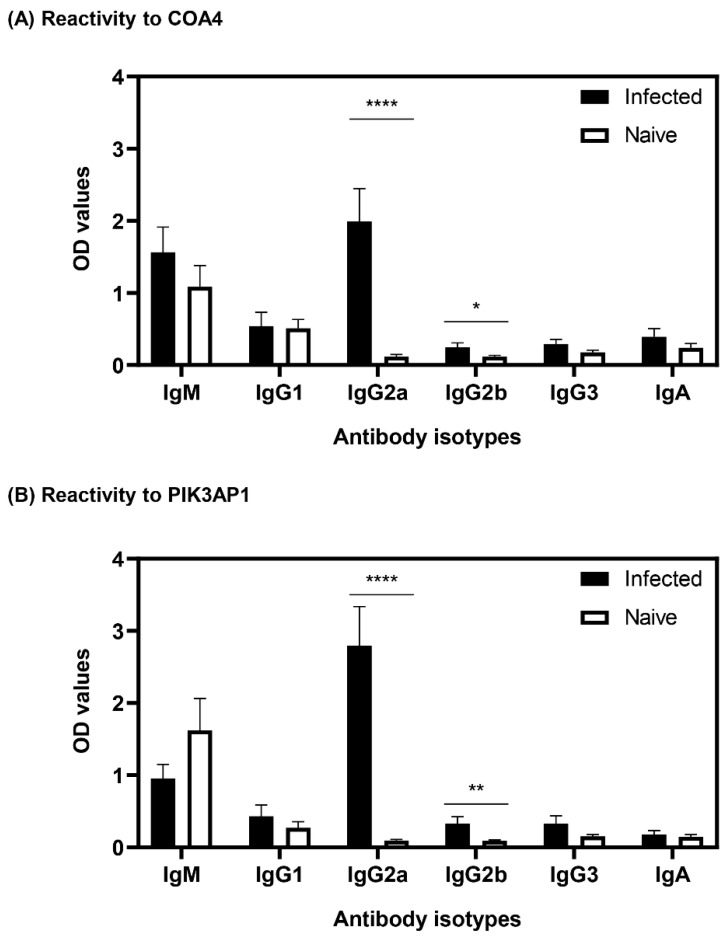
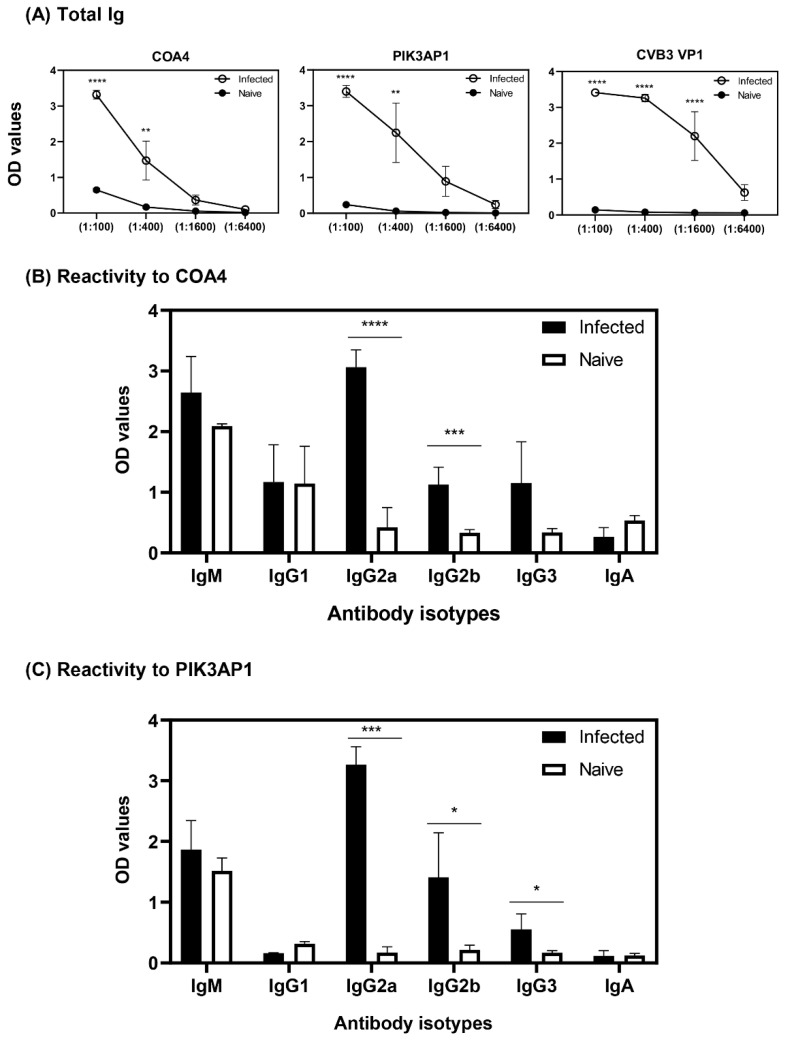
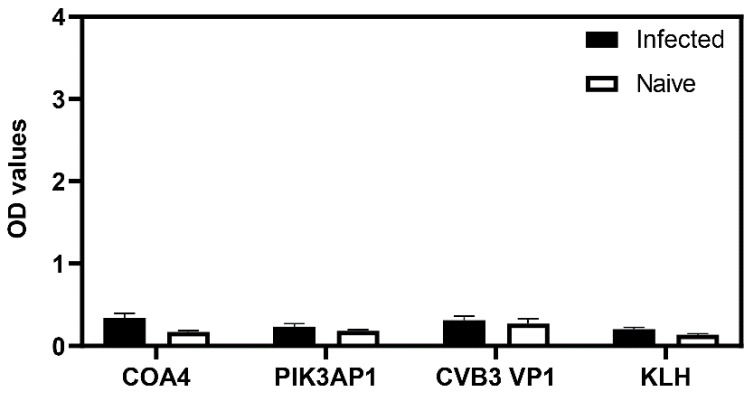
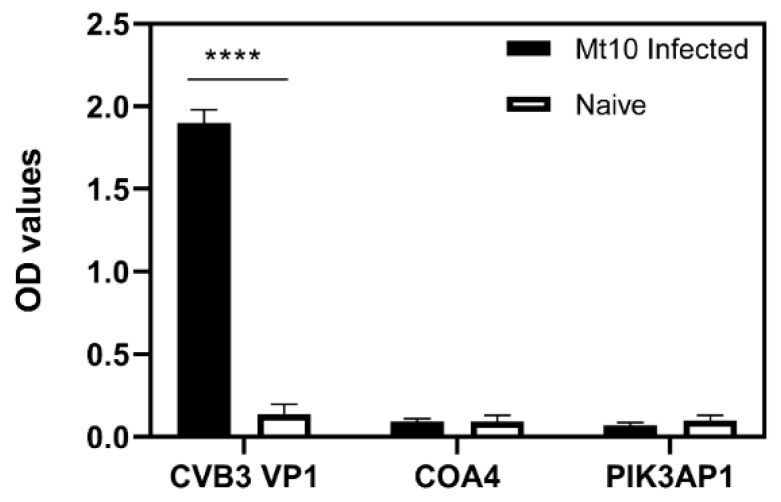
Enteroviruses such as group B coxsackieviruses (CVB) are commonly suspected as causes of myocarditis that can lead to dilated cardiomyopathy (DCM), and the mouse model of CVB3 myocarditis is routinely used to understand DCM pathogenesis. Mechanistically, autoimmunity is suspected due to the presence of autoantibodies for select antigens. However, their role continues to be enigmatic, which also raises the question of whether the breadth of autoantibodies is sufficiently characterized. Here, we attempted to comprehensively analyze the autoantibody repertoire using Phage ImmunoPrecipitation Sequencing (PhIP-Seq), a versatile and high-throughput platform, in the mouse model of CVB3 myocarditis. First, PhIP-Seq analysis using the VirScan library revealed antibody reactivity only to CVB3 in the infected group but not in controls, thus validating the technique in this model. Second, using the mouse peptide library, we detected autoantibodies to 32 peptides from 25 proteins in infected animals that are ubiquitously expressed and have not been previously reported. Third, by using ELISA as a secondary assay, we confirmed antibody reactivity in sera from CVB3-infected animals to cytochrome c oxidase assembly factor 4 homolog (COA4) and phosphoinositide-3-kinase adaptor protein 1 (PIK3AP1), indicating the specificity of antibody detection by PhIP-Seq technology. Fourth, we noted similar antibody reactivity patterns in CVB3 and CVB4 infections, suggesting that the COA4- and PIK3AP1-reactive antibodies could be common to multiple CVB infections. The specificity of the autoantibodies was affirmed with influenza-infected animals that showed no reactivity to any of the antigens tested. Taken together, our data suggest that the autoantibodies identified by PhIP-Seq may have relevance to CVB pathogenesis, with a possibility that similar reactivity could be expected in human DCM patients.
诸如B组柯萨奇病毒(CVB)之类的肠道病毒通常被怀疑是导致心肌炎进而引发扩张型心肌病(DCM)的病因,CVB3心肌炎的小鼠模型常被用于了解DCM的发病机制。从机制上讲,由于存在针对特定抗原的自身抗体,所以怀疑存在自身免疫。然而,它们的作用仍然是个谜,这也引发了一个问题,即自身抗体的广度是否得到了充分的表征。在此,我们尝试在CVB3心肌炎的小鼠模型中,使用噬菌体免疫沉淀测序(PhIP-Seq)这一通用且高通量的平台,全面分析自身抗体库。首先,使用VirScan文库进行的PhIP-Seq分析显示,感染组中抗体仅对CVB3有反应,而对照组中则无反应,从而在该模型中验证了该技术。其次,使用小鼠肽库,我们在受感染动物中检测到针对25种蛋白质中32种肽段的自身抗体,这些蛋白质广泛表达且此前未被报道。第三,通过使用酶联免疫吸附测定(ELISA)作为辅助检测方法,我们证实了CVB3感染动物血清中针对细胞色素c氧化酶组装因子4同源物(COA4)和磷脂酰肌醇-3-激酶衔接蛋白1(PIK3AP1)的抗体反应性,表明PhIP-Seq技术检测抗体的特异性。第四,我们注意到CVB3和CVB4感染中存在相似的抗体反应模式,这表明对COA4和PIK3AP1有反应的抗体可能在多种CVB感染中常见。用感染流感的动物证实了自身抗体的特异性,这些动物对所测试的任何抗原均无反应。综上所述,我们的数据表明,通过PhIP-Seq鉴定出的自身抗体可能与CVB发病机制相关,并且人类DCM患者可能也会有类似的反应。