Department of Plant Breeding, Cotton Research Institute of Iran (CRII), Agricultural Research, Education and Extension Organization (AREEO), Gorgan, Iran.
Centre for Plant Biotechnology and Molecular Biology, Kerala Agricultural University, Thrissur, India.
BMC Plant Biol. 2023 Oct 13;23(1):488. doi: 10.1186/s12870-023-04495-2.
Heterosis is a complex phenomenon wherein the hybrids outperform their parents. Understanding the underlying molecular mechanism by which hybridization leads to higher yields in allopolyploid cotton is critical for effective breeding programs. Here, we integrated DNA methylation, transcriptomes, and small RNA profiles to comprehend the genetic and molecular basis of heterosis in allopolyploid cotton at three developmental stages.
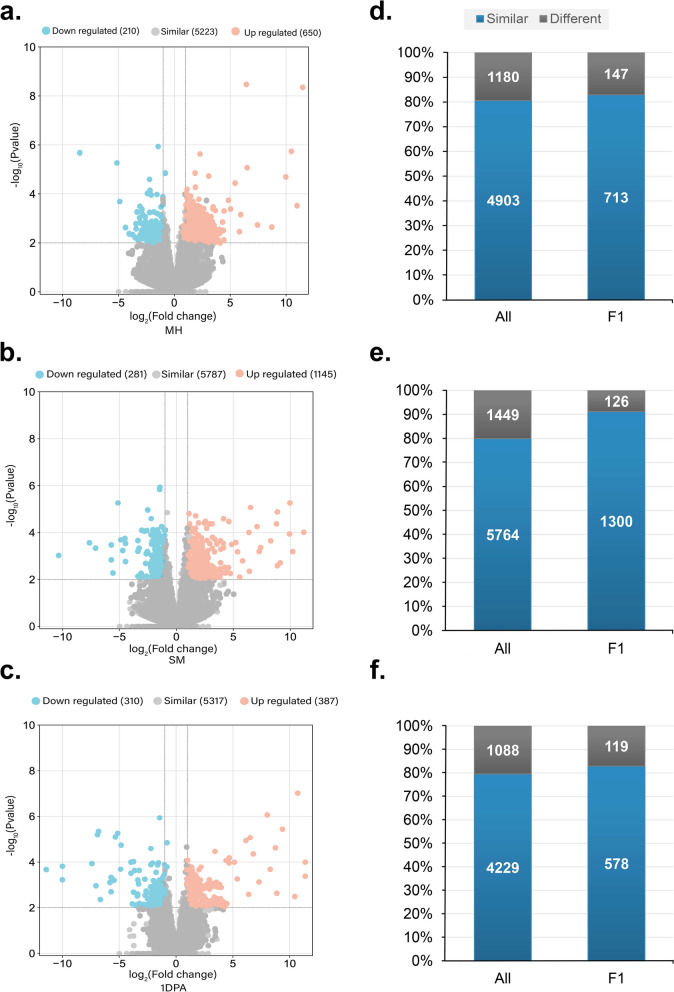
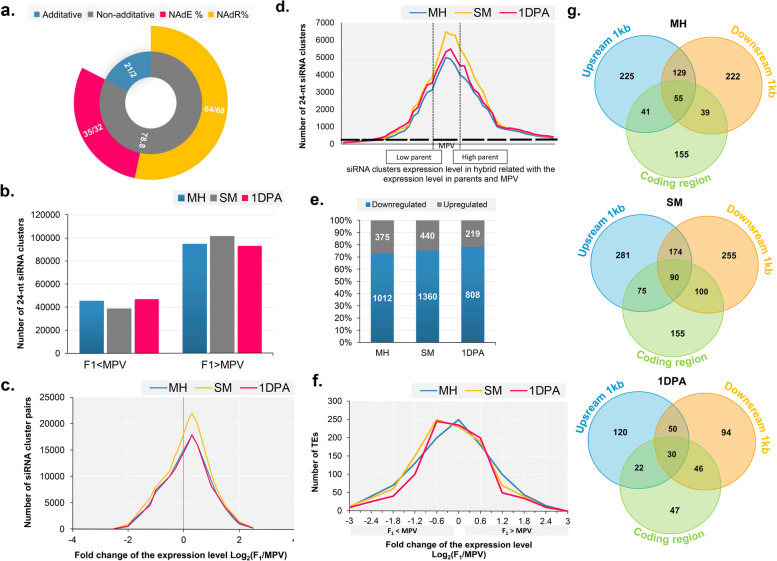
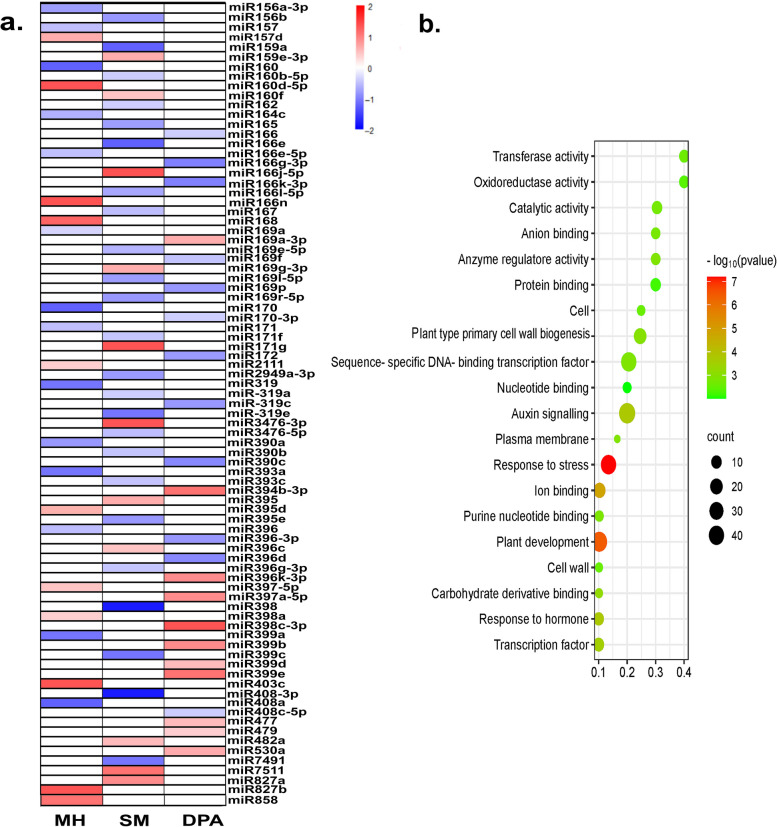
Transcriptome analysis revealed that numerous DEGs responsive to phytohormones (auxin and salicylic acid) were drastically altered in F1 hybrid compared to the parental lines. DEGs involved in energy metabolism and plant growth were upregulated, whereas DEGs related to basal defense were downregulated. Differences in homoeologous gene expression in F1 hybrid were greatly reduced after hybridization, suggesting that higher levels of parental expression have a vital role in heterosis. Small RNAome and methylome studies showed that the degree of DNA methylation in hybrid is higher when compared to the parents. A substantial number of allele-specific expression genes were found to be strongly regulated by CG allele-specific methylation levels. The hybrid exhibited higher 24-nt-small RNA (siRNA) expression levels than the parents. The regions in the genome with increased levels of 24-nt-siRNA were chiefly related to genes and their flanking regulatory regions, demonstrating a possible effect of these molecules on gene expression. The transposable elements correlated with siRNA clusters in the F1 hybrid had higher methylation levels but lower expression levels, which suggest that these non-additively expressed siRNA clusters, reduced the activity of transposable elements through DNA methylation in the hybrid.
These multi-omics data provide insights into how changes in epigenetic mechanisms and gene expression patterns can lead to heterosis in allopolyploid cotton. This makes heterosis a viable tool in cotton breeding.
杂种优势是一种复杂的现象,杂种表现优于其亲本。了解杂交导致异源多倍体棉花产量提高的潜在分子机制对于有效的育种计划至关重要。在这里,我们整合了 DNA 甲基化、转录组和小 RNA 谱,以了解三个发育阶段异源多倍体棉花杂种优势的遗传和分子基础。
转录组分析表明,与亲本系相比,F1 杂种中许多对植物激素(生长素和水杨酸)有反应的 DEGs 发生了剧烈改变。参与能量代谢和植物生长的 DEGs 上调,而与基础防御相关的 DEGs 下调。F1 杂种中外源基因表达的差异在杂交后大大减少,这表明亲本表达水平较高在杂种优势中起着至关重要的作用。小 RNA 组和甲基化组研究表明,与亲本相比,杂种中的 DNA 甲基化程度更高。大量等位基因特异性表达基因被发现受到 CG 等位基因特异性甲基化水平的强烈调控。杂种表现出比亲本更高的 24-nt-siRNA 表达水平。基因组中 24-nt-siRNA 水平升高的区域主要与基因及其侧翼调控区域有关,表明这些分子可能对基因表达有影响。与 F1 杂种中 siRNA 簇相关的转座元件具有较高的甲基化水平和较低的表达水平,这表明这些非加性表达的 siRNA 簇通过杂种中的 DNA 甲基化降低了转座元件的活性。
这些多组学数据提供了关于表观遗传机制和基因表达模式变化如何导致异源多倍体棉花杂种优势的见解。这使得杂种优势成为棉花育种的一种可行工具。