P. N. Lebedev Physical Institute, Russian Academy of Sciences, Leninsky Prospect 53, Moscow 119991, Russia.
Department of Veterinary Medicine, Institute of Veterinary, Veterinary-Sanitary Examination and Agricultural Safety, Russian Biotechnological University, Volokolamskoe Highway 11, Moscow 125080, Russia.
Int J Mol Sci. 2023 Oct 5;24(19):14911. doi: 10.3390/ijms241914911.
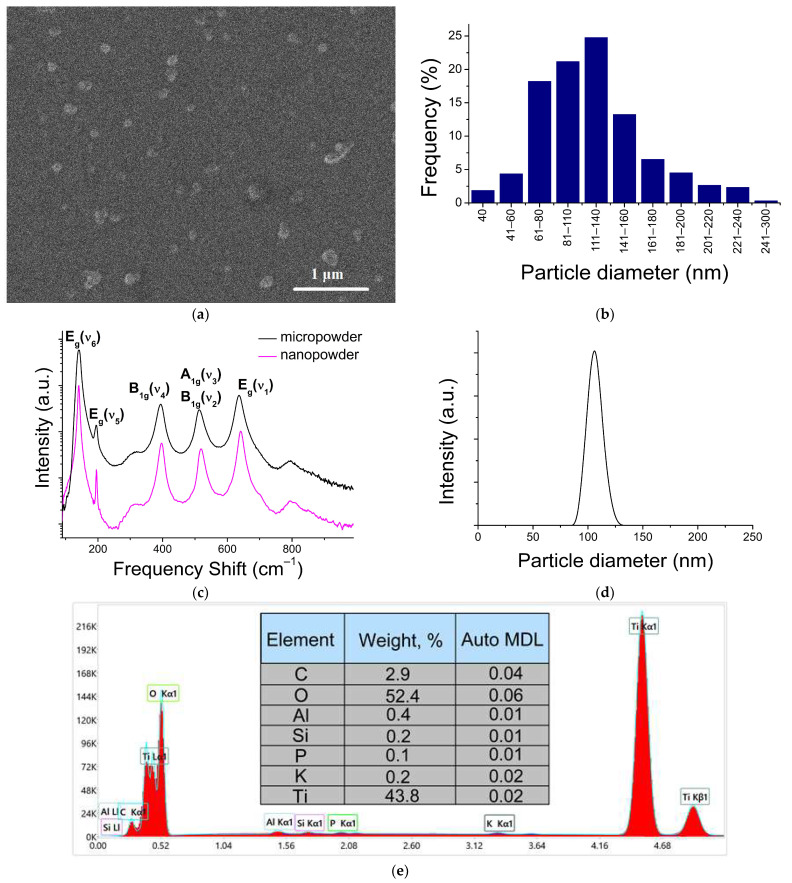
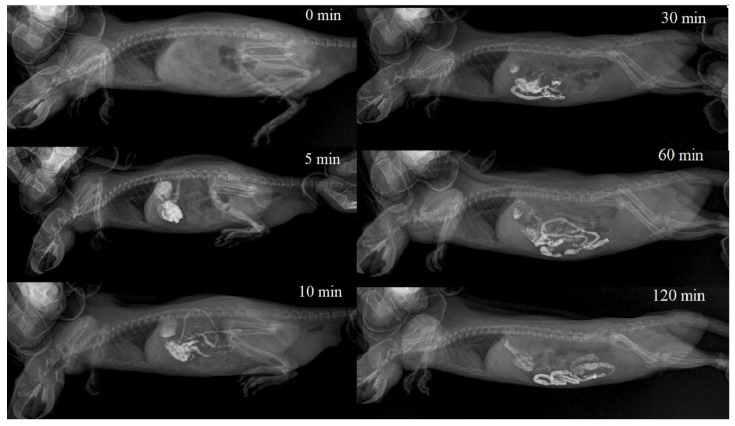
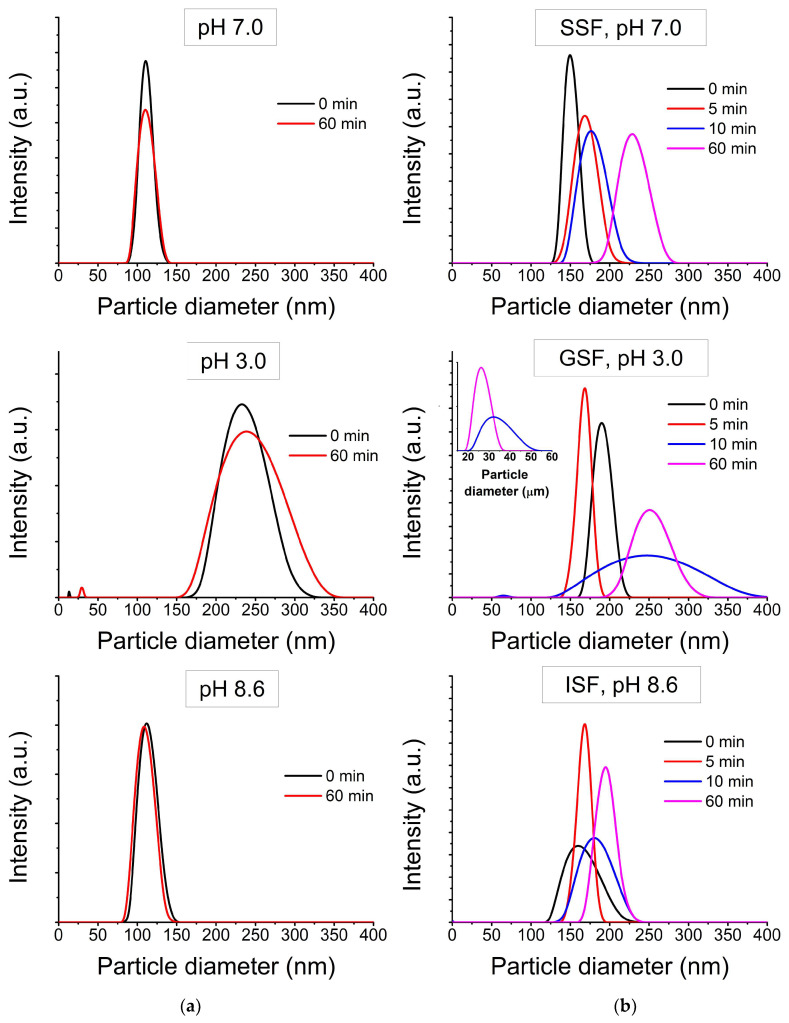
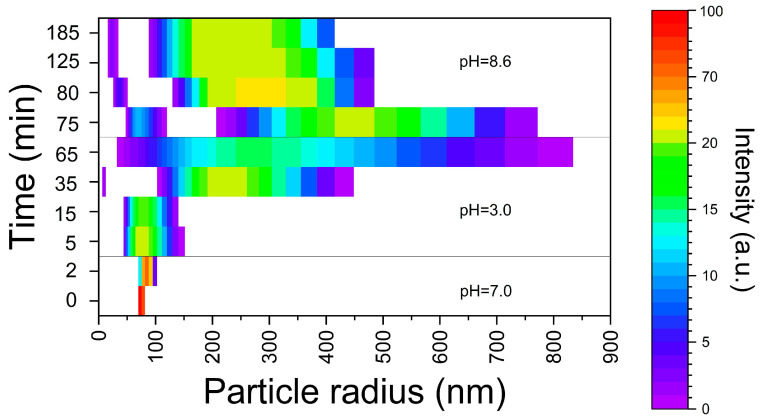
In this work, the size transformation of the TiO nanofraction from pharmaceutical grade E171 powder was studied during its transit through the gastrointestinal tract (GIT). It was shown that pharmaceutical-grade TiO powder contained about 0.68% (/) of particles smaller than 240 nm in diameter. In the observed GIT transit process the TiO nanoparticles were agglomerated up to 150-200 nm in simulated salivary fluid, with gradual agglomerate enlargement up to 300-600 nm and more than 1 micron in simulated gastric fluid. In the intestinal fluid the reverse process occurred, involving a decrease of agglomerates accompanied by the formation of a small fraction with ~50 nm average size. This fraction can be further involved in the histohematic transport process. The acidity degree (pH) and mineral composition of solutions, as well as the transit speed along the gastrointestinal tract, influence the nature of the particle transformation significantly. The rapid passing between the gastrointestinal tract sections creates conditions for a decrease in part of the TiO particles, up to 100 nm, and may be associated with the violation of the structural and functional integrity of the intestinal mucus layer.
在这项工作中,研究了在胃肠道(GIT)转运过程中,医药级 E171 粉末中的 TiO 纳米颗粒从医药级尺寸向更小尺寸的转变。结果表明,医药级 TiO 粉末中约有 0.68%(/)的颗粒直径小于 240nm。在观察到的 GIT 转运过程中,TiO 纳米颗粒在模拟唾液中团聚成 150-200nm 的大小,在模拟胃液中逐渐增大至 300-600nm 甚至 1 微米以上。在肠液中,发生了相反的过程,团聚体减少,并形成了一小部分平均粒径约为 50nm 的颗粒。这部分颗粒可能进一步参与组织血流运输过程。溶液的酸度(pH)和矿物质组成以及沿着胃肠道的转运速度,对颗粒转化的性质有显著影响。胃肠道各部分之间的快速转移,导致部分 TiO 颗粒减小至 100nm,这可能与肠道黏液层的结构和功能完整性遭到破坏有关。