Chair and Department of Anatomy, Medical University of Lublin, 20-090 Lublin, Poland.
Department of Plastic, Reconstructive and Burn Surgery, Medical University of Lublin, 21-010 Łęczna, Poland.
Int J Mol Sci. 2023 Oct 6;24(19):14959. doi: 10.3390/ijms241914959.
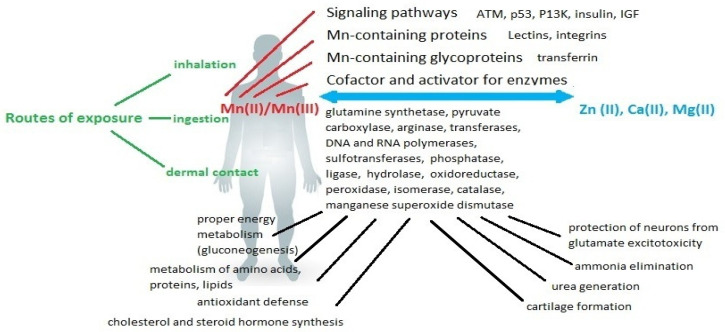
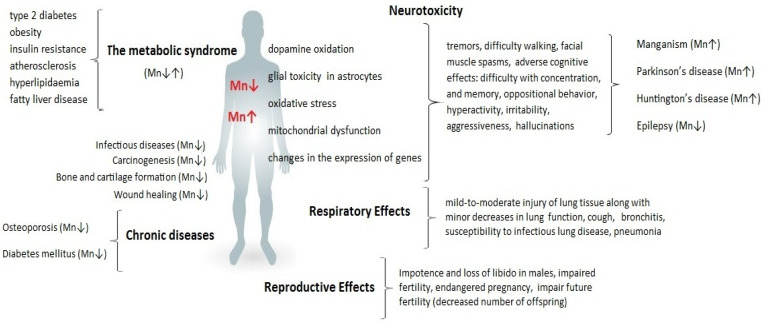
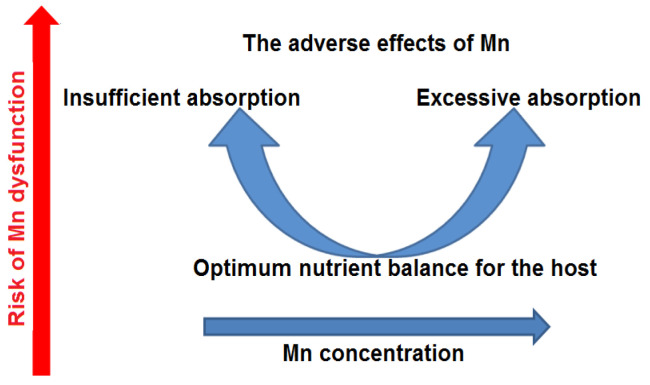
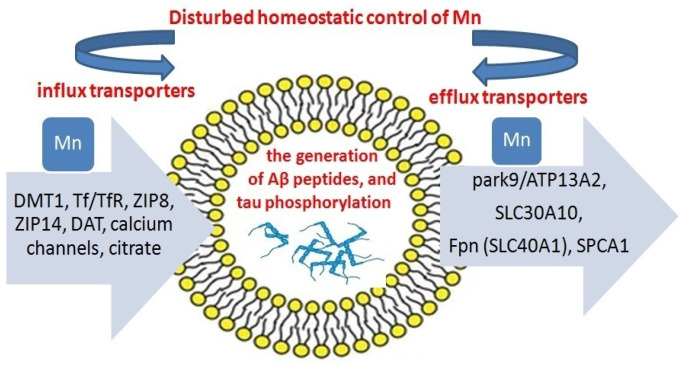
Manganese (Mn) is an essential trace element with unique functions in the body; it acts as a cofactor for many enzymes involved in energy metabolism, the endogenous antioxidant enzyme systems, neurotransmitter production, and the regulation of reproductive hormones. However, overexposure to Mn is toxic, particularly to the central nervous system (CNS) due to it causing the progressive destruction of nerve cells. Exposure to manganese is widespread and occurs by inhalation, ingestion, or dermal contact. Associations have been observed between Mn accumulation and neurodegenerative diseases such as manganism, Alzheimer's disease, Parkinson's disease, Huntington's disease, and amyotrophic lateral sclerosis. People with genetic diseases associated with a mutation in the gene associated with impaired Mn excretion, kidney disease, iron deficiency, or a vegetarian diet are at particular risk of excessive exposure to Mn. This review has collected data on the current knowledge of the source of Mn exposure, the experimental data supporting the dispersive accumulation of Mn in the brain, the controversies surrounding the reference values of biomarkers related to Mn status in different matrices, and the competitiveness of Mn with other metals, such as iron (Fe), magnesium (Mg), zinc (Zn), copper (Cu), lead (Pb), calcium (Ca). The disturbed homeostasis of Mn in the body has been connected with susceptibility to neurodegenerative diseases, fertility, and infectious diseases. The current evidence on the involvement of Mn in metabolic diseases, such as type 2 diabetes mellitus/insulin resistance, osteoporosis, obesity, atherosclerosis, and non-alcoholic fatty liver disease, was collected and discussed.
锰(Mn)是一种必需的微量元素,在体内具有独特的功能;它作为许多参与能量代谢、内源性抗氧化酶系统、神经递质产生和生殖激素调节的酶的辅助因子。然而,过量暴露于锰是有毒的,尤其是对中枢神经系统(CNS),因为它会导致神经细胞的进行性破坏。锰的暴露是广泛的,通过吸入、摄入或皮肤接触发生。锰的积累与神经退行性疾病如锰中毒、阿尔茨海默病、帕金森病、亨廷顿病和肌萎缩侧索硬化症之间存在关联。与与锰排泄受损相关的基因突变、肾脏疾病、缺铁或素食饮食相关的遗传疾病的人特别容易受到锰的过度暴露。这篇综述收集了关于锰暴露来源的现有知识、支持锰在大脑中分散积累的实验数据、与不同基质中锰状态相关的生物标志物参考值相关的争议,以及锰与其他金属(如铁(Fe)、镁(Mg)、锌(Zn)、铜(Cu)、铅(Pb)、钙(Ca))的竞争。体内锰的平衡失调与神经退行性疾病、生育能力和传染病的易感性有关。收集并讨论了目前关于锰参与代谢疾病(如 2 型糖尿病/胰岛素抵抗、骨质疏松症、肥胖症、动脉粥样硬化和非酒精性脂肪肝疾病)的证据。