Laboratory of Nutrition and Metabolic Surgery (LIM-35), Department of Gastroenterology, Faculdade de Medicina, Hospital das Clinicas HCFMUSP, Universidade de São Paulo, São Paulo 05508-070, SP, Brazil.
Department of Nutrition, Universidade Federal do Rio Grande do Norte, Natal 59078-900, RN, Brazil.
Nutrients. 2023 Sep 26;15(19):4148. doi: 10.3390/nu15194148.
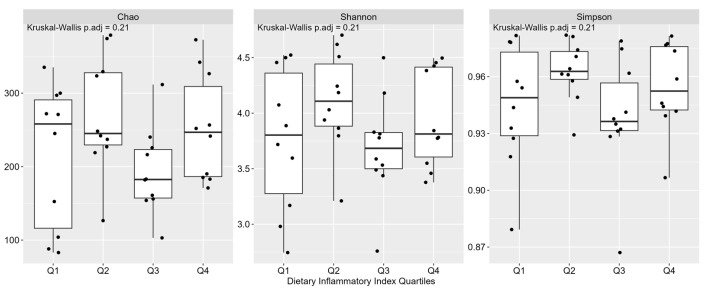
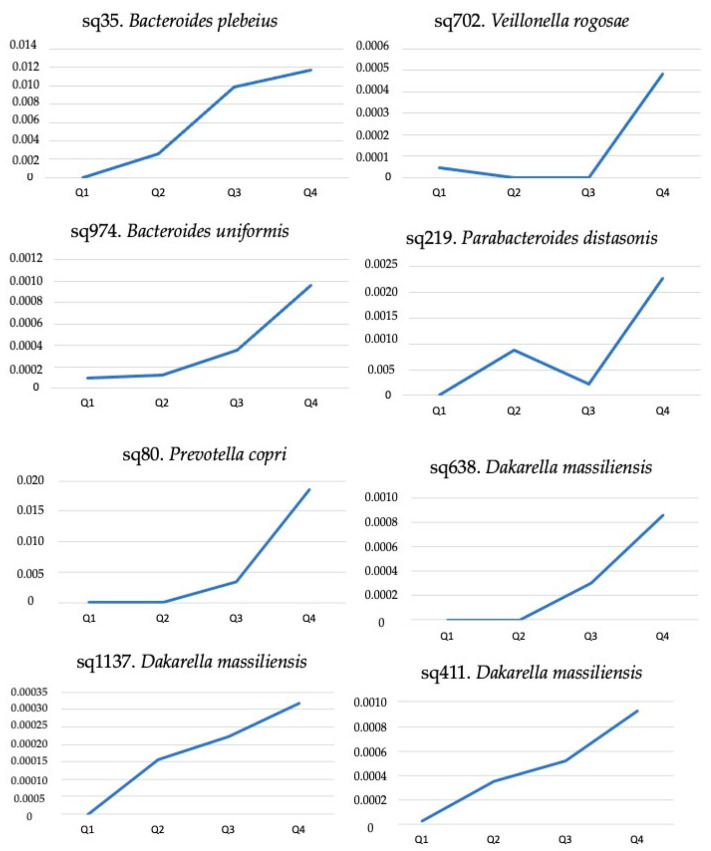
Inflammatory bowel diseases (IBD) are chronic conditions arising from an intricate interplay of genetics and environmental factors, and are associated with gut dysbiosis, inflammation, and gut permeability. In this study, we investigated whether the inflammatory potential of the diet is associated with the gut microbiota profile, inflammation, and permeability in forty patients with IBD in clinical remission. The dietary inflammatory index (DII) score was used to assess the inflammatory potential of the diet. The fecal microbiota profile was analyzed using 16SrRNA (V3-V4) gene sequencing, while fecal zonulin and calprotectin levels were measured with enzyme-linked immunosorbent assays. We found a positive correlation between the DII score and elevated calprotectin levels (Rho = 0.498; = 0.001), but not with zonulin levels. Although α- and β-diversity did not significantly differ across DII quartiles, the most pro-inflammatory diet group exhibited a higher fecal abundance of ( = 0.026). In addition, the abundance of some specific bacteria sequences showed an exponential behavior across DII quartiles and a correlation with calprotectin or zonulin levels ( ≤ 0.050). This included a positive correlation between sq702. and fecal calprotectin levels (Rho = 0.419, = 0.007). DII, calprotectin, and zonulin levels were identified as significant predictors of 6-month disease relapse ( ≤ 0.050). Our findings suggest a potential relationship of a pro-inflammatory diet intake with and calprotectin levels in IBD patients in clinical remission, which may contribute to disease relapse.
炎症性肠病(IBD)是由遗传和环境因素复杂相互作用引起的慢性疾病,与肠道菌群失调、炎症和肠道通透性有关。在这项研究中,我们调查了饮食的炎症潜能是否与 40 例处于临床缓解期的 IBD 患者的肠道微生物群谱、炎症和通透性有关。饮食炎症指数(DII)评分用于评估饮食的炎症潜能。使用 16SrRNA(V3-V4)基因测序分析粪便微生物群谱,同时使用酶联免疫吸附试验测量粪便紧密蛋白和钙卫蛋白水平。我们发现 DII 评分与升高的钙卫蛋白水平呈正相关(Rho = 0.498; = 0.001),但与紧密蛋白水平无关。尽管 α-和 β-多样性在 DII 四分位组之间没有显著差异,但最具炎症潜能的饮食组粪便中 ( = 0.026)的丰度更高。此外,一些特定细菌序列的丰度在 DII 四分位组之间呈指数增长,并与钙卫蛋白或紧密蛋白水平相关( ≤ 0.050)。这包括 sq702. 与粪便钙卫蛋白水平之间的正相关(Rho = 0.419, = 0.007)。DII、钙卫蛋白和紧密蛋白水平被确定为 6 个月疾病复发的显著预测因子( ≤ 0.050)。我们的研究结果表明,在处于临床缓解期的 IBD 患者中,摄入促炎饮食可能与 和钙卫蛋白水平之间存在潜在关系,这可能导致疾病复发。