Department of Mathematics, Nnamdi Azikiwe University, P.O. Box 5025, Awka, 420110, Nigeria.
Department of Mathematics, Federal University of Technology, P.O. Box 1526, Owerri, 460114, Nigeria.
Sci Rep. 2023 Oct 18;13(1):17787. doi: 10.1038/s41598-023-44825-w.
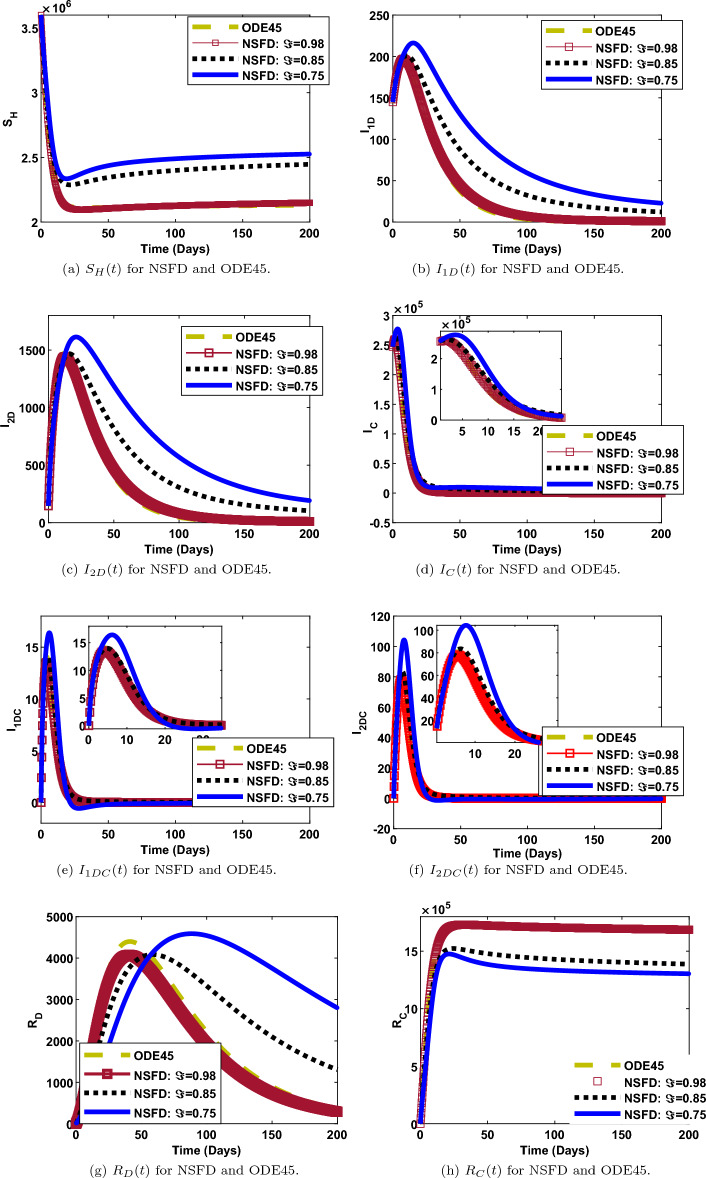
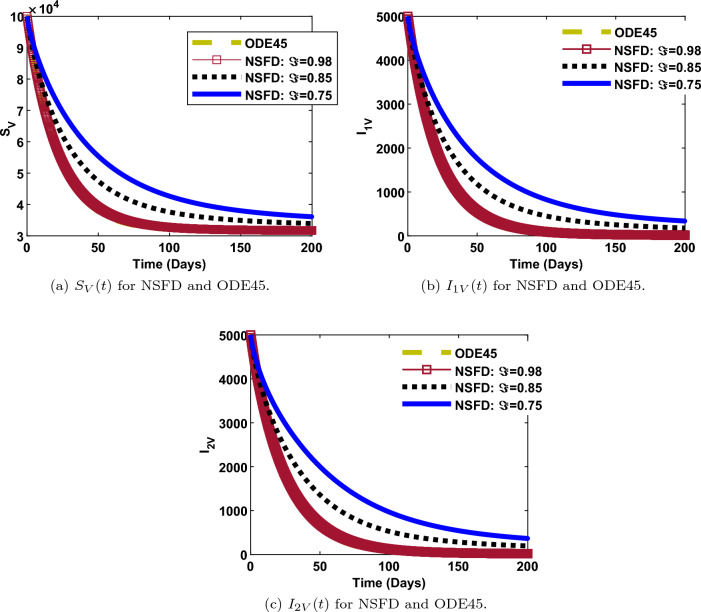
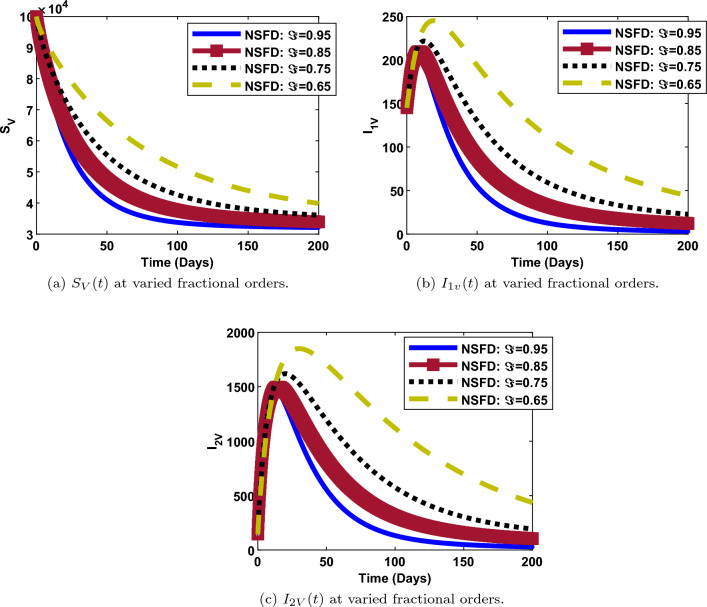
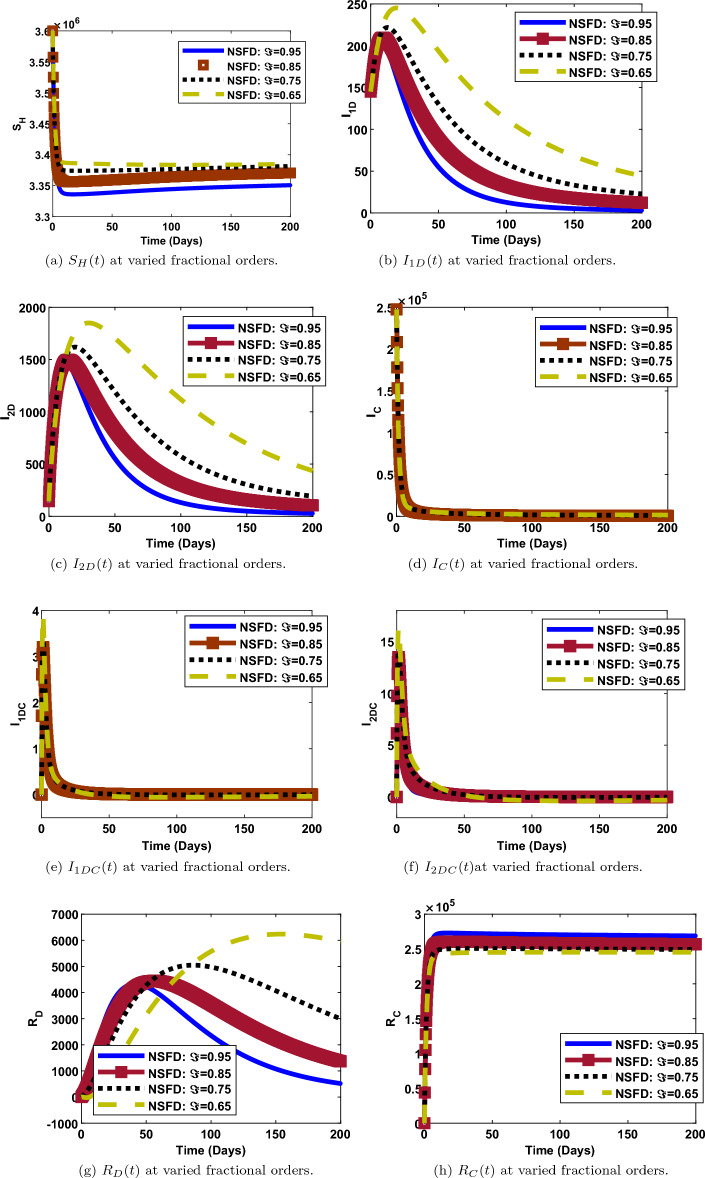
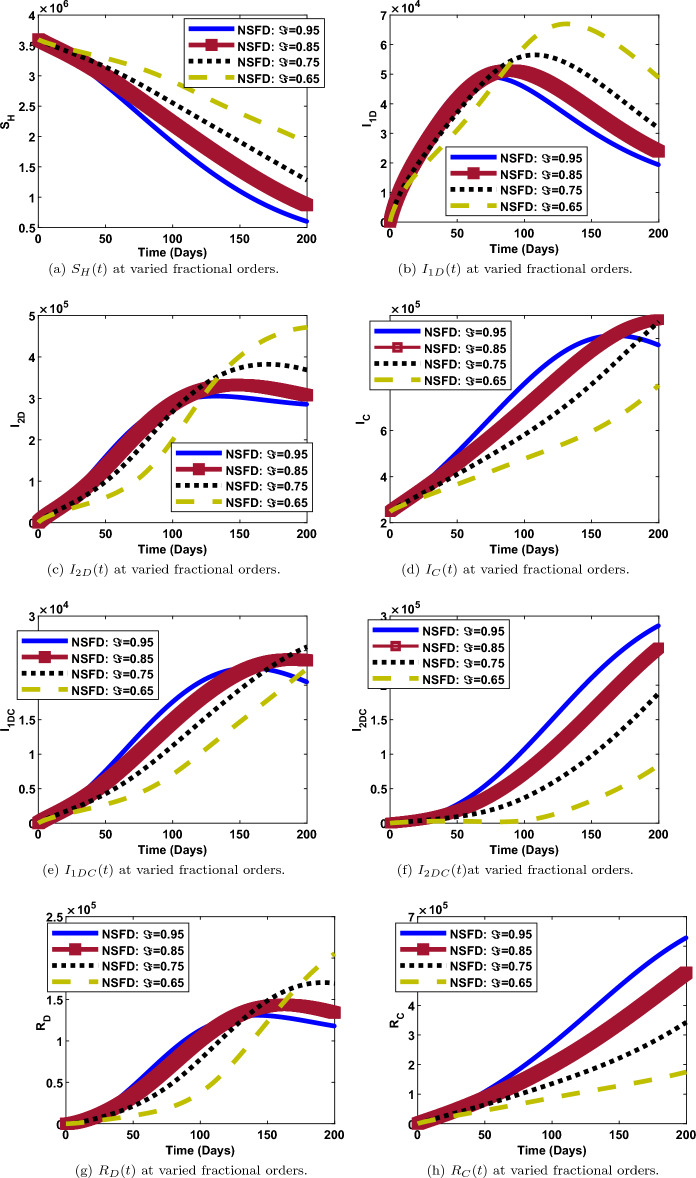
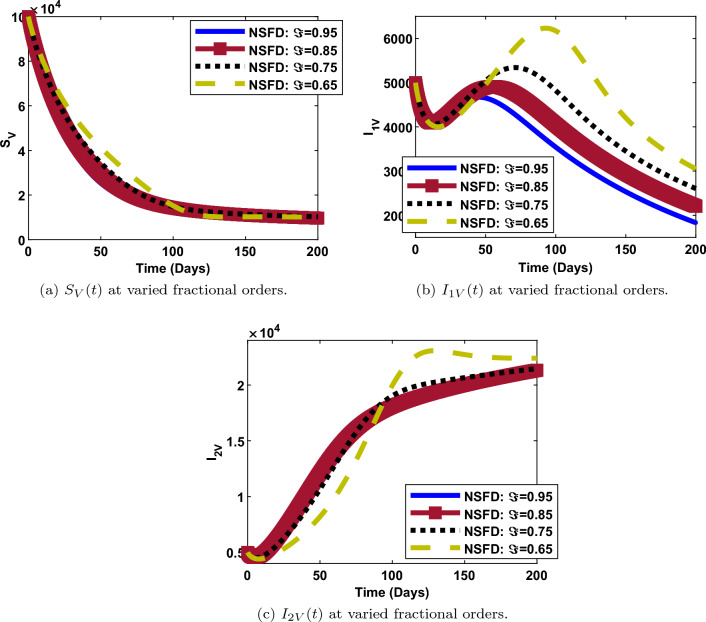
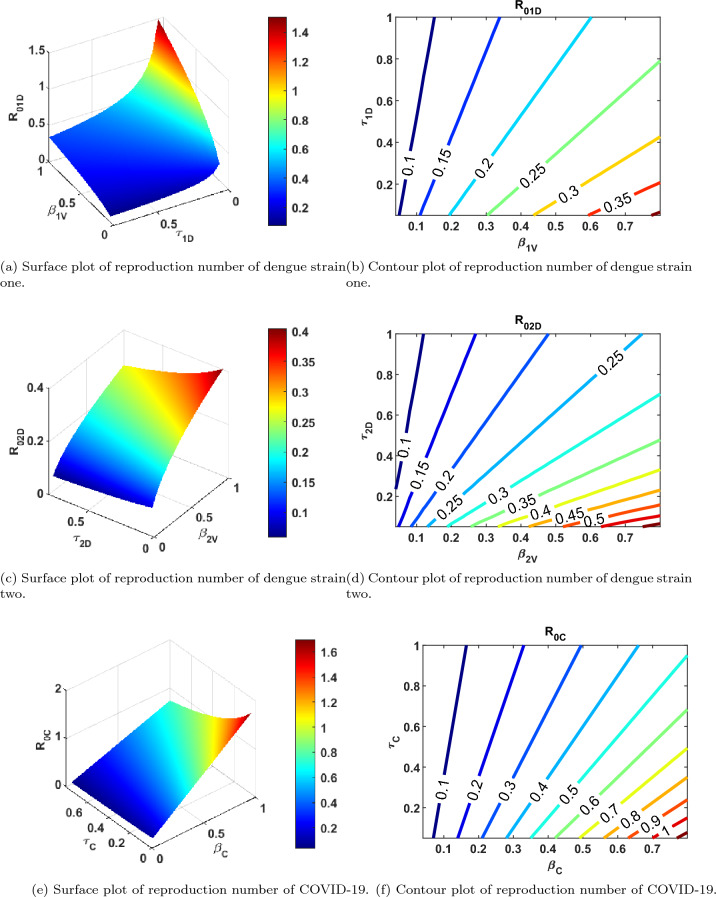
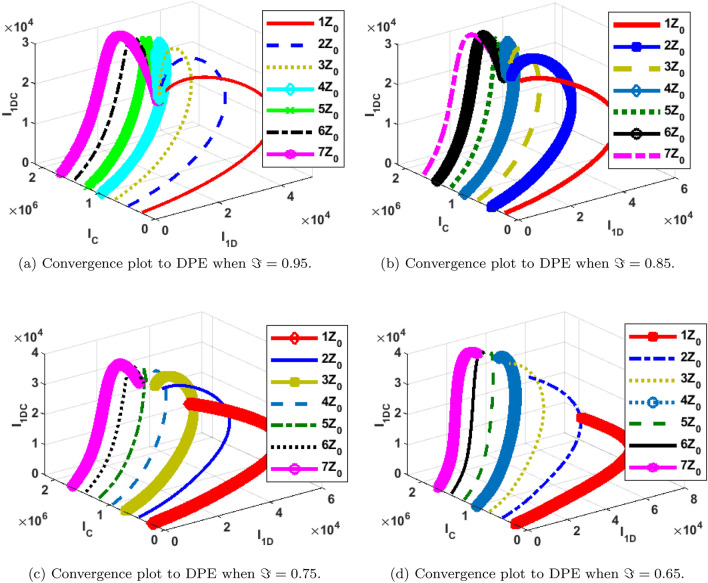
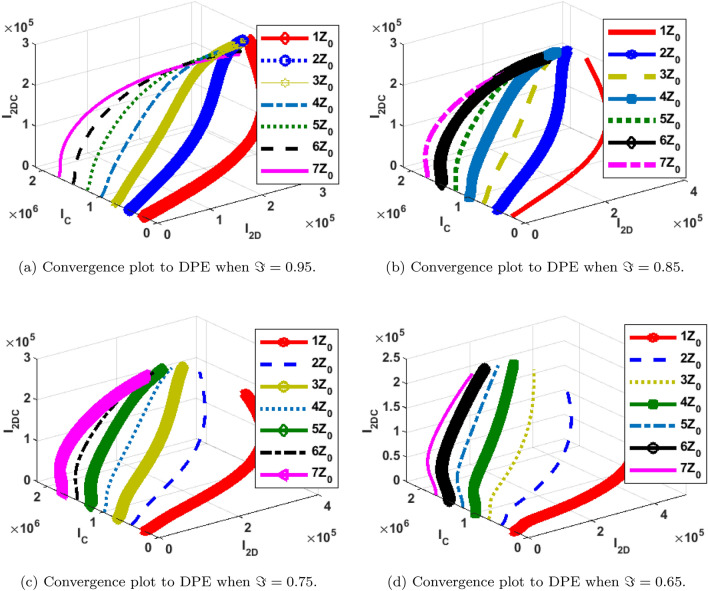
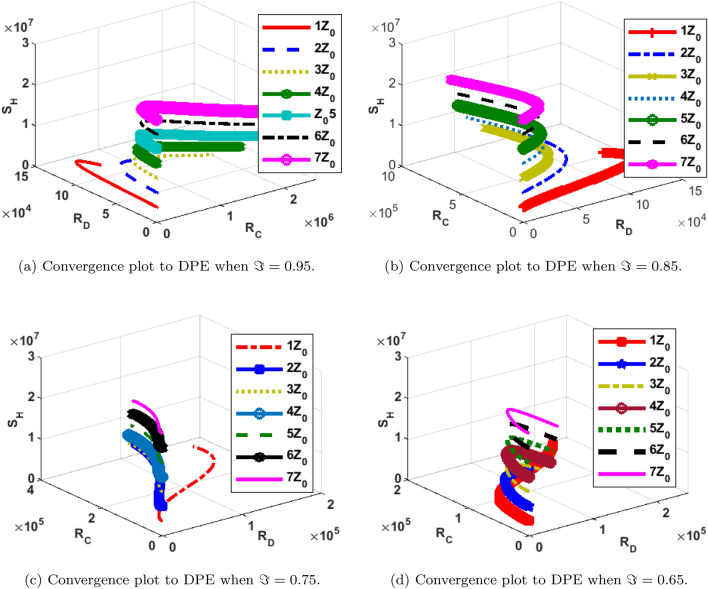
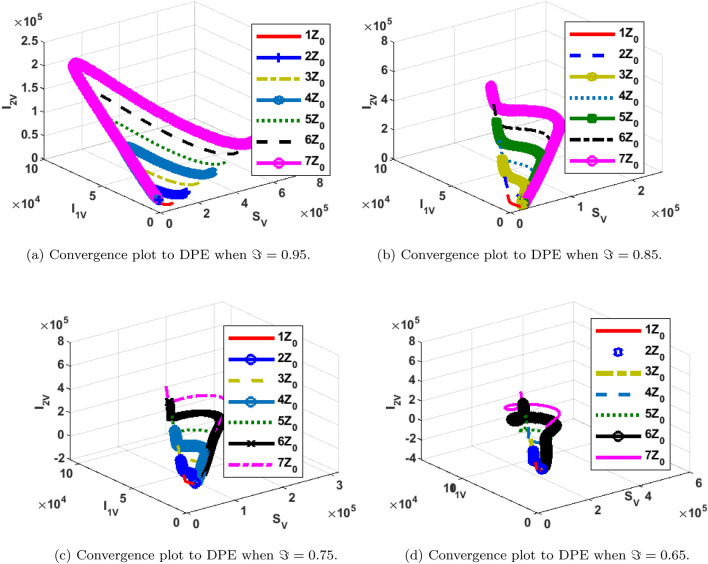
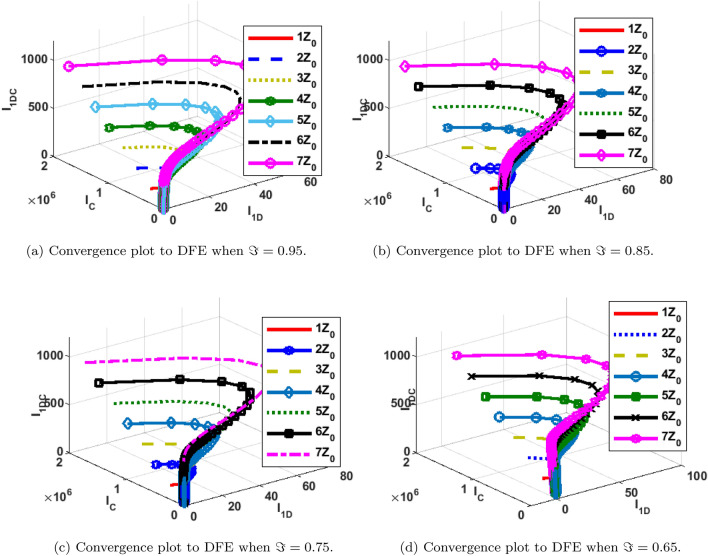
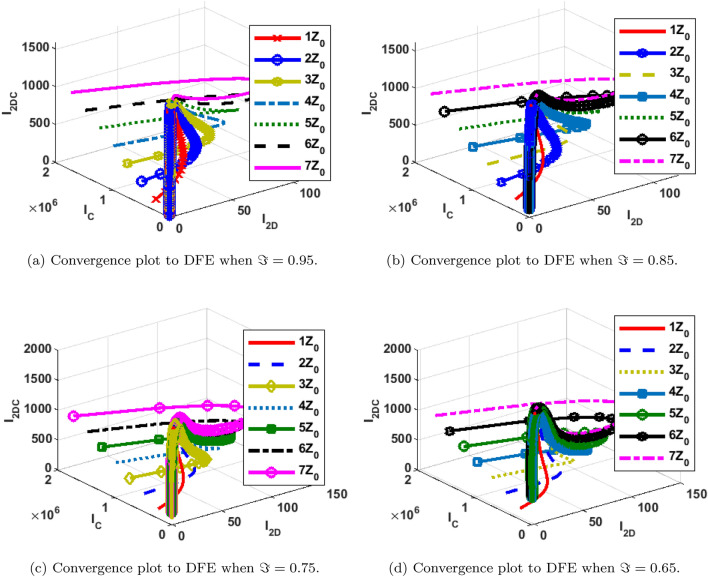
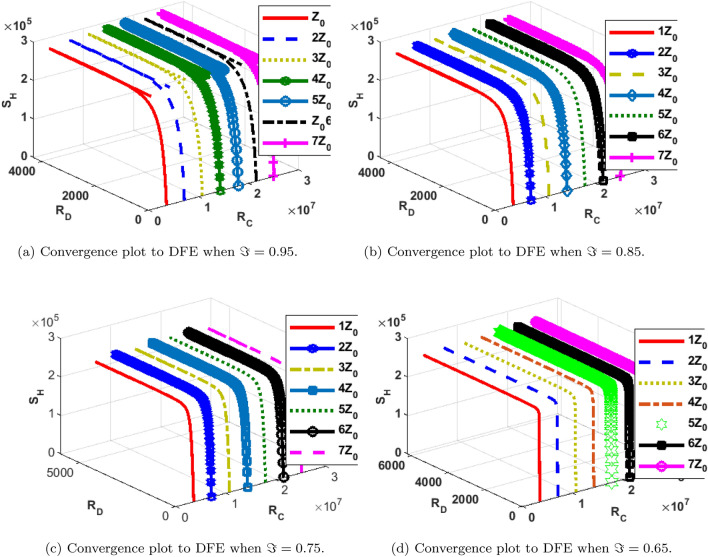
An efficient finite difference approach is adopted to analyze the solution of a novel fractional-order mathematical model to control the co-circulation of double strains of dengue and COVID-19. The model is primarily built on a non-integer Caputo fractional derivative. The famous fixed-point theorem developed by Banach is employed to ensure that the solution of the formulated model exists and is ultimately unique. The model is examined for stability around the infection-free equilibrium point analysis, and it was observed that it is stable (asymptotically) when the maximum reproduction number is strictly below unity. Furthermore, global stability analysis of the disease-present equilibrium is conducted via the direct Lyapunov method. The non-standard finite difference (NSFD) approach is adopted to solve the formulated model. Furthermore, numerical experiments on the model reveal that the trajectories of the infected compartments converge to the disease-present equilibrium when the basic reproduction number ([Formula: see text]) is greater than one and disease-free equilibrium when the basic reproduction number is less than one respectively. This convergence is independent of the fractional orders and assumed initial conditions. The paper equally emphasized the outcome of altering the fractional orders, infection and recovery rates on the disease patterns. Similarly, we also remarked the importance of some key control measures to curtail the co-spread of double strains of dengue and COVID-19.
采用有效的有限差分方法来分析一种新型分数阶数学模型的解,以控制登革热和 COVID-19 双株共同循环。该模型主要建立在非整数 Caputo 分数导数上。利用 Banach 提出的著名不动点定理来保证所提出模型的解的存在性和唯一性。对无感染平衡点附近的模型稳定性进行了分析,当最大繁殖数严格小于 1 时,发现它是稳定的(渐近稳定)。此外,通过直接 Lyapunov 方法对疾病存在平衡点的全局稳定性进行了分析。采用非标准有限差分(NSFD)方法来求解所提出的模型。此外,对模型的数值实验表明,当基本繁殖数 ([Formula: see text])大于 1 时,感染部分的轨迹收敛于疾病存在平衡点,当基本繁殖数小于 1 时,轨迹收敛于无病平衡点。这种收敛与分数阶和假设的初始条件无关。本文同样强调了改变分数阶、感染率和恢复率对疾病模式的影响。同样,我们还指出了一些关键控制措施对遏制登革热和 COVID-19 双株共同传播的重要性。