VCC-SEA, Vector Control Consulting, Vientiane, Lao PDR.
Center for Malariology, Parasitology and Entomology, Ministry of Health, Vientiane, Lao PDR.
Malar J. 2023 Oct 21;22(1):319. doi: 10.1186/s12936-023-04754-5.
The Lao PDR National Strategic Plan for malaria control and elimination for year 2021-2025 emphasizes the importance of routine entomological surveillance being conducted in areas with high transmission and in active malaria foci in elimination targeted areas. The collection of entomological surveillance data that is closely linked to recent epidemiological data is crucial for improving impact, as it contributes to the evidence package that supports operational and strategic decision-making of national malaria programmes, as they accelerate their last mile of elimination.
The Center for Malariology Parasitology and Epidemiology (CMPE) entomology team conducted entomological surveillance activities at 13 sentinel sites in 8 provinces and at active transmission foci sites from 2018 to 2020. The techniques used for the mosquito collection were indoor and outdoor human landing collections (from houses and from cultivation areas) and cattle baited net trap collections.
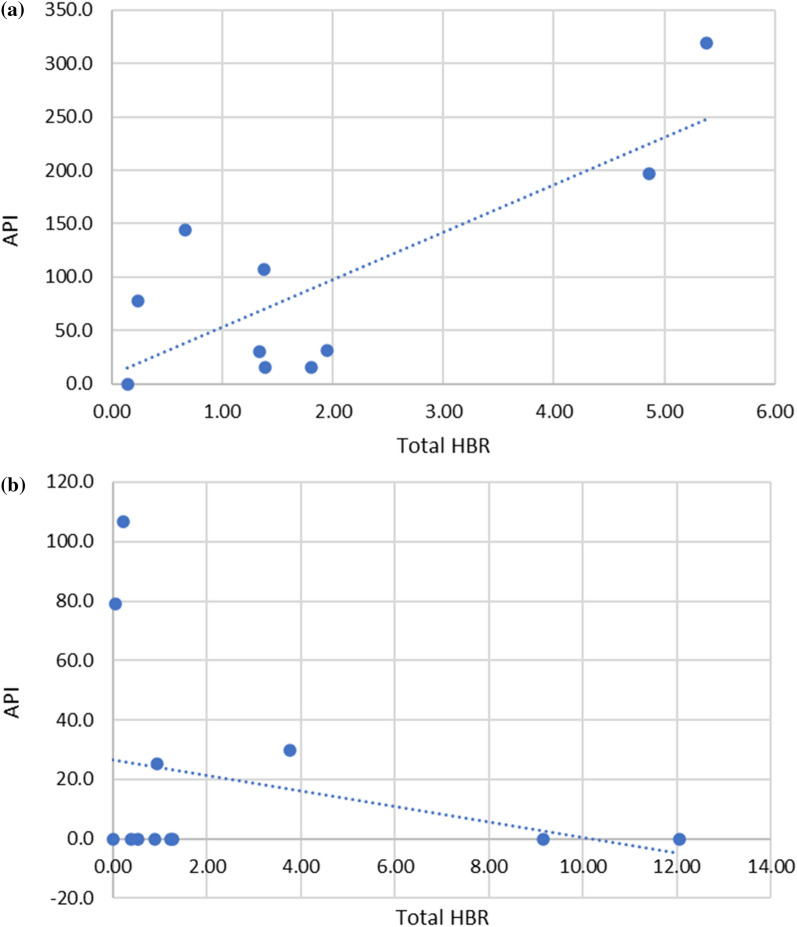
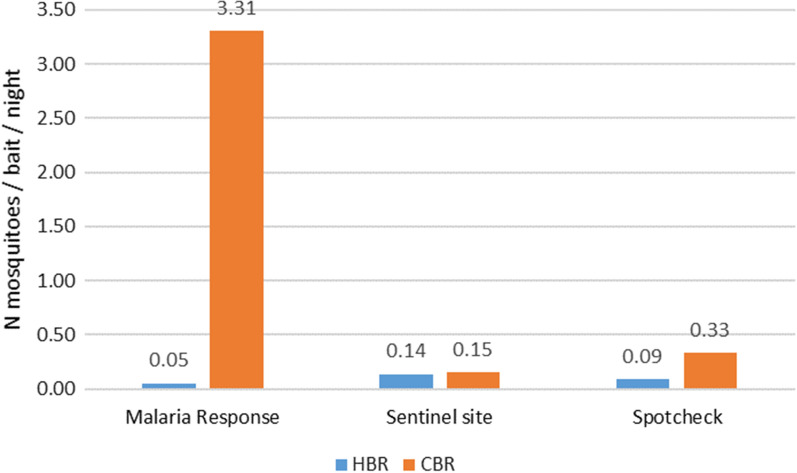
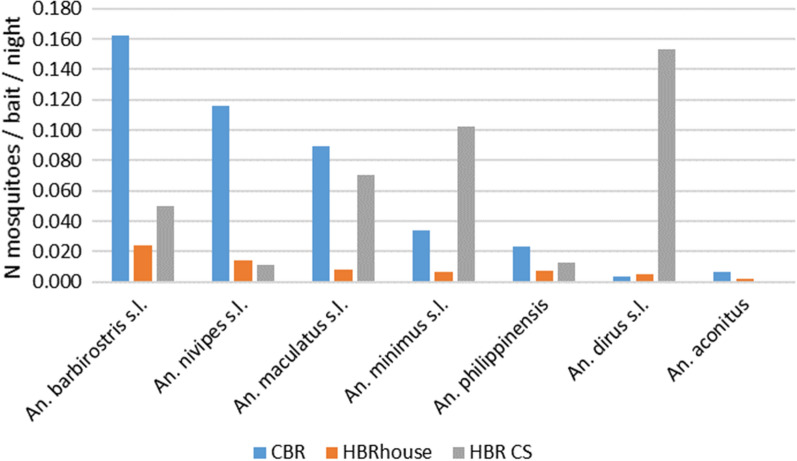
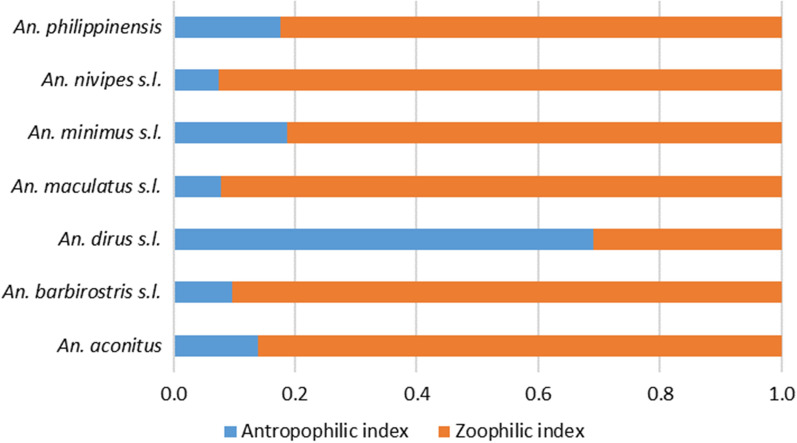
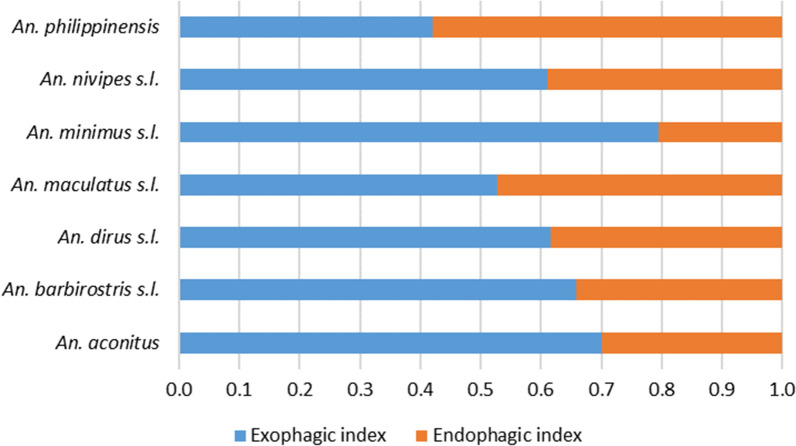
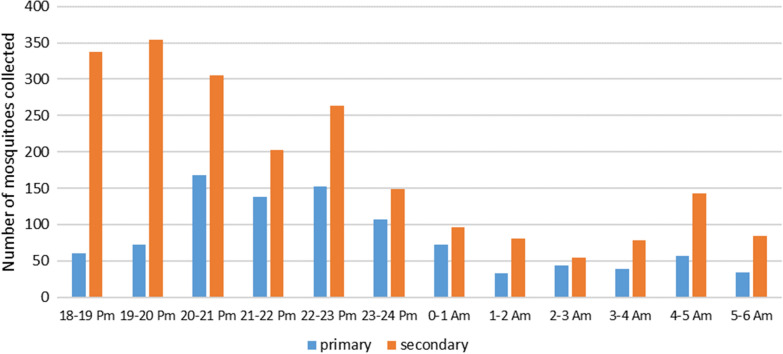
There were 5601 Anopheles mosquito females captured and identified throughout the study, on both human and cow bait. They represented 15 different species or species complexes. The primary malaria vectors as well as the secondary vectors were present in all collection sites in the south, indicating that people living in these rural areas with high malaria incidence are exposed to the vectors. The vectors were highly zoophilic, but they still bite humans throughout the night with a high peak of activity before midnight, both indoors and outdoors. Overall, 17% of the malaria vectors were collected indoors when the people are sleeping. This confirms the importance of bed net use during the night. Thirty-two percent of primary and secondary vectors were collected outdoors at times when people are usually awake and outdoors, which shows that people are exposed to potentially infectious mosquitoes and the importance of personal protection at these times. The findings showed that residual transmission may occur outdoors in the villages, and outside the villages in cultivation fields and forested areas. Epidemiological data showed that transmission was higher in surveillance sites which were targeted as part of a malaria response rather than sentinel sites.
Understanding where and how transmission is persisting, monitoring and mapping vector species distribution in areas with active transmission, monitoring biting trends, and designing evidence based and effective vector control interventions are critical to accelerating progress toward malaria elimination. In this context, the role of entomological surveillance combined with epidemiological data should be considered as a cornerstone in achieving malaria elimination.
老挝人民民主共和国 2021-2025 年国家疟疾控制和消除战略计划强调,在高传播地区和消除目标地区的疟疾活跃焦点地区进行常规昆虫学监测的重要性。收集与最近流行病学数据密切相关的昆虫学监测数据对于提高效果至关重要,因为它为国家疟疾规划的运营和战略决策提供了证据,支持其加速消除的最后一英里。
寄生虫学和流行病学中心(CMPE)昆虫学小组于 2018 年至 2020 年在 8 个省的 13 个哨点和活跃传播焦点地区开展了昆虫学监测活动。用于蚊子收集的技术包括室内和室外人类着陆收集(从房屋和种植区收集)和牛诱饵网陷阱收集。
在整个研究过程中,共捕获并鉴定了 5601 只雌性疟蚊,这些蚊子分别在人和牛诱饵上捕获。它们代表了 15 个不同的种或种复合体。主要疟疾媒介以及次要媒介在南部所有收集点都存在,这表明生活在这些疟疾发病率高的农村地区的人们接触到了这些媒介。这些媒介高度嗜人,但它们仍然在夜间咬人,午夜前活动高峰很高,室内外均如此。总的来说,17%的疟疾媒介是在人们睡觉时在室内捕获的。这证实了夜间使用蚊帐的重要性。32%的主要和次要媒介是在人们通常清醒和户外活动的室外时间收集到的,这表明人们在这些时候容易受到可能感染的蚊子的影响,并且需要在这些时候进行个人保护。研究结果表明,在村庄内和村庄外的种植区和森林地区可能会发生残留传播。流行病学数据显示,在作为疟疾应对一部分的监测点而非哨点,传播率更高。
了解传播在哪里和如何持续存在,监测和绘制活跃传播地区的媒介物种分布,监测叮咬趋势,并设计基于证据和有效的媒介控制干预措施,对于加速消除疟疾的进展至关重要。在这种情况下,昆虫学监测与流行病学数据的结合应被视为实现消除疟疾的基石。