Buchheit Martin, Settembre Maxime, Hader Karim, McHugh Derek
Kitman Labs, Dublin, Ireland.
Lille OSC, Lille, France.
Biol Sport. 2023 Oct;40(4):1057-1067. doi: 10.5114/biolsport.2023.125595. Epub 2023 Mar 6.
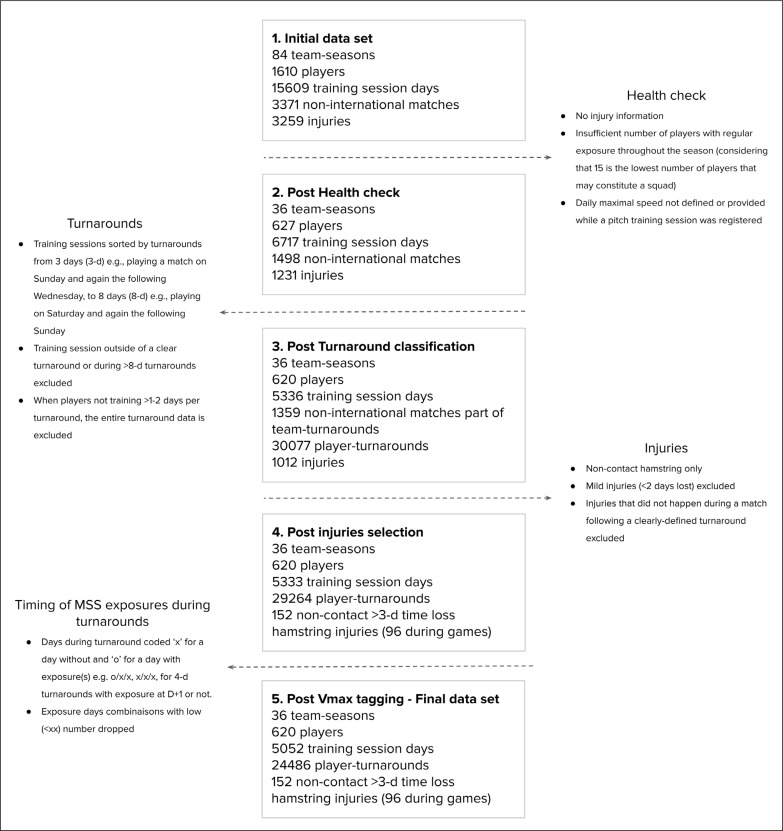
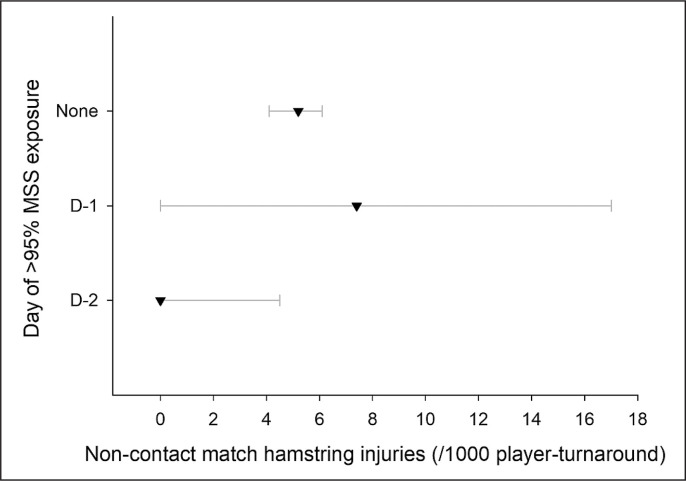
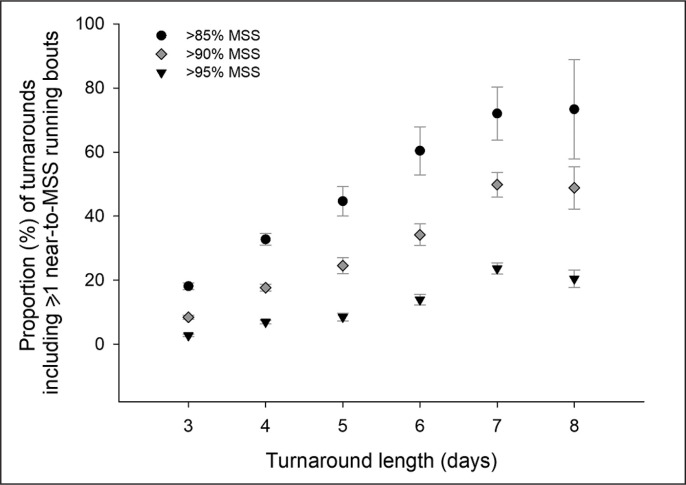
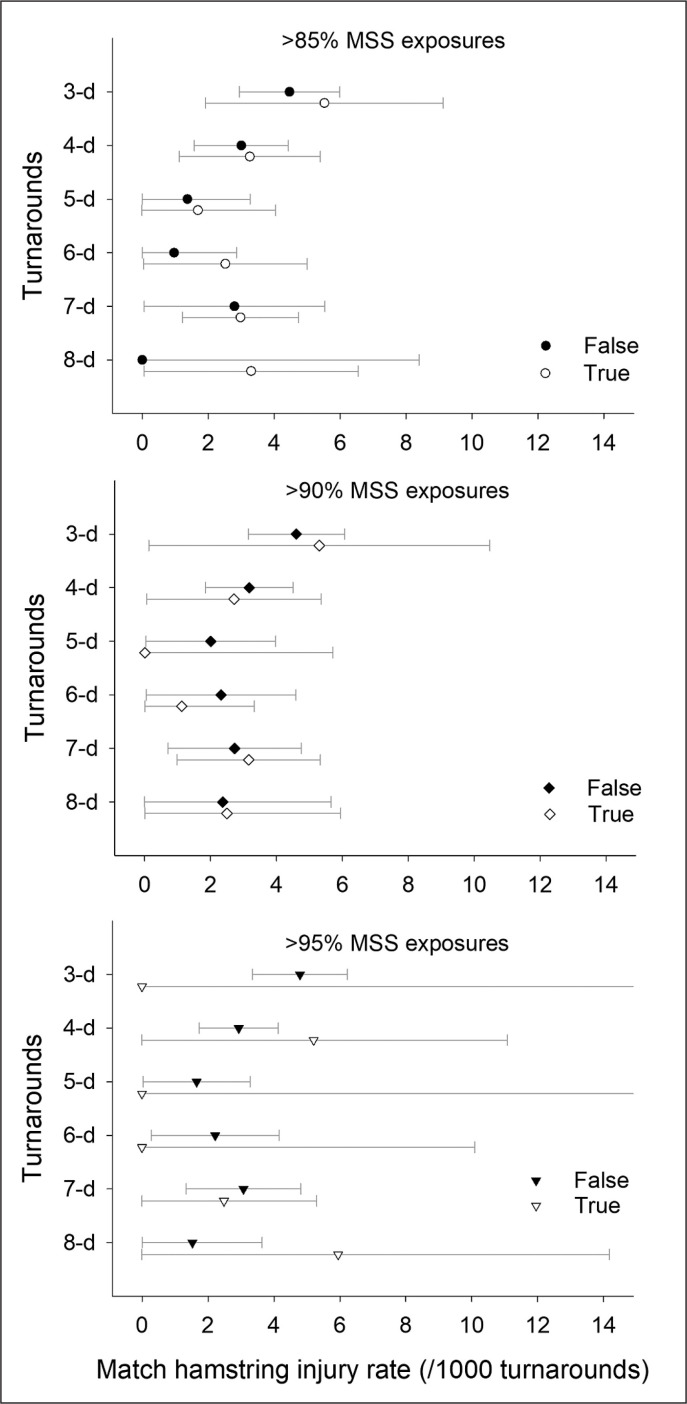
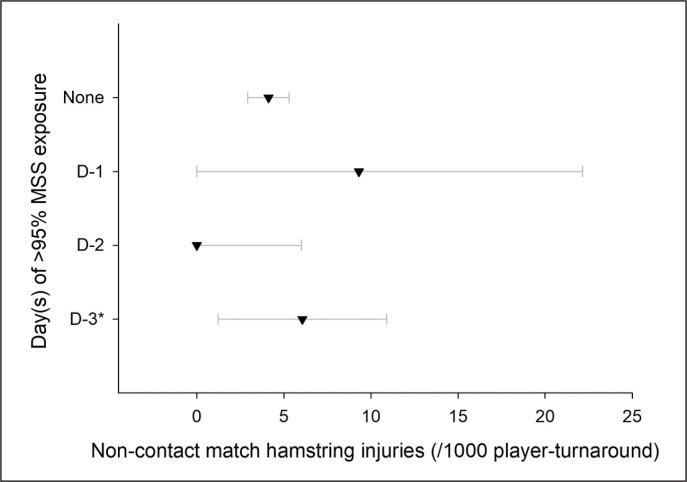
To describe the occurrence of near-to-maximal sprinting speed (near-to-MSS) running bouts during training and hamstring injuries during the consecutive match of the same turnaround in elite football (soccer). Retrospective data from 36 team-seasons (16 elite teams performing in top European leagues) were analyzed (627 players, 96 non-contact time loss match hamstring injuries). We described 1) the occurrence of > 85%, > 90% or > 95% MSS exposures during training within each turnaround and match hamstring injuries and 2) whether the above-mentioned injury occurrences differed depending on the day(s) of the turnarounds (i.e., the period separating two consecutive matches, which is generally from 3 to 8 days) when these speed exposures occurred. The longer the length of the turnarounds and the lower the speed thresholds, the greater the number (and proportion) of near-to-MSS exposures (e.g., 18%, 45% and 72% of turnarounds with > 85% runs for 3, 5 and 7-turnarounds, respectively). For half of the turnarounds examined, there were no match hamstring injuries when players were exposed to running bouts > 95% MSS during training (e.g., injury rates: 0; CI: 0-15). Injuries still occurred during 85% of the turnarounds when there were no or lower relative speed exposures (i.e., > 85 or > 90%, injury rates: 2-5, CI: 0-6). Finally, irrespective of the turnaround length, there were no match hamstring injuries when > 95% MSS exposures occurred at D-2, while in contrast, injuries still happened when players were not exposed at all, or when these exposures occurred at D-3 and/or earlier within the turnaround. While the present observational study design precludes the examination of causal relationships, the programming of > 95% MSS exposures at D-2 may help mitigate match hamstring injury occurrences in elite football.
描述精英足球(英式足球)同一比赛周期连续比赛期间训练中接近最大冲刺速度(near-to-MSS)跑步训练的发生情况以及腘绳肌损伤情况。分析了来自36个球队赛季(16支在欧洲顶级联赛中表现的精英球队)的回顾性数据(627名球员,96例非接触性比赛中腘绳肌损伤导致的失时情况)。我们描述了:1)每个比赛周期内训练中大于85%、大于90%或大于95%MSS暴露情况以及比赛中腘绳肌损伤情况;2)当这些速度暴露发生时,上述损伤发生率是否因比赛周期的天数(即相邻两场比赛之间的间隔时间,通常为3至8天)不同而有所差异。比赛周期越长且速度阈值越低,接近最大冲刺速度暴露的次数(及比例)就越多(例如,分别有18%、45%和72%的3、5和7天比赛周期中跑步速度大于总距离的85%)。在所检查的一半比赛周期中,当球员在训练中进行大于95%MSS的跑步训练时,没有出现比赛中腘绳肌损伤(例如,损伤率:0;可信区间:0-15)。当相对速度暴露为无或较低(即大于85%或大于90%)时,85%的比赛周期中仍会发生损伤(损伤率:2-5,可信区间:0-6)。最后,无论比赛周期长短,当在比赛前第2天出现大于95%MSS暴露时,没有出现比赛中腘绳肌损伤,而相反,当球员完全没有此类暴露,或者当这些暴露发生在比赛前第3天及更早时间时,仍会发生损伤。虽然目前的观察性研究设计无法检验因果关系,但在比赛前第2天安排大于95%MSS暴露可能有助于减少精英足球比赛中腘绳肌损伤的发生。