Li Xiangchen, Song Yuting, Wang Huang, Su Xinyu, Wang Mengyao, Li Jing, Ren Zhiqiang, Zhong Daidi, Huang Zhiyong
China Institute of Sport Science, Beijing 100061, China.
School of Nursing, Qingdao University, Qingdao 266021, China.
iScience. 2023 Oct 4;26(11):108128. doi: 10.1016/j.isci.2023.108128. eCollection 2023 Nov 17.
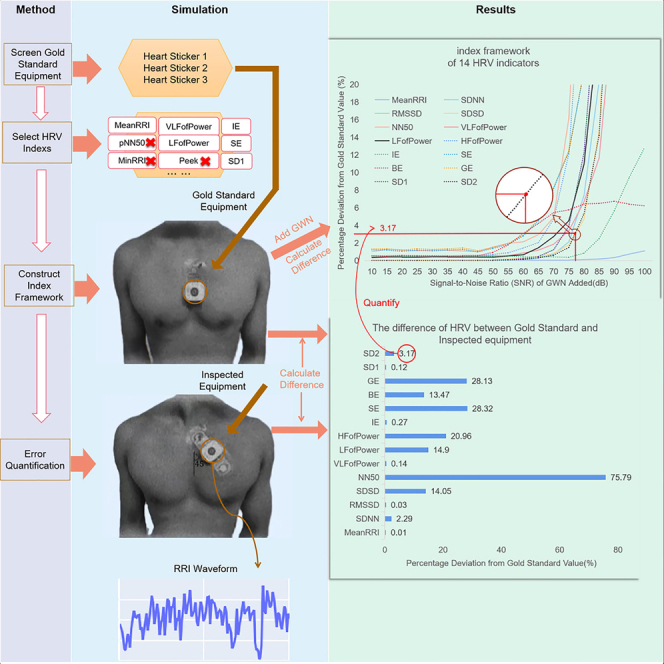
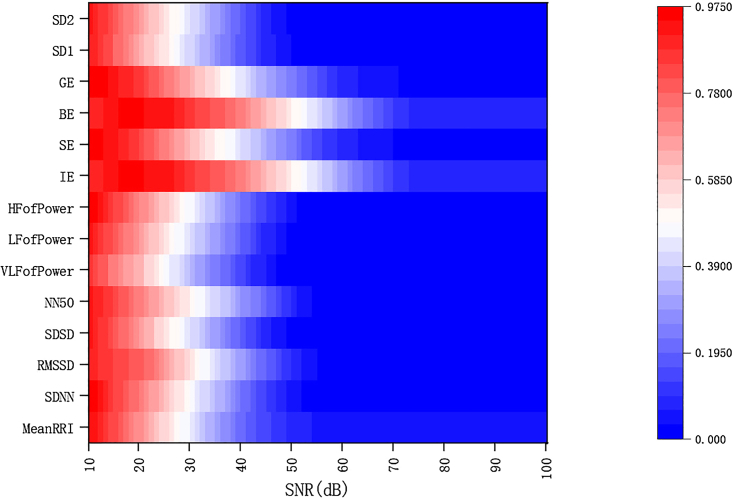
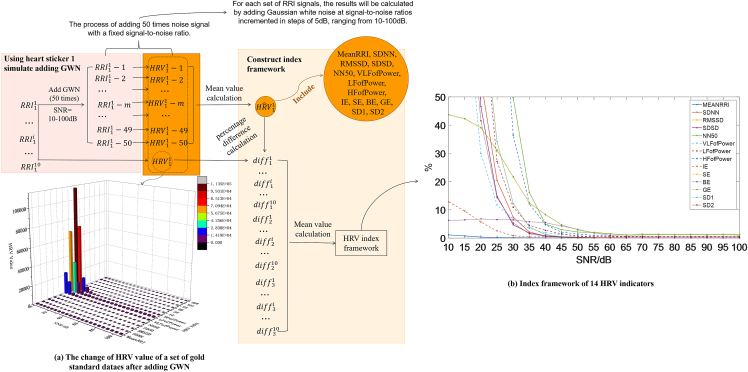
This paper proposed a method based on heart rate variability (HRV) for evaluating the accuracy of wearable devices in measuring heart rate. HRV refers to the variation in time intervals between successive heartbeats, widely used in many fields such as clinical and sports fields. Wearable devices such as Electrocardiogram (ECG) electrode patches have gained popularity due to their portability and ease of use. However, they can be prone to measurement interference caused by environmental noise, human respiration, etc. The proposed method consists of four main components: selection of "gold standard measurement devices", identification of HRV measurement metrics, construction of an HRV evaluation framework, and quantification of measurement errors. The method is validated through simulated experiments using ECG patches. The evaluation framework and quantification model established in this method have significant implications in establishment of industry standards and diagnosis of diseases in clinical practice.
本文提出了一种基于心率变异性(HRV)的方法,用于评估可穿戴设备测量心率的准确性。心率变异性是指连续心跳之间的时间间隔变化,广泛应用于临床和体育等许多领域。诸如心电图(ECG)电极贴片之类的可穿戴设备因其便携性和易用性而受到欢迎。然而,它们容易受到环境噪声、人体呼吸等引起的测量干扰。所提出的方法包括四个主要部分:“金标准测量设备”的选择、HRV测量指标的识别、HRV评估框架的构建以及测量误差的量化。该方法通过使用ECG贴片的模拟实验进行了验证。此方法中建立的评估框架和量化模型对行业标准的建立以及临床实践中的疾病诊断具有重要意义。