Department of Chemistry and Biochemistry, University of California, San Diego, La Jolla, California 92093, United States.
J Am Chem Soc. 2023 Nov 8;145(44):23994-24004. doi: 10.1021/jacs.3c06481. Epub 2023 Oct 23.
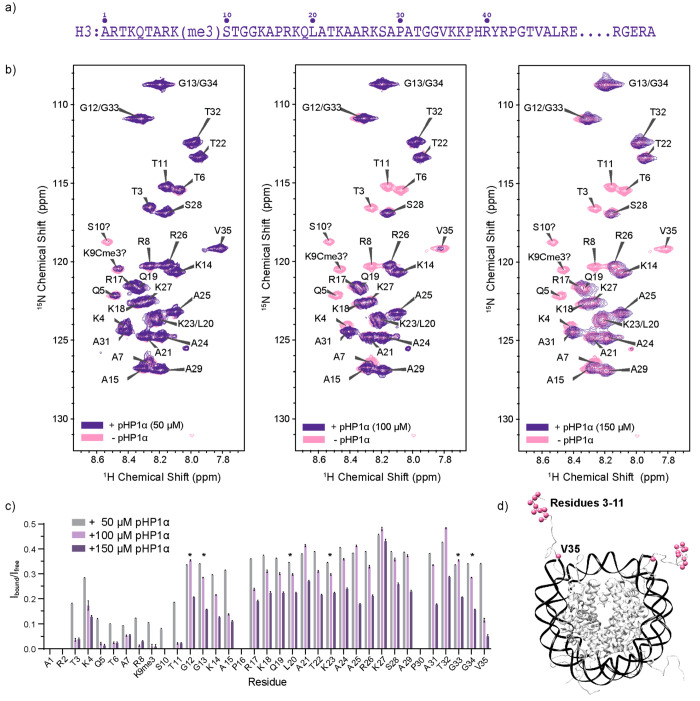
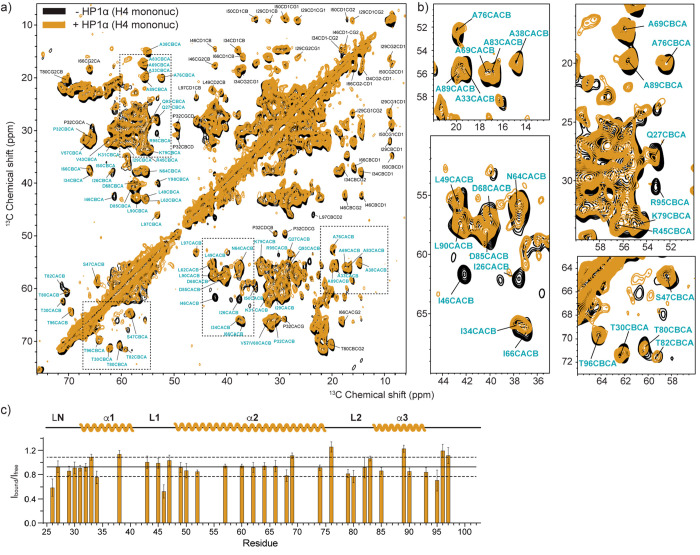
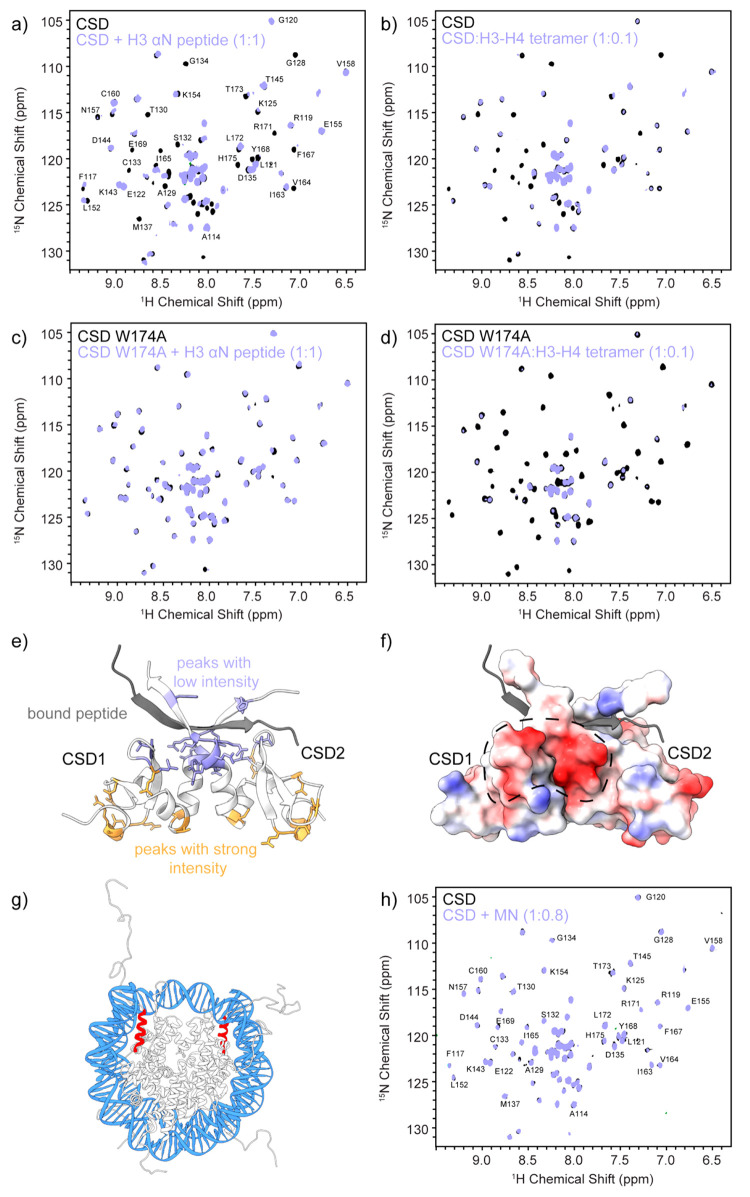
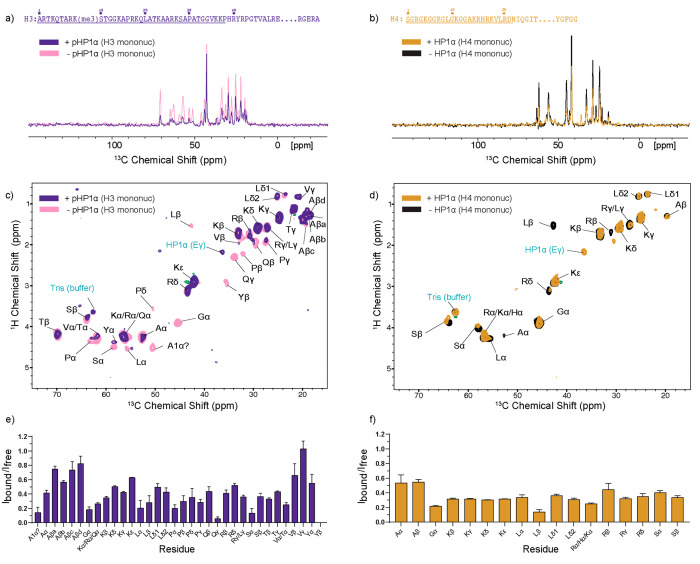
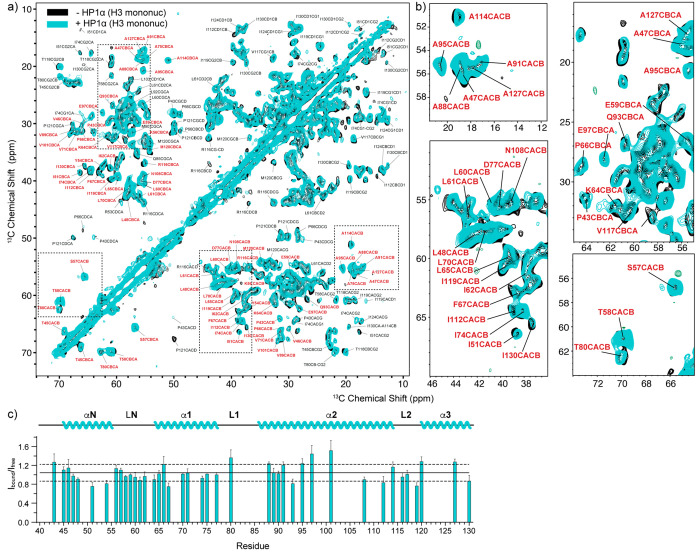
In the nucleus, transcriptionally silent genes are sequestered into heterochromatin compartments comprising nucleosomes decorated with histone H3 Lys9 trimethylation and a protein called HP1α. This protein can form liquid-liquid droplets and potentially organize heterochromatin through a phase separation mechanism that is promoted by phosphorylation. Elucidating the molecular interactions that drive HP1α phase separation and its consequences on nucleosome structure and dynamics has been challenging due to the viscous and heterogeneous nature of such assemblies. Here, we tackle this problem by a combination of solution and solid-state NMR spectroscopy, which allows us to dissect the interactions of phosphorylated HP1α with nucleosomes in the context of phase separation. Our experiments indicate that phosphorylated human HP1α does not cause any major rearrangements to the nucleosome core, in contrast to the yeast homologue Swi6. Instead, HP1α interacts specifically with the methylated H3 tails and slows the dynamics of the H4 tails. Our results shed light on how phosphorylated HP1α proteins may regulate the heterochromatin landscape, while our approach provides an atomic resolution view of a heterogeneous and dynamic biological system regulated by a complex network of interactions and post-translational modifications.
在核内,转录沉默的基因被隔离到异染色质隔室中,这些隔室包含组蛋白 H3 Lys9 三甲基化修饰的核小体和一种称为 HP1α 的蛋白质。这种蛋白质可以形成液-液相滴,并通过一种被磷酸化促进的相分离机制潜在地组织异染色质。由于这些组装体的粘性和异质性,阐明驱动 HP1α 相分离及其对核小体结构和动力学影响的分子相互作用具有挑战性。在这里,我们通过溶液和固态 NMR 光谱学的组合来解决这个问题,这使我们能够在相分离的情况下剖析磷酸化 HP1α 与核小体的相互作用。我们的实验表明,与酵母同源物 Swi6 相反,磷酸化的人 HP1α 不会引起核小体核心的任何重大重排。相反,HP1α 特异性地与甲基化的 H3 尾巴相互作用,并减缓 H4 尾巴的动力学。我们的结果揭示了磷酸化的 HP1α 蛋白如何调节异染色质景观,而我们的方法提供了一个原子分辨率的视图,展示了一个由复杂的相互作用和翻译后修饰网络调控的异质和动态生物系统。